Fitness Smart Ring Skin Safety and Overnight Comfort
Most fitness smart rings can support skin safety and overnight comfort when the fit is secure without creating painful pressure. Daily and overnight wear are more comfortable when the skin stays clean and dry and the ring does not restrict the finger as it swells. Comfort remains conditional on fit, hygiene, skin sensitivity, and the wearer’s response.
A fitness smart ring is a wearable ring that maintains close skin contact for functions such as sleep tracking. A suitable fit is snug enough to limit unwanted movement but loose enough to avoid numbness, pain, or persistent pressure. Moisture trapped beneath the ring can increase friction, while materials containing nickel or a damaged coating may cause irritation in sensitive skin despite hypoallergenic claims. Skin comfort therefore depends on a non-restrictive fit, controlled moisture, tolerated materials, and manageable wear time.
During overnight wear, finger swelling can make a previously comfortable smart ring feel tighter by morning. A light pressure mark that fades after removal is different from persistent redness, rash, numbness, swelling, or broken skin. Remove the ring when pain, numbness, swelling, or broken skin occurs, and seek professional advice when irritation continues or suggests an allergy.
Overnight comfort is most likely when the fitness smart ring remains dry, stable, and free from restrictive pressure during sleep tracking. The broader fitness smart ring guide explains how skin comfort fits within the wider category and daily-wear context.
How Smart Rings Interact with Skin During Daily and Overnight Wear
A smart ring stays in continuous contact with finger skin while it is worn. This contact allows sensor touchpoints to remain against the skin while the ring applies light pressure through its contact area. How smart rings interact with skin is shaped by contact conditions, including pressure, moisture, movement, surface finish, and wear duration.
How smart rings interact with skin depends on the combined effect of contact conditions rather than one single factor. The diagram below highlights the contact area, pressure zones, sensor touchpoints, and places where trapped moisture can influence comfort during daily and overnight wear.
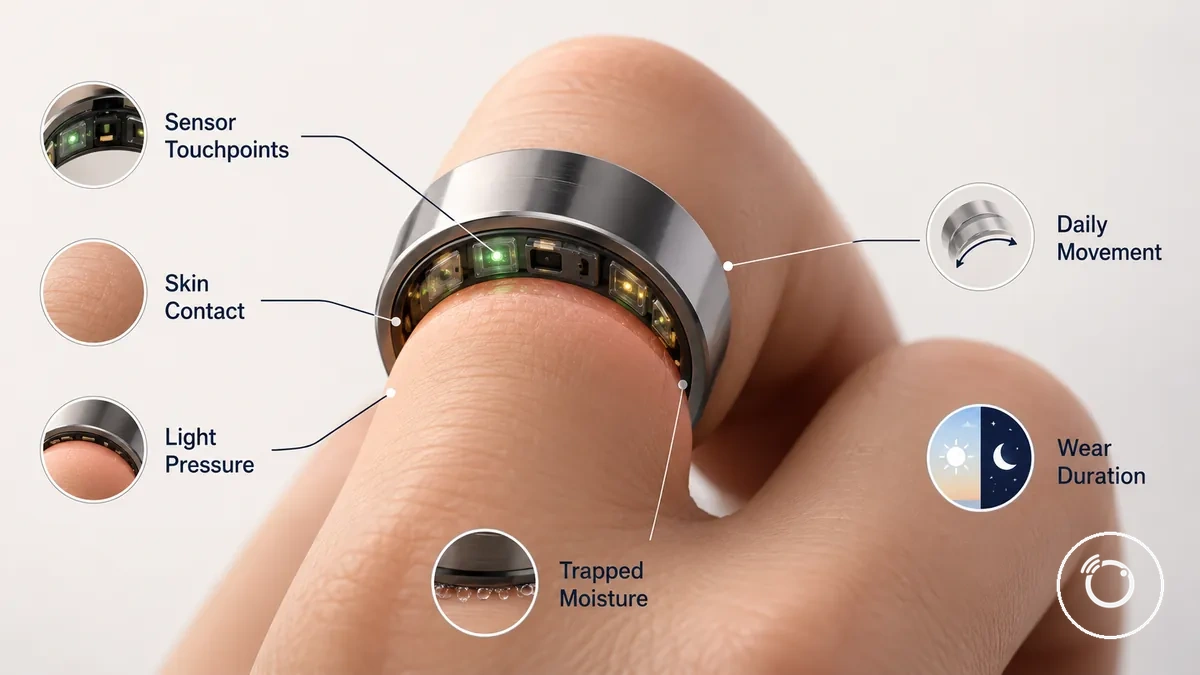
- Continuous contact keeps the sensor touchpoints against finger skin for consistent skin contact.
- Pressure is focused where the ring rests, while normal movement changes how that pressure is distributed.
- Moisture trapped beneath the ring can increase friction against the contact area.
- Surface finish affects how smoothly the ring moves across the skin during daily wear and overnight wear.
- Longer wear duration can reduce comfort and increase irritation risk when pressure and trapped moisture remain against sensitive skin.
A common myth is that feeling a smart ring at times always means something is wrong. In reality, mild ring awareness or a light mark that fades after removal can be a normal response to continuous contact, while persistent redness, irritation, pain, numbness, swelling, or broken skin are warning signs that deserve closer attention.
Main Causes of Smart Ring Irritation
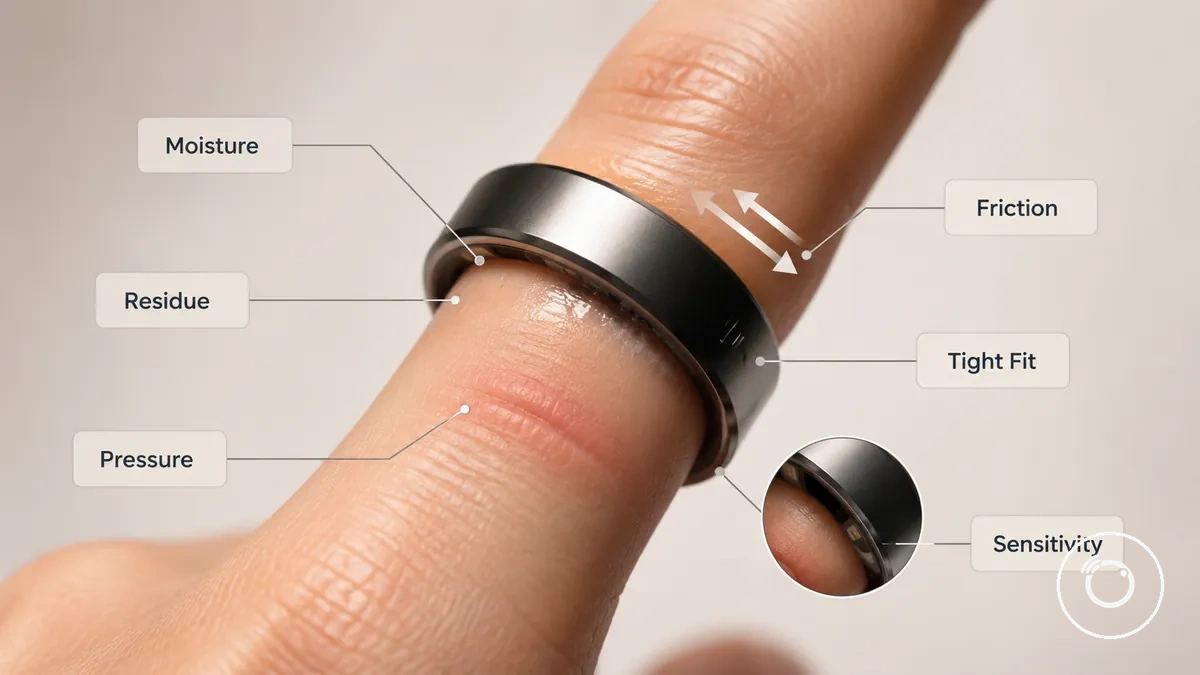
Smart ring irritation is usually linked to contact conditions rather than a single cause. Moisture, residue, friction, pressure, tightness, and individual sensitivity are the main cause groups that can lead to redness, itching, rubbing, or swelling.
The main causes of smart ring irritation are easier to interpret when the trigger is matched with the visible sign and a safer response. The image below highlights common trigger zones, and the table organizes each cause by trigger, visible sign, and safer response.
| Trigger | Visible sign | Safer response |
|---|---|---|
| Moisture or residue trapped under the ring | Redness or itching | Keep the skin and ring clean and dry before wearing again. |
| Tight fit and pressure | Pressure marks or swelling | Check whether the ring feels snug without being restrictive and review the fit and comfort factors. |
| Friction during repeated movement | Rubbing or skin irritation | Reduce repeated rubbing when practical and allow the skin to recover if irritation develops. |
| Material or coating sensitivity | Persistent redness or localized sensitivity | Consider whether the reaction is limited to skin contact with the ring and monitor for ongoing irritation. |
| Combined conditions | More noticeable irritation | Consider multiple contributing factors instead of assuming a single trigger explains every reaction. |
For example, tight overnight wear after handwashing can combine moisture, residue, pressure, and friction, making irritation more noticeable than any single condition alone. This pattern can change how smart ring irritation is interpreted before concluding that the ring material is responsible.
Moisture, soap residue, and buildup under the ring
Moisture, soap residue, and buildup beneath a smart ring can change the skin-contact environment by keeping the ring underside damp or coated. Trapped water, sweat, lotion, soap residue, or debris can soften the contacted skin and increase friction, which may contribute to irritation such as itching, odor, or redness. In this situation, trapped residue is the local irritation condition rather than proof that the ring material is unsuitable.
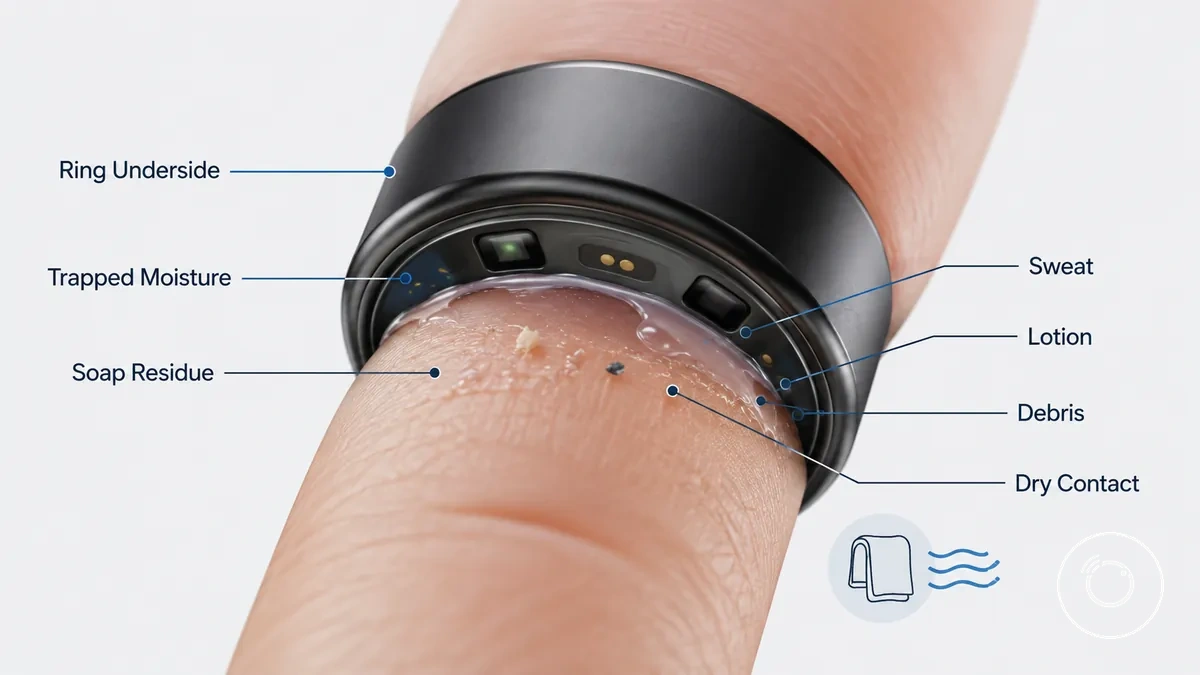
After handwashing, showering, exercise, or applying lotion, moisture, soap residue, and buildup under the ring can remain between the ring underside and the finger if both surfaces are not fully dry. This trapped layer increases skin contact and rubbing during movement, making irritation more likely under those conditions. Keeping both the finger and the ring clean and dry reduces that contact condition before wearing the ring again.
- Dry the finger before putting the ring back on.
- Dry the ring underside so trapped water does not remain against the skin.
- Remove soap residue, sweat, lotion, and visible debris before wearing the ring.
- After exercise or showering, wait until both the finger and the ring are dry.
- Check that the skin is dry before overnight wear.
Pause wearing the ring if irritation continues after cleaning and drying both contact surfaces. Persistent symptoms may have another contributing cause and should not be attributed to moisture alone.
Pressure, friction, and tight fit marks
Pressure, friction, and tight fit marks are not always harmful, but they should be judged by how the ring feels during normal wear. A temporary indentation after wearing a smart ring can be normal, while ongoing pressure, rubbing, or reduced comfort indicates fit-related pressure as the local issue.
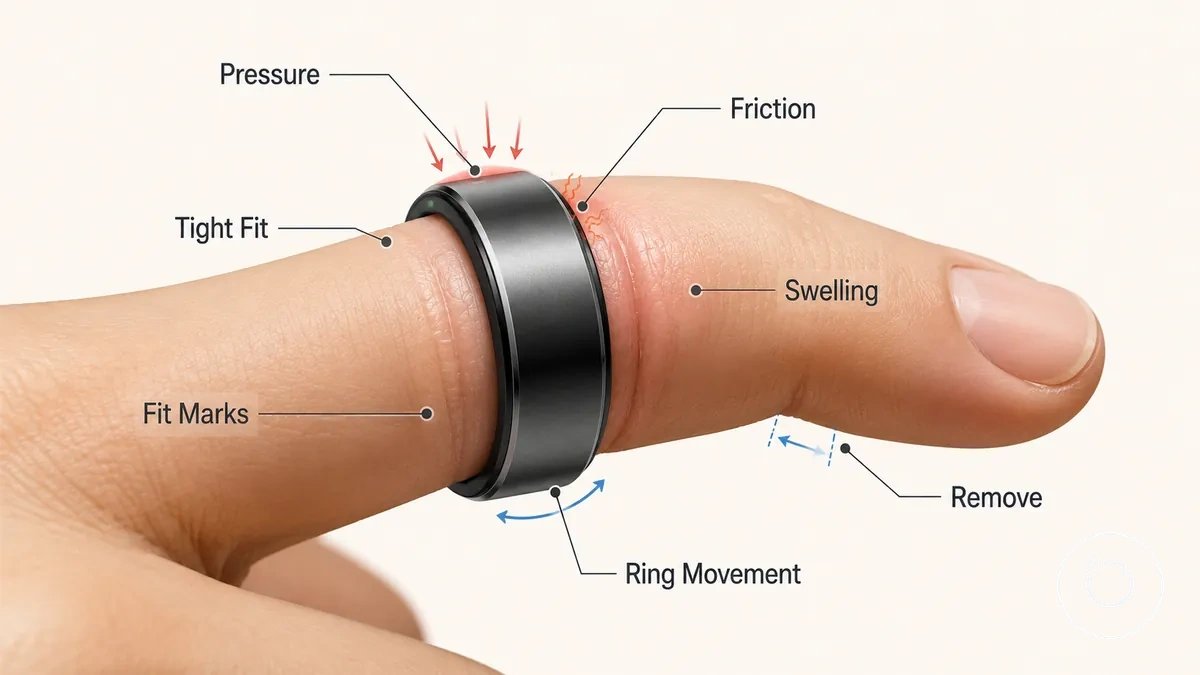
Finger swelling during sleep, daily movement, or after physical activity can make a tight fit feel tighter than usual. Edge pressure and ring movement may create friction and rubbing marks, while a temporary indentation that fades after removing the ring is different from pain, numbness, increasing swelling, or difficulty removing the ring. Those signs should be assessed together because both swelling and movement influence comfort.
Remove the ring immediately if numbness, pain, noticeable swelling, or difficulty removing it occurs. If fit marks continue under normal wear, resizing may improve comfort, but it is not a guaranteed solution for every situation. For broader guidance beyond these local pressure signs, see the fit and comfort factors.
Pressure, friction, and tight fit marks should be checked against comfort, circulation feeling, and ease of removal.
- Check whether pressure marks fade after removing the ring.
- Confirm the ring can be removed without excessive force.
- Notice whether ring movement creates repeated friction or rubbing.
- Watch for numbness or increasing swelling, especially after overnight wear.
- Consider resizing if discomfort continues after repeated comfort checks.
Material sensitivity and hypoallergenic smart ring claims
Material sensitivity describes how an individual’s skin responds to the materials and contact surfaces of a smart ring during everyday wear. A hypoallergenic smart ring claim indicates that the material is intended to reduce the likelihood of common contact reactions, but it does not confirm compatibility for every wearer. Individual skin response remains the deciding factor, so hypoallergenic claims should be treated as qualified rather than absolute.
Hypoallergenic claims are often misunderstood as proof that irritation cannot occur. In practice, titanium, ceramic, and resin may be selected for their contact-surface characteristics, while irritation can also relate to a coating, plating, or worn finish rather than the underlying material itself. This distinction helps separate material allergy from coating- or finish-related irritation.
Material sensitivity should be evaluated by considering both the base material and the condition of the contact surface. Moisture, prolonged wear, or a close fit may contribute to irritation even when the primary material is intended to reduce allergy risk. If a coating or plating becomes worn, the exposed surface can change the skin contact experience. Checking the finish alongside the material provides a more complete assessment, while user-specific sensitivity remains the deciding factor.
Material claims should be interpreted as guidance rather than proof of personal skin compatibility. For a broader understanding of durability, finishes, and long-term contact surfaces, continue to materials and daily wear.
Material sensitivity and hypoallergenic smart ring claims require qualification because individual skin response, contact surfaces, and finish condition all influence comfort.
| Material or surface claim | What it may affect | What to verify |
|---|---|---|
| Hypoallergenic smart ring | Likelihood of common contact reactions | Personal comfort during regular wear |
| Titanium, ceramic, or resin | Contact-surface characteristics | Individual skin response over time |
| Coating or plating | Surface exposure as the finish wears | Visible finish wear or surface changes |
| Nickel-containing components | Potential allergy risk for sensitive users | Manufacturer material disclosures |
Titanium, ceramic, resin, and nickel exposure
Titanium, ceramic, and resin create different smart ring contact surfaces, but the material name alone does not determine skin comfort. Coatings, surface finishes, and mixed construction can change which material touches the skin, so each material should be assessed by contact relevance.
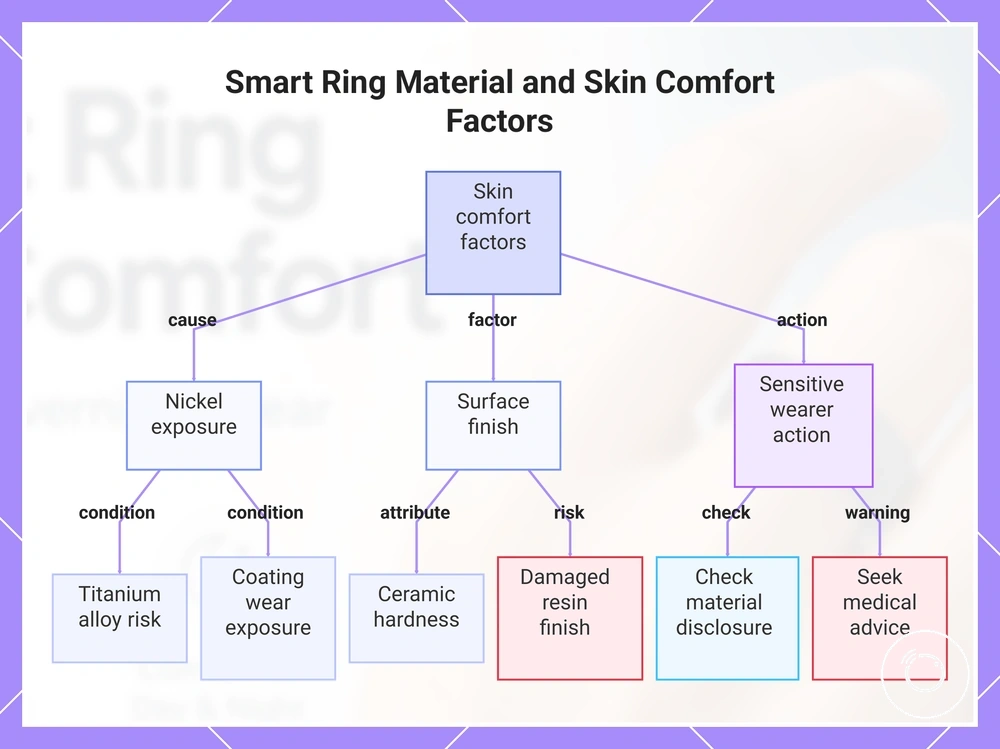
Titanium is sometimes assumed to be suitable for every sensitive wearer, yet nickel exposure can remain a contact issue when alloy components, plating, or coating wear alter the exposed surface. Ceramic hardness creates a firm contact surface, while a rough or damaged resin finish can increase local discomfort for a sensitive wearer. These conditions do not make either material universally irritating; they show why nickel content, coating condition, and surface finish require separate qualification.
Check the material disclosure when a known allergy or skin sensitivity exists. If nickel content, coating, plating, or mixed construction is not clearly disclosed, treat the uncertainty as an allergy caution and seek medical advice for a confirmed or suspected material allergy.
This chart explains why the material name alone does not determine skin comfort for smart rings and what factors to consider for sensitive wearers.
Sensor surfaces, coatings, and smooth inner edges
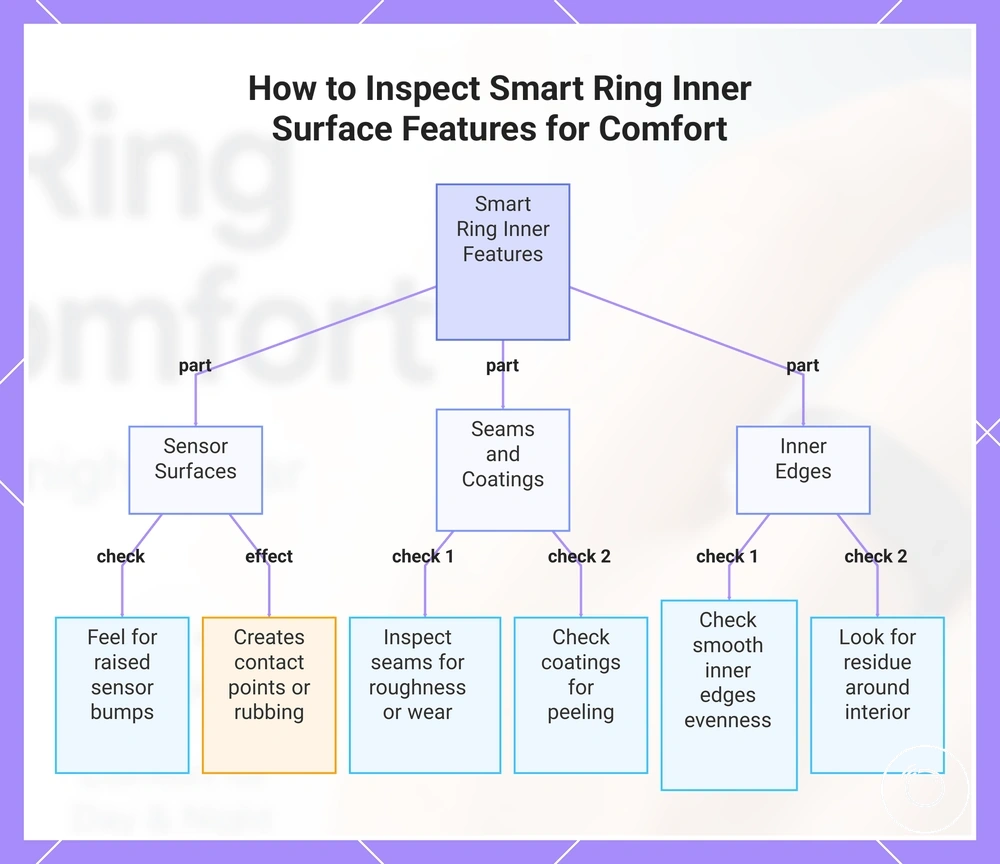
Sensor surfaces, coatings, and smooth inner edges define how the inner surface of a smart ring feels against the skin beyond its outer material. Raised sensors, seams, polished edges, and contact points can influence rubbing, pressure focus, and overall comfort when they repeatedly touch the same area. These inner-surface features are the most relevant areas to inspect for skin contact.
Sensor surfaces, coatings, and smooth inner edges should be checked where the ring makes continuous skin contact.
- Feel for raised sensors or sensor bumps that create noticeable contact points or rubbing during normal wear.
- Inspect seams and coatings for roughness, wear, or peeling that could increase cleaning difficulty or skin friction.
- Check that smooth inner edges and polished edges feel even rather than creating concentrated pressure on one area.
- Look for residue around the ring interior, seams, or sensor surfaces because these areas can require more careful cleaning.
These visible and touchable features can help explain comfort differences without indicating sensor accuracy or technical performance. The inspection can be performed safely by sight and touch while considering that comfort remains influenced by fit, finish, and individual skin sensitivity.
This chart shows the main inner surface features of a smart ring and the specific checks to perform to identify potential comfort issues.
Rash, redness, numbness, and other warning signs
Persistent rash, pain, swelling, numbness, or worsening redness means you should remove the ring and assess the affected skin before wearing it again. If these warning signs continue after removal or become more severe, pause wear and seek medical advice.
Rash, redness, numbness, and other warning signs should be interpreted by severity and persistence rather than appearance alone. Mild discomfort may reflect temporary pressure or friction, while persistent itching, swelling, pain, or altered sensation warrants a more cautious response. The table groups each symptom by a likely concern and a conservative next step.
| Symptom | Likely concern | Conservative response |
|---|---|---|
| Persistent rash or worsening redness | Ongoing irritation from friction, trapped moisture, or skin sensitivity | Remove the ring, clean and dry the skin, pause wear, and seek medical advice if the symptom persists or worsens. |
| Itching | Possible allergy or material sensitivity | Remove the ring, pause wear, and review the ring's material disclosure before wearing it again. |
| Swelling or increasing pain | Pressure from a fit that has become too restrictive | Remove the ring promptly and do not resume wear while swelling or pain remains. Seek medical advice if either symptom continues. |
| Numbness | Possible circulation restriction caused by excessive pressure | Remove the ring immediately and pause wear. Seek medical advice if normal sensation does not return after removal. |
These symptoms do not identify a medical condition by themselves; they indicate when continued ring contact is no longer a conservative choice. Cleaning, drying, resizing, or pausing wear may address a contact-related concern, but persistent or worsening warning signs require medical advice rather than continued self-testing.
A mild temporary mark that fades after the ring is removed differs from persistent rash, worsening redness, pain, swelling, numbness, ongoing itching, or broken skin. Temporary marks can be monitored, but warning signs that persist or intensify should not be ignored.
Skin irritation versus material allergy
Skin irritation and a possible material allergy can look similar, so the reaction pattern should be interpreted cautiously rather than by appearance alone. Trigger timing, location, itch, swelling, recurrence, cleaning, and fit provide more useful context for understanding the reaction. Similar-looking skin changes can have different causes.
Reaction patterns become easier to compare when the timing and circumstances of the reaction are considered instead of assuming a definite cause.
| Likely irritation pattern | Possible allergy pattern |
|---|---|
| Often follows friction, moisture, residue, inadequate cleaning, or an unsuitable fit. The reaction usually stays where the ring contacts the skin and may improve after cleaning, drying, adjusting the fit, or pausing wear. | May recur after re-wear, is more likely to involve persistent itch or swelling, and may continue despite cleaning or fit adjustment. This recurring reaction pattern supports a cautious interpretation rather than a definite cause. |
No reaction pattern can confirm a material allergy without professional evaluation. If the same reaction recurs after cleaning and fit adjustments, pause wear and seek medical advice instead of assuming a material allergy or another definite cause.
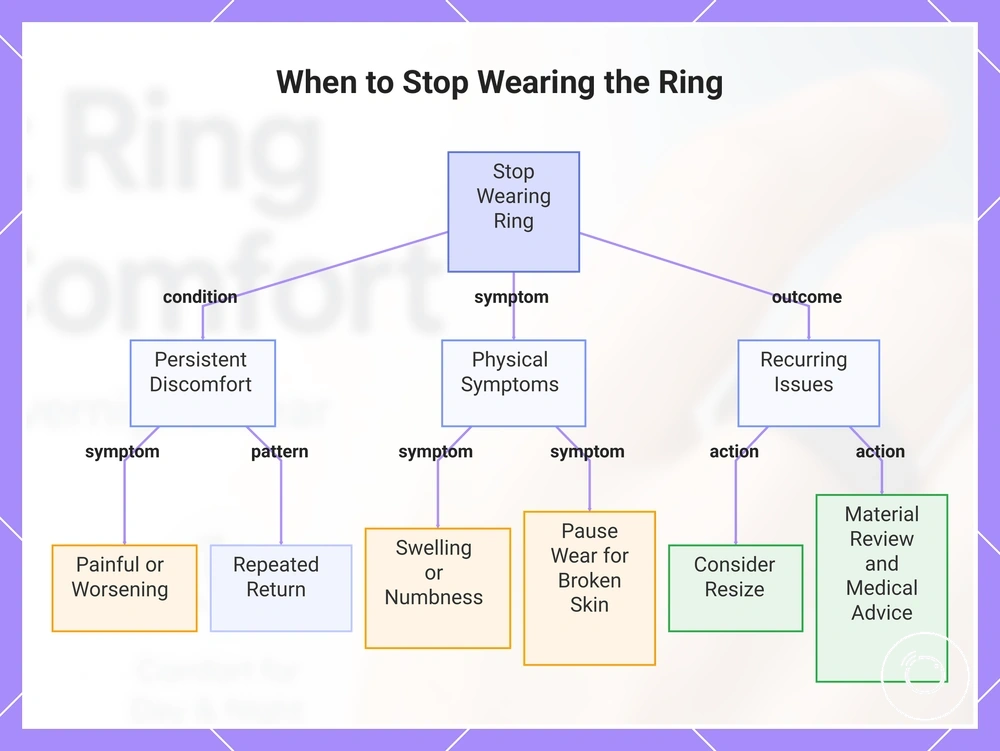
When to stop wearing the ring
Stop wearing the ring and remove the ring when persistent discomfort becomes painful, is getting worse, causes swelling or numbness, or is linked to broken skin. These symptoms represent a practical threshold for pausing wear until the skin has recovered and the cause has been reassessed.
When to stop wearing the ring depends on symptom severity and persistence rather than on minor, short-lived comfort changes.
- Remove the ring if persistent discomfort continues or repeatedly returns during normal wear.
- Stop wearing the ring if swelling, numbness, or increasing tightness affects normal circulation feeling.
- Pause wear if broken skin develops or the skin barrier is no longer intact, and allow appropriate recovery time before considering re-wear.
- Consider a resize if recurring pressure or tightness continues despite correct positioning.
- Review the ring material and seek medical advice if the same reaction recurs after cleaning, fit adjustments, and cautious re-wear.
Recovery time should be guided by whether the skin has fully recovered rather than by a fixed timeline. Re-wear cautiously only after symptoms have resolved, reassess the fit and material review if discomfort returns, and seek medical advice if symptoms persist, worsen, or continue after overnight wear.
This chart shows the main symptoms and conditions that indicate when to stop wearing the ring, along with recommended actions for recurring issues.
Safe overnight wear for sleep tracking
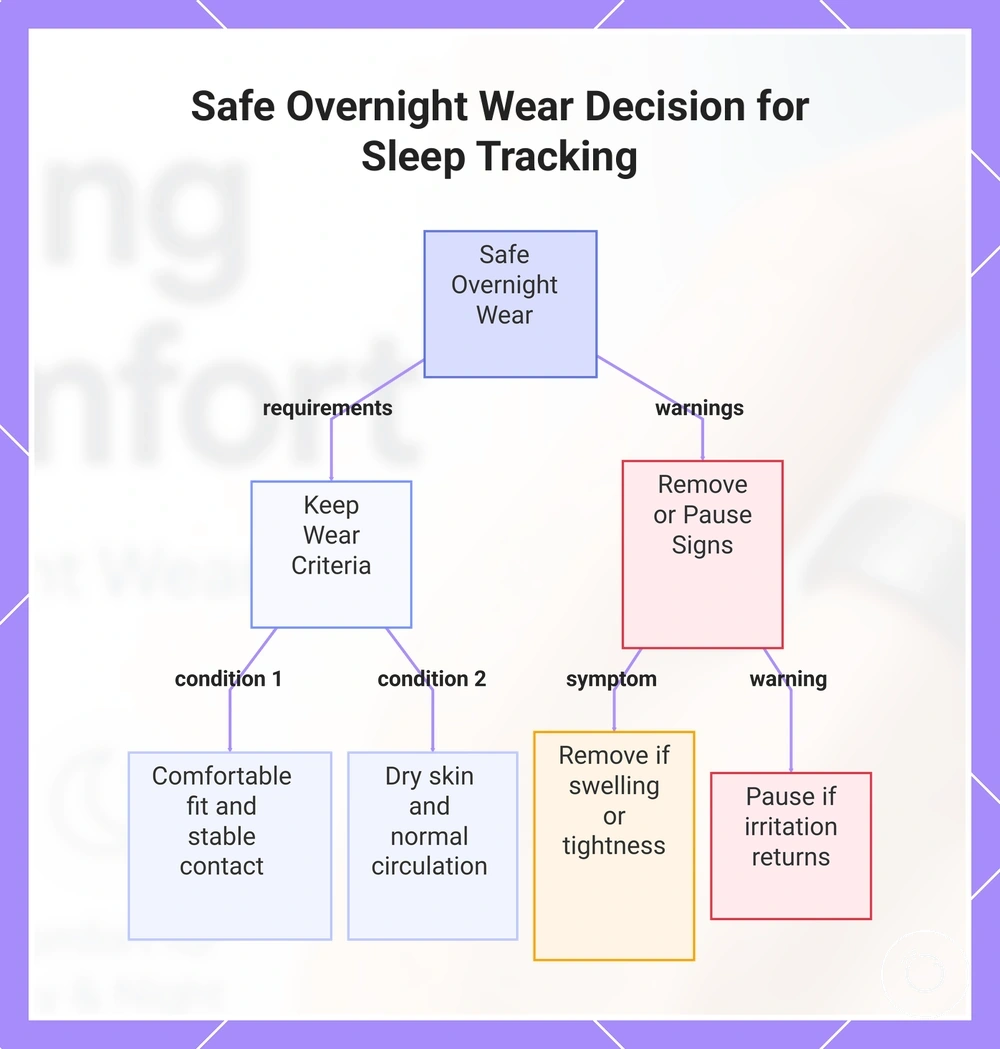
Overnight wear for sleep tracking can be appropriate when the ring fits comfortably, the skin is dry, circulation feels normal, and no irritation is developing. If the ring becomes tight, uncomfortable, or signs of irritation appear, remove the ring rather than continuing overnight wear.
Overnight wear means keeping the ring on throughout sleep so sensor contact can be maintained for sleep tracking. Safe wear depends on a comfortable fit, dry skin, normal circulation, and stable sensor contact instead of prolonged pressure. Finger swelling, overnight movement, moisture, longer wear duration, and prior irritation can change comfort during sleep and affect whether continued overnight wear remains appropriate.
Overnight suitability should be reassessed whenever skin or comfort conditions change instead of assuming continuous wear is appropriate. A ring that fits well before bedtime may feel tighter if finger swelling develops, while moisture and movement can increase skin friction during sleep. If irritation develops or a previous irritation returns, pause overnight wear until the skin has recovered. The following checklist highlights practical criteria for safer overnight wear.
Safe overnight wear for sleep tracking depends on fit, skin dryness, circulation feeling, and whether prior irritation has occurred. Use the following checklist to decide whether to continue wearing the ring overnight.
- The fit remains comfortable without pressure, and circulation feels normal.
- Dry skin is present before overnight wear begins.
- Sensor contact stays comfortable without increasing pressure during sleep.
- Remove the ring if finger swelling, increasing tightness, discomfort, or irritation develops overnight.
- Pause overnight wear if prior irritation returns until the skin has recovered and the cause has been reassessed.
This section addresses skin and comfort safety during overnight wear, not the broader selection or evaluation of sleep-tracking features. For wider guidance about overnight sleep tracking, refer to the dedicated page.
This chart shows the key criteria for safe overnight wear and the warning signs to remove or pause the ring during sleep tracking.
Comfort checks before sleeping with a smart ring
Comfort checks help confirm whether sleeping with a smart ring is suitable for the night. The pre-sleep check should verify that the ring feels comfortable and remains easy to remove if conditions change.
A ring that feels acceptable during the day may become uncomfortable overnight if the fit is tight, moisture remains beneath it, or the skin condition has changed. Do not wear the ring when numbness, pain, swelling, or broken skin is present. Comfort checks before sleeping with a smart ring verify fit, dryness, skin condition, and circulation feeling.
- Fit: The ring should feel secure without pressure or rubbing, with no numbness and with easy removal still possible.
- Dryness: The finger and ring should be dry before wear; pause until both are dry if moisture remains.
- Skin condition: The contact area should show no active irritation, broken skin, or worsening redness; pause wear when these signs are present.
- Circulation feeling: The finger should feel normal, without swelling, tingling, numbness, or unusual tightness; remove the ring if these symptoms appear.
- Finger choice: Switch finger only when the alternative finger has a comfortable fit, dry skin, normal circulation feeling, and no irritation.
If every check passes, the ring may remain on overnight; if a check fails, remove it, switch finger only when the alternative finger meets the same conditions, or pause wear until the problem resolves. For broader positioning and everyday usage guidance, see how to wear a fitness smart ring.
EMF, heat, and continuous wear concerns
EMF, heat, and continuous wear are separate concern types and should be assessed by practical risk rather than treated as a single issue. Skin-contact concerns relate to comfort during prolonged contact, while charging state, battery behavior, and wireless function belong to broader electronic-device safety. This distinction separates skin comfort from wider device concerns.
Boundary clarification: EMF, heat, and continuous wear concerns should be separated by practical risk type. EMF and wireless function should be treated as qualified device concerns that require manufacturer guidance, while noticeable heat, charging, damage, or abnormal battery behavior require an immediate practical response.
If the ring feels hot, remove it and stop wearing it until the cause has been checked. Remove the ring during charging unless manufacturer guidance explicitly permits wear in that charging state, and stop using a damaged device or one showing unusual battery behavior. Continuous wear remains appropriate only while skin contact stays comfortable and no heat or device damage is present.
Skin-friendly care habits for long-term smart ring wear
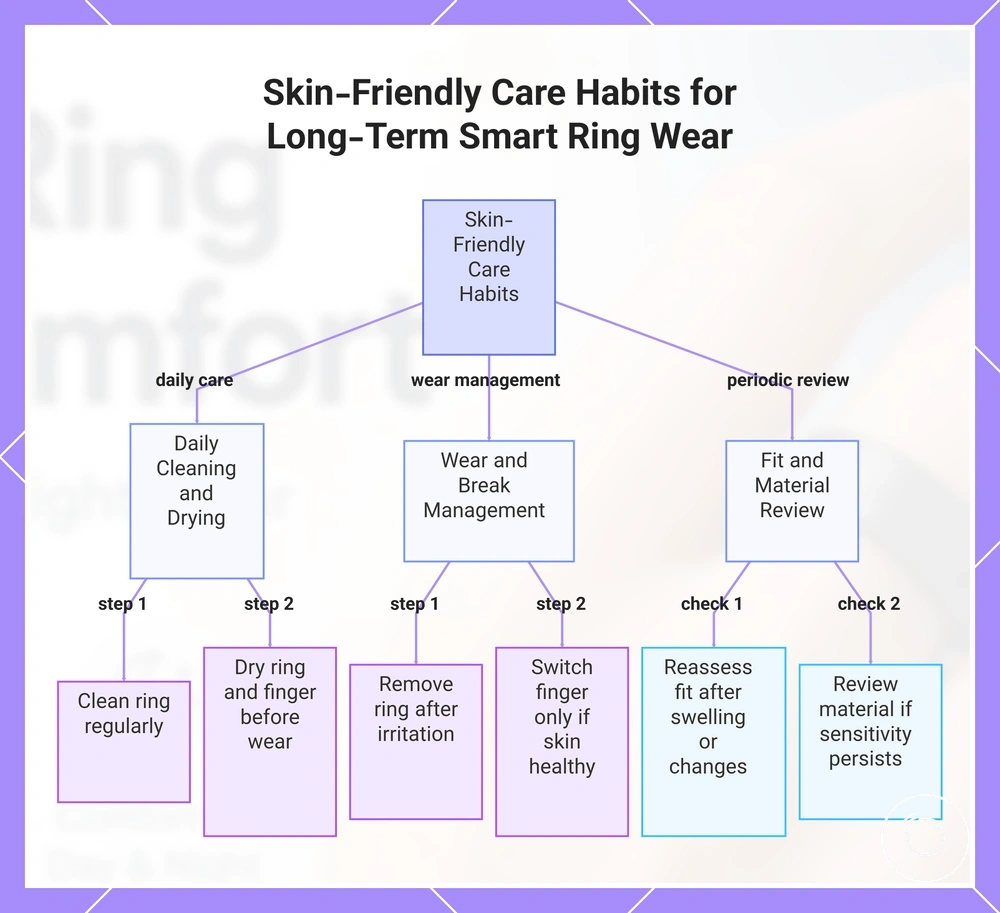
Skin-friendly care habits for long-term smart ring wear keep the ring and skin clean, dry, and comfortable during regular use. These maintenance habits reduce recurring exposure to residue, moisture, friction, and sensitivity triggers without correcting an unsuitable fit or material reaction. Long-term comfort depends on consistent care and timely wear breaks.
Residue, trapped moisture, and fit changes can reduce comfort even when the ring initially feels suitable. Cleaning and drying the ring, rotating wear when appropriate, removing it after irritation, and checking fit after swelling or other physical changes help limit repeated friction and moisture. The checklist below groups the main maintenance habits.
- Cleaning: Clean the ring regularly to reduce residue that can increase friction against the skin.
- Drying: Dry both the ring and finger before wearing to prevent moisture from remaining under the ring.
- Wear breaks: Remove the ring after irritation and pause wear until the skin has recovered.
- Rotating wear: Switch finger only when the alternative finger has healthy skin and a comfortable fit.
- Fit changes: Reassess the fit if swelling or physical changes make the ring feel tighter, looser, or less comfortable.
- Material comfort: Review the material and surface finish when sensitivity or rubbing continues despite regular cleaning and drying.
If discomfort returns despite consistent care, review whether the ring still suits the finger and skin. A different material, smoother design, lighter ring, or better fit may be relevant when residue has been removed but pressure, rubbing, or sensitivity continues. Care habits should not be used to override an allergy or persistently poor fit.
Daily care should keep cleaning, drying, wear breaks, and fit awareness simple and consistent. When comparing long-term comfort criteria, review materials and daily wear alongside fit, surface finish, weight, and skin response.
Long-term wear is more manageable when decision signals such as recurring irritation, pressure, moisture, or sensitivity prompt a material or fit review.
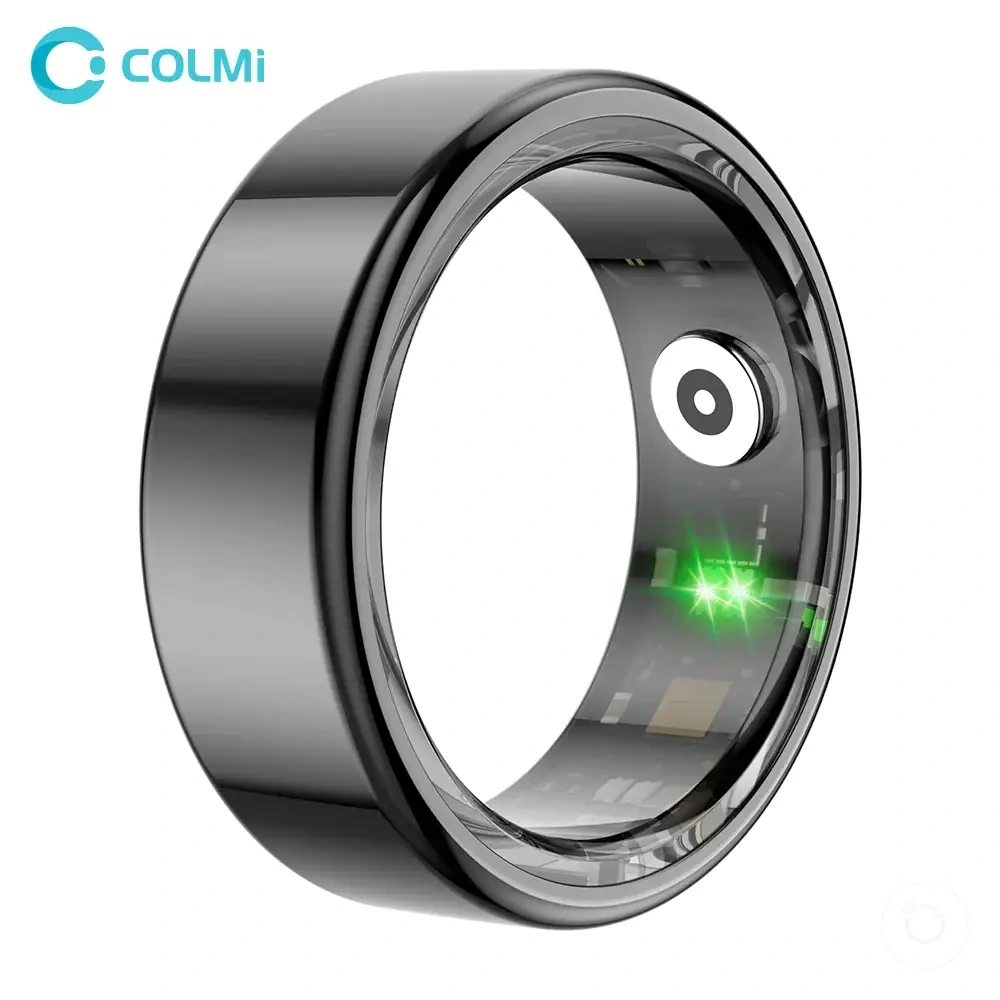
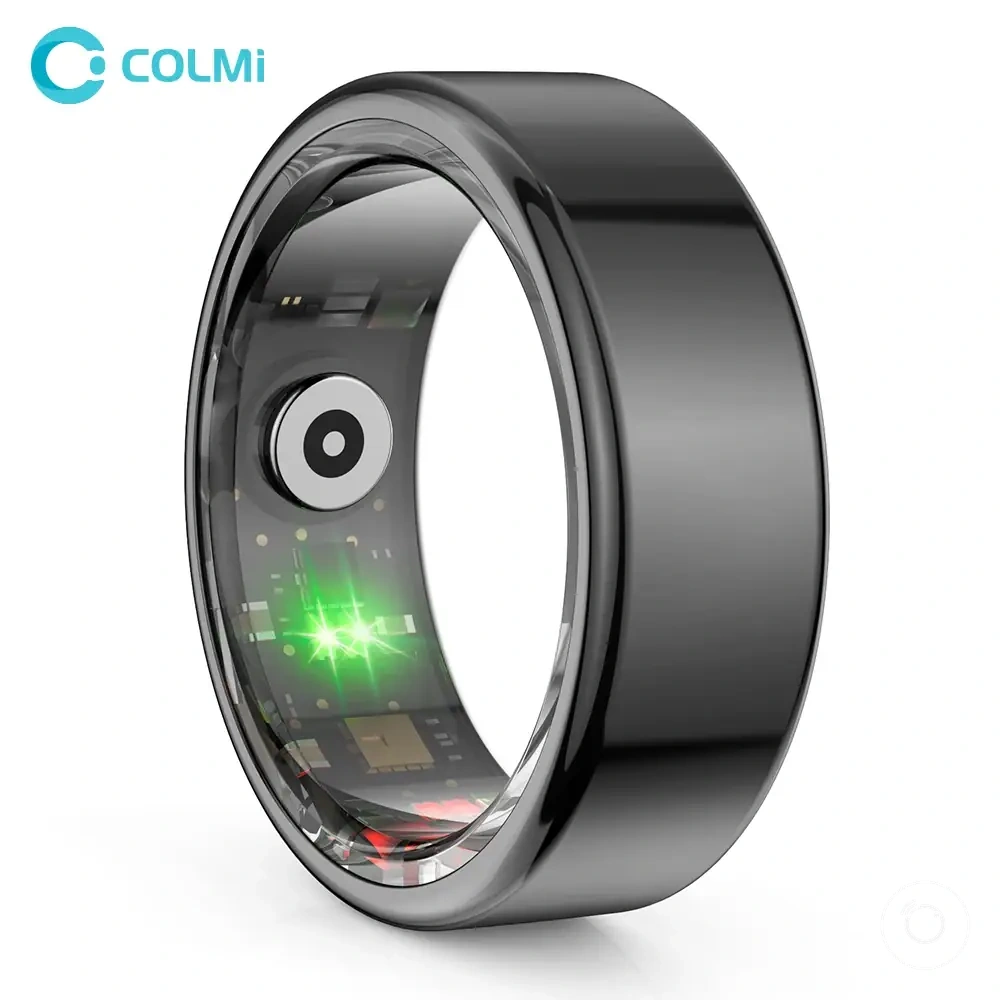
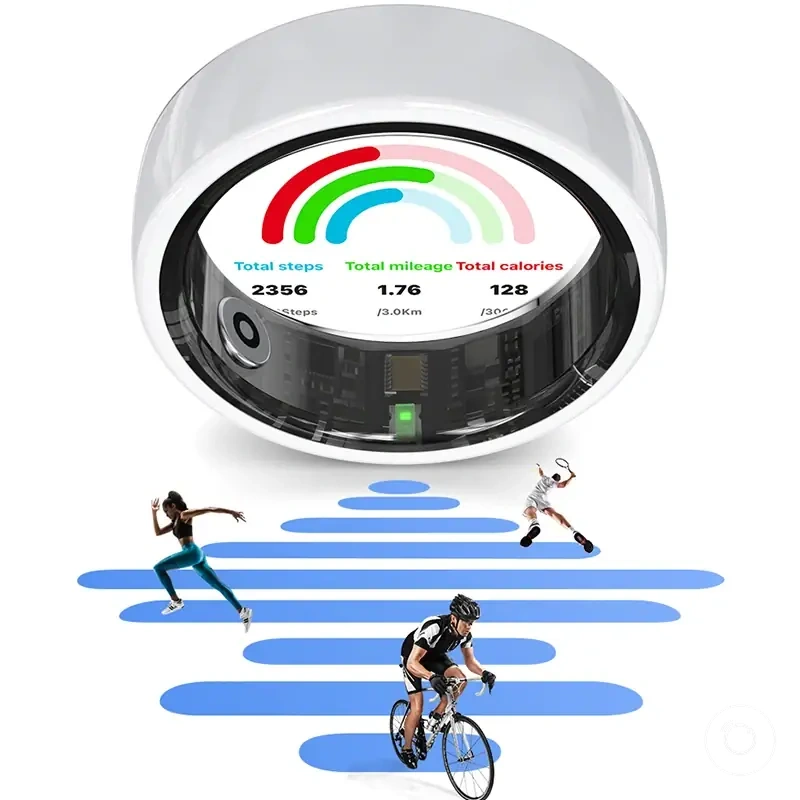
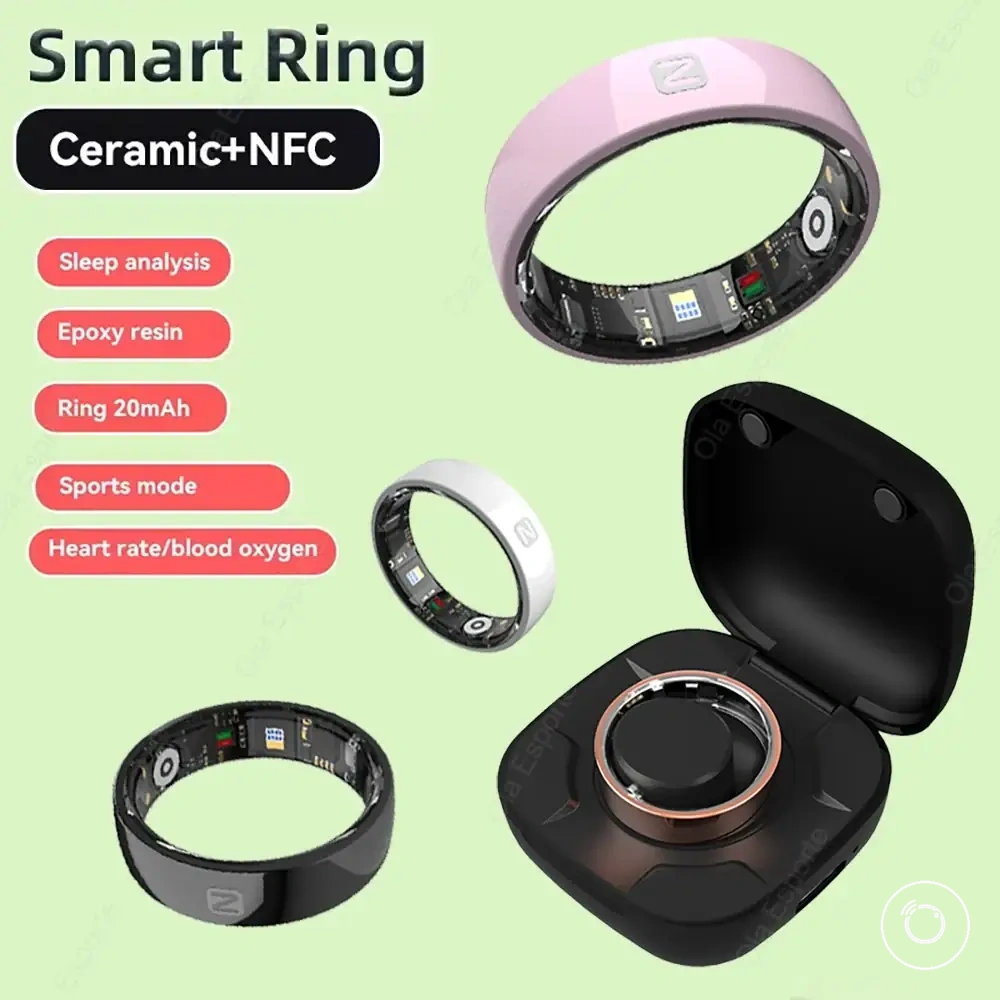
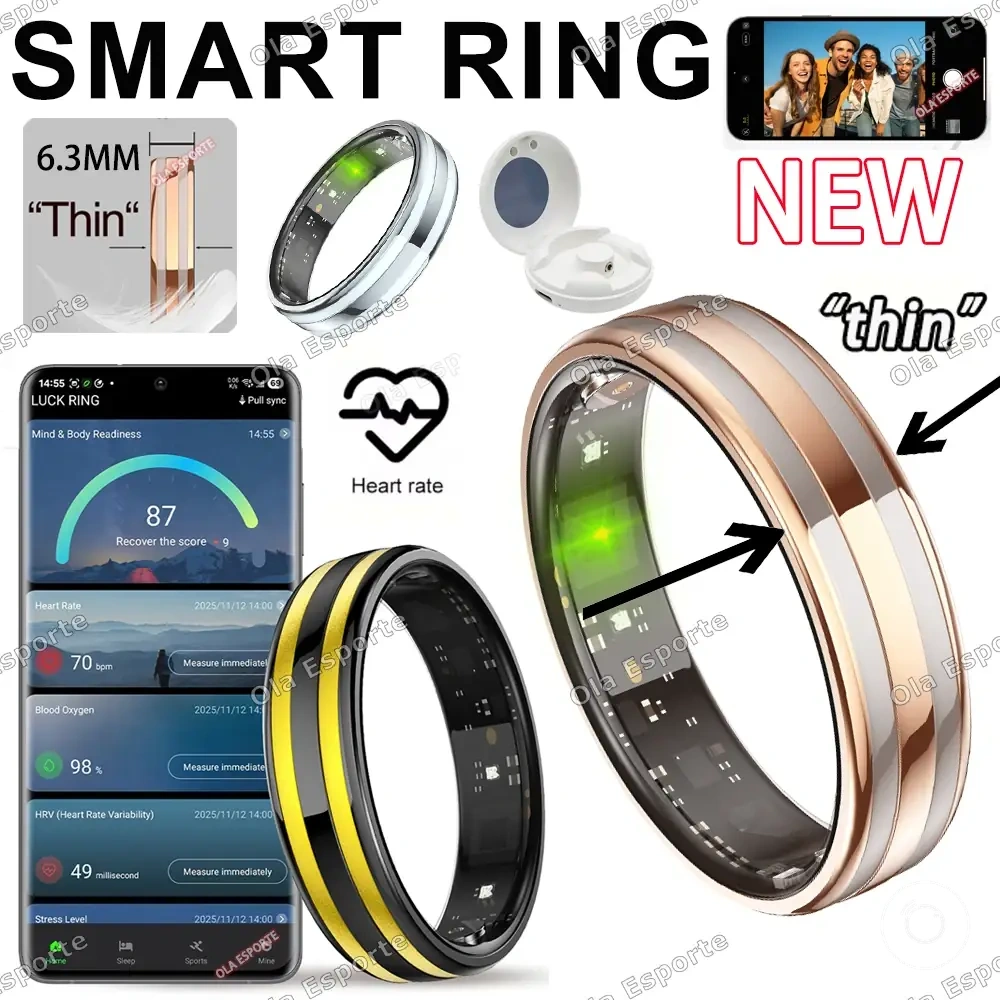
Here are product examples that may make comparison easier. Before buying, always review the compatibility criteria, essential features, and product details.
This chart shows the main care habits to keep the ring and skin clean, dry, and comfortable during regular use.