Fitness Smart Ring Materials, Durability, and Water Resistance
A fitness smart ring is a compact wearable whose durability is shaped by its shell material, coating, water resistance rating, scratch resistance, and exposure during daily wear. A harder shell or protective material finish may reduce visible surface wear, while comfort is determined by the ring’s shape, skin-contact surface, and fit during long wear. Durability is separate from tracking accuracy, sizing accuracy, and battery lifespan because those attributes describe different parts of performance. Fitness smart ring durability therefore varies by material, published rating, and use context.
Daily wear may expose a fitness smart ring to hand washing, rain, sweat, workouts, sleep, hard surfaces, and repeated handling. Water resistance should be treated as a stated wet-use limit under defined pressure and exposure conditions, not as universal protection for every activity. Scratch visibility is influenced by the coating, shell hardness, surface finish, and contact with abrasive or harder objects, while impact risk increases during lifting, manual work, or exercises that press the ring against equipment. These situations make the ring’s material specification and published rating the relevant evidence for deciding when to wear or remove it.
Read durability claims by matching each attribute to an explicit value or condition: identify the shell and coating materials, confirm the stated water resistance rating, check the permitted water activities, and review any care or removal guidance for impact-heavy use. When a manufacturer does not specify a scratch-resistance level, wet-use condition, or material finish, that attribute remains unconfirmed and should not be assumed from appearance alone. Use the fitness smart ring guide to connect these durability factors with the wider selection process.
What Durability Means for a Fitness Smart Ring
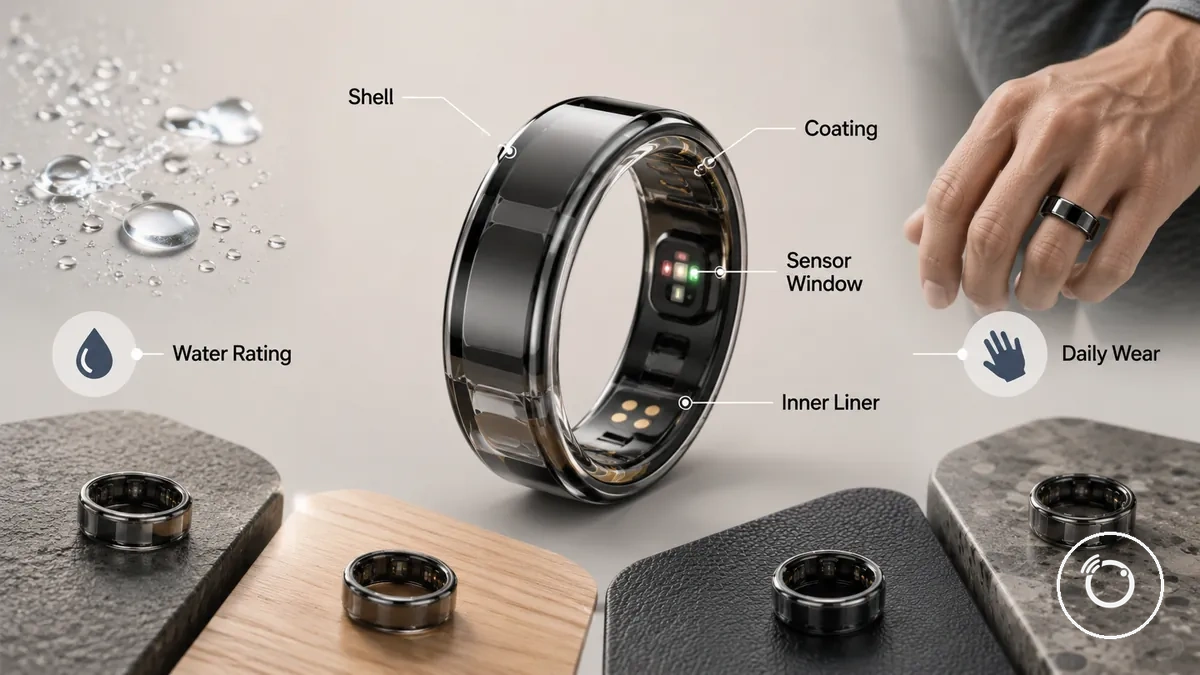
Durability for a fitness smart ring means resistance to ordinary wear, moisture exposure, surface damage, pressure, and reduced comfort over time. The image for What Durability Means for a Fitness Smart Ring labels the shell, coating, sensor window, inner liner, and surface finish that influence wear during daily use. Fitness smart ring durability is therefore a set of connected attributes rather than a single fixed score.
Simple resistance claims can mislead when they omit the exposure condition or the part of the ring being assessed. A water rating describes resistance under its stated exposure and pressure conditions, while scratch visibility reflects the coating, finish, and contact with harder or abrasive objects. Pressure during workouts or handling creates a different risk from moisture during daily wear, and comfort during long wear is supported when the inner surface remains smooth against the skin. Everyday durability is separate from sizing accuracy, battery lifespan, and tracking accuracy.
- Shell: The outer structure provides the main barrier against pressure and contact, with practical resistance limited by the shell material and the force of impact exposure.
- Coating: The surface layer influences scratch visibility and cosmetic wear, especially where daily contact repeatedly affects the finish.
- Sensor window: The inner sensor window remains a durability signal when its surface stays intact, clean, and suitable for continued skin contact.
- Inner liner: The inner surface supports comfort when it remains smooth during extended wear and does not develop rough or damaged contact points.
- Water rating: The stated rating defines a conditional wet-use limit based on the specified exposure and pressure conditions rather than unrestricted water use.
- Wear duration: Longer daily wear increases cumulative contact with moisture, surfaces, and equipment, making care and removal decisions part of the practical durability outcome.
Smart Ring Material Types and Wear Trade-Offs
Smart ring materials influence strength, weight, finish feel, scratch behaviour, and perceived comfort through the properties of the shell and its coating rather than through a single measure of quality. Titanium, ceramic, and stainless steel represent different material trade-offs because each combines hardness, weight, surface finish, and wear characteristics in a different way. Coatings can also change how cosmetic wear appears during everyday use without making one shell material universally superior. The table compares material attributes rather than products.
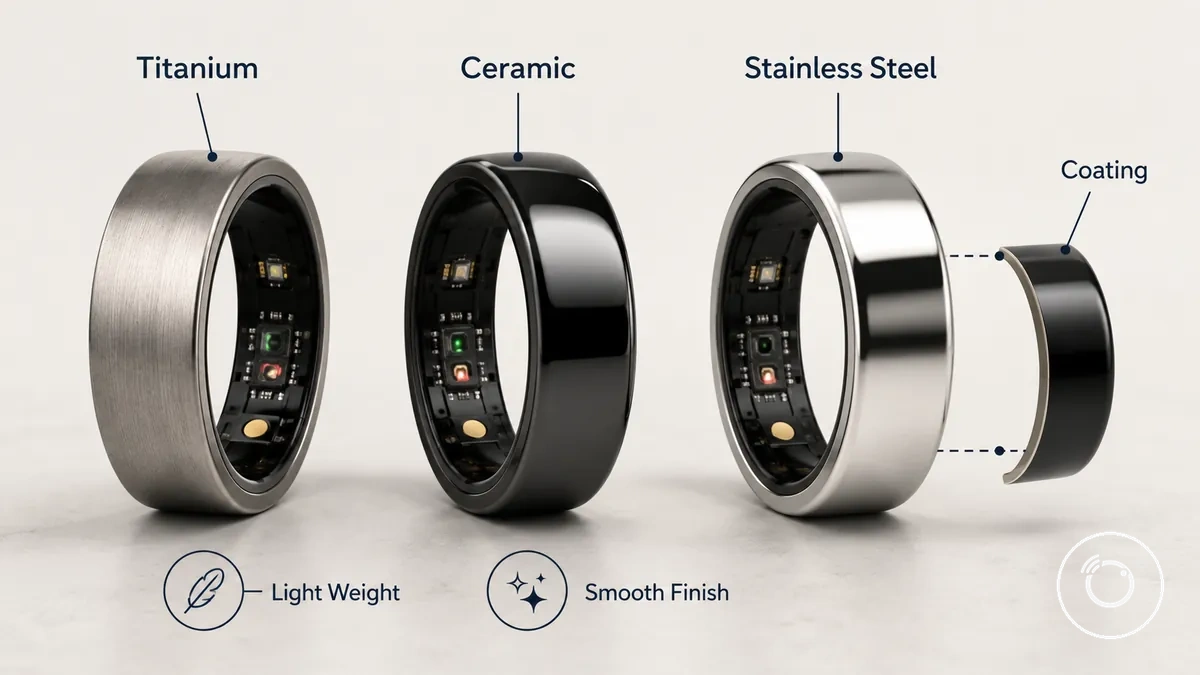
Simple material comparisons can be misleading when they focus on only one attribute such as hardness or scratch behaviour. A more useful interpretation considers shell material together with coating, weight, finish feel, comfort, and the expected wear condition because these attributes interact during daily use. The comparison below uses durability benefit, common limitation, comfort implication, and best use condition as its evaluation criteria.
| Material type | Durability benefit | Common limitation | Comfort implication | Best use condition |
|---|---|---|---|---|
| Titanium | High strength with relatively low weight; a coating may reduce visible cosmetic wear during ordinary use. | Surface coating can show wear after repeated contact with abrasive materials. | Lower weight may improve comfort during extended wear. | Frequent daily wear where a lighter metal shell is preferred. |
| Ceramic | Hard, smooth shell that can reduce scratch visibility during ordinary contact. | Higher hardness is commonly associated with greater brittleness under stronger impacts. | Smooth finish may provide a comfortable skin-contact surface. | Routine wear where finish appearance is an important consideration. |
| Stainless steel | Strong metal shell with good resistance to everyday handling. | Higher weight and gradual finish wear may become more noticeable over time. | A heavier shell can create a more substantial feel on the finger. | Daily wear where a solid metal feel is preferred. |
| Coated shell finishes | Surface coatings can improve finish appearance and reduce early cosmetic wear. | The coating layer may wear before the underlying shell material. | Comfort is primarily influenced by the smoothness of the finished contact surface. | Use where finish appearance is an important decision factor. |
These trade-offs help compare material characteristics without declaring a universal winner. Matching shell material, coating, and comfort expectations to the intended wear conditions provides a more practical basis for evaluation than focusing on a single attribute.
Titanium Alloy and Coated Metal Shells
Titanium alloy and coated metal shells combine a lightweight, strong metal shell with a surface coating that influences colour finish and scratch visibility. The titanium alloy forms the structural shell, while the coating determines much of the visible surface appearance during daily contact. The main trade-off is that the coating and the underlying shell can show wear differently over time.
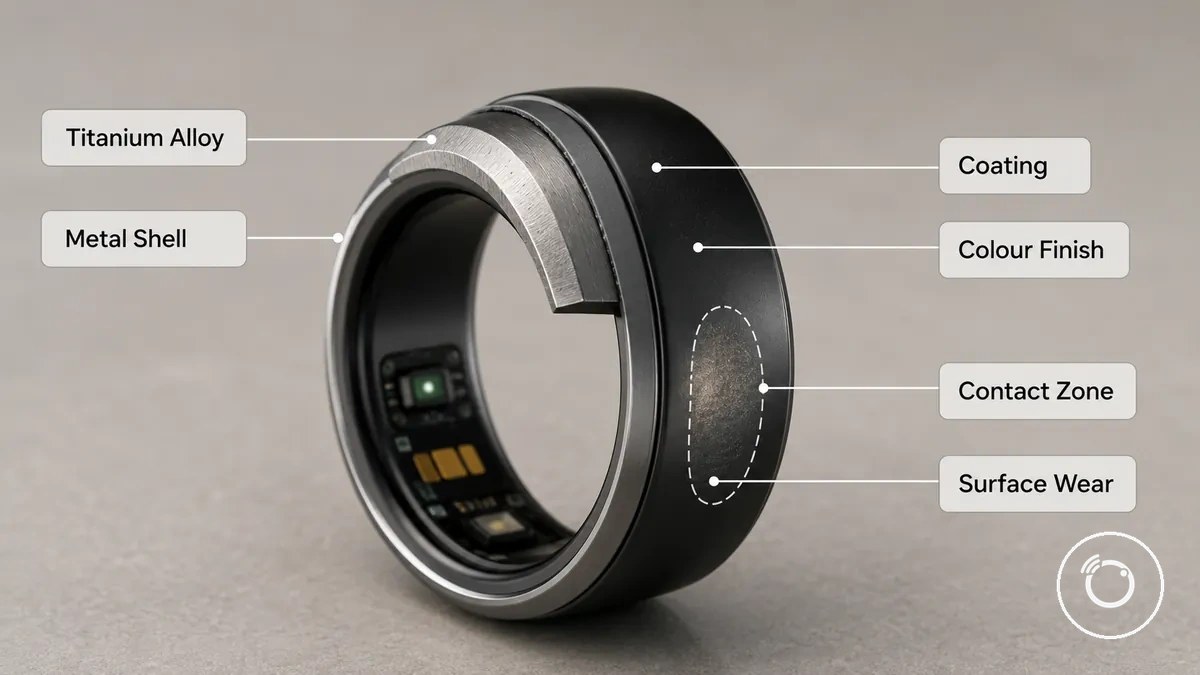
Titanium alloy and coated metal shells should be evaluated by considering both the base shell and the surface finish.
- Strength and weight: The titanium alloy shell provides a strong structure with relatively low weight, although the overall result is also influenced by shell thickness and ring design.
- Coating and colour finish: The coated metal shell provides the visible colour finish, and the coating layer may show cosmetic wear before the underlying metal shell.
- Scratch visibility: Surface marks are influenced by the coating, finish texture, and repeated daily contact, so visible wear may differ even between rings using similar titanium alloy shells.
- Comfort: A smooth coated finish may support a comfortable skin-contact surface while it remains intact during normal daily wear.
Expect the appearance of a titanium smart ring to reflect both the condition of its coating and the underlying shell rather than assuming every coated finish wears in the same way.
Ceramic Shells and Brittleness Trade-Offs
A ceramic shell is a hard, smooth material option that can keep scratch visibility relatively low during ordinary surface contact and help maintain finish stability. Its hardness supports resistance to surface marks, while its brittleness creates a different impact risk under drops or concentrated pressure. The main trade-off is stronger resistance to surface wear but less tolerance for certain impact conditions.
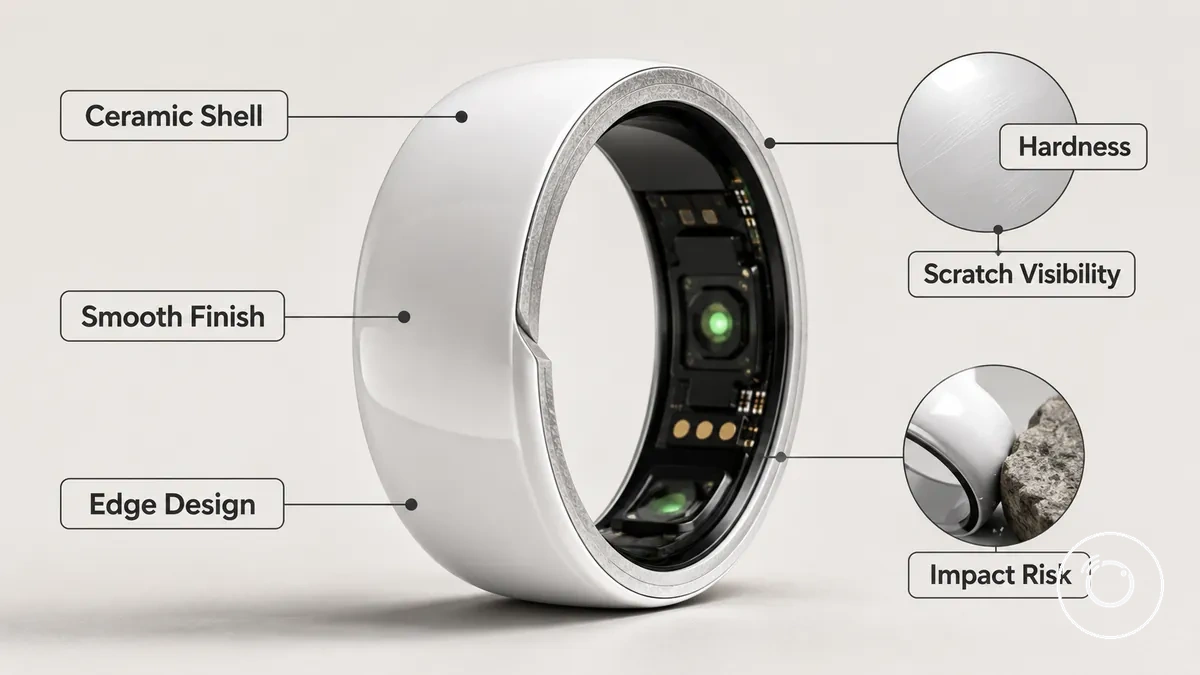
During drops, high-contact use, or pressure applied near an exposed edge, a ceramic shell may face a higher break risk because brittle materials respond less flexibly to impact than to abrasion. Edge design and shell geometry can reduce or increase pressure concentration, which affects comfort, visible damage, and finish stability during daily wear. A ceramic smart ring is therefore better assessed by both scratch visibility and the specific impact or pressure conditions it is likely to encounter.
Inner Liners, Coatings, and Skin-Contact Surfaces
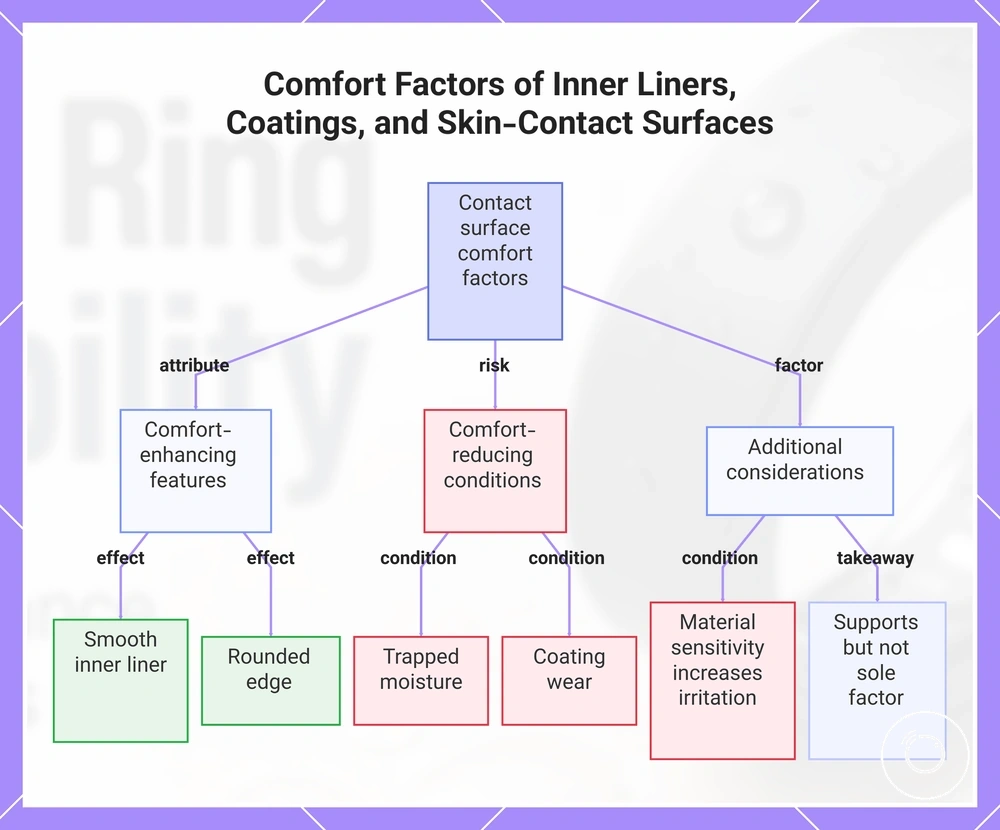
An inner liner, coating, and skin-contact surface are the parts of a fitness smart ring that rest directly against the finger. Their texture, coating condition, and edge profile influence long-wear comfort by affecting how smoothly the ring sits against the skin. These material surfaces support comfort but do not determine it on their own.
When trapped moisture, coating wear, or an uneven edge profile is present, a skin-contact surface may feel less comfortable during extended wear, particularly for a person with material sensitivity. Reviewing Inner Liners, Coatings, and Skin-Contact Surfaces helps verify the contact-surface factors linked to comfort and irritation risk.
- A smooth inner liner may reduce friction during daily wear.
- A rounded edge profile may reduce concentrated pressure at the contact surface.
- A stable coating provides a more consistent skin-contact surface while the finish remains intact.
- Lower moisture retention reduces the time trapped moisture remains against the finger.
- Material sensitivity can increase irritation risk during prolonged contact with a particular surface material.
Material comfort supports, but does not replace, correct sizing and fit. Broader skin comfort considerations are covered in the dedicated guide.
This chart shows the key positive attributes, risk conditions, and additional considerations that affect long-wear comfort of a fitness smart ring's skin-contact surfaces.
Water Resistance Ratings and Wet-Use Limits
A water resistance rating describes the test conditions under which a fitness smart ring has been evaluated for water exposure. The rating must be interpreted together with pressure conditions, seal integrity, charging contacts, exposure type, and the manufacturer limit. Marketing wording such as “waterproof” should not be treated as blanket permission for every wet-use situation without checking the published rating. Water resistance ratings describe tested conditions, not all wet-use outcomes.
Real-world exposure can differ from laboratory testing because pressure, repeated exposure, worn seals, and moisture around charging contacts may increase practical risk. Fresh water, shower products, heat, saltwater, and repeated immersion can create conditions outside the original test environment or stated wet-use limits. Before relying on a water rating, compare the stated exposure with the intended use and review the rating language below.
| Rating language | What it usually indicates | What it does not guarantee | What to verify |
|---|---|---|---|
| Water-resistant | A defined level of moisture exposure under stated test conditions. | Suitable use in every activity or water environment. | The manufacturer limit and permitted exposure type. |
| Immersion rating | Testing under specified immersion and pressure conditions. | Permission for unrestricted depth, duration, or repeated immersion. | The stated pressure condition, exposure type, and wet-use limit. |
| Waterproof claim | Marketing language that still requires interpretation through a published rating. | Protection during swimming, showering, saltwater exposure, or heat in all conditions. | The formal water resistance rating and the manufacturer’s stated exclusions. |
Verify the model’s stated rating, test conditions, permitted exposure type, seal-related limitations, charging contact guidance, and manufacturer limit before wet use. Remove the ring when the planned exposure falls outside those published conditions or when the seals or charging contacts show damage.
IP Ratings, ATM Ratings, and Depth Claims
An IP rating, ATM rating, and depth claim describe different ways of organising water-resistance test conditions. An IP rating refers to tested exposure involving solids and water, an ATM rating refers to a stated pressure assumption, and a depth claim presents immersion wording linked to specified conditions. Each rating label has a limitation because practical meaning depends on the test context.
Static test pressure is not equivalent to the changing pressure created by movement, impact, or repeated immersion. Practical interpretation therefore requires matching the rating type with its tested exposure and model guidance rather than treating IP, ATM, and depth wording as interchangeable.
| Rating type | What it tests | What users may misread | Practical interpretation |
|---|---|---|---|
| IP rating | Resistance to defined dust, splash, spray, or immersion exposure under the stated code. | That every IP rating permits prolonged immersion or a specific water activity. | Read the complete rating and the stated exposure condition before wet use. |
| ATM rating | Resistance under a specified pressure test condition. | That the pressure rating provides unrestricted use at the corresponding depth. | Check whether the model guidance permits the intended activity and exposure pattern. |
| Depth claim | A stated depth or immersion condition linked to the product’s test wording. | That the depth wording applies to unrestricted duration, movement, heat, or repeated exposure. | Confirm the stated pressure assumption, exposure type, duration, and limitation attached to the claim. |
Waterproof Claims Versus Water-Resistant Use
Waterproof claims should not be treated as unlimited water protection for a fitness smart ring. Claim wording describes a marketing or product statement, while a supporting technical rating defines the tested conditions and exposure limit behind that statement. The difference between claim wording and rating evidence is essential for interpreting real-use conditions.
| Claim wording | Practical interpretation |
|---|---|
| Waterproof claim | Look for a supporting technical rating, stated exposure limit, and any listed exception before treating the claim as suitable for immersion or another wet-use activity. |
| Water-resistant claim | Interpret water-resistant use within the published technical rating and manufacturer guidance rather than as automatic approval for swimming or prolonged water exposure. |
| Marketing wording without a supporting rating | The protection level is not clearly defined; verify the tested conditions and stated limitations before exposing the ring to wet conditions. |
Compare waterproof claims with the supporting rating, intended exposure, stated pressure or immersion condition, and any published exposure limit before deciding whether a specific activity is appropriate. A fitness smart ring may be suitable for a particular wet-use condition only when that condition falls within its verified rating, while use beyond those limits increases practical risk. Avoid interpreting either waterproof claims or water-resistant use as absolute protection in every real-use situation.
Swimming, Showering, and Everyday Water Exposure
Swimming, showering, handwashing, sweat, rain, saltwater, and soap exposure create different wet-use conditions for a fitness smart ring. Each situation should be interpreted through the ring’s stated rating, exposure limits, and manufacturer instructions rather than treated as equally suitable.
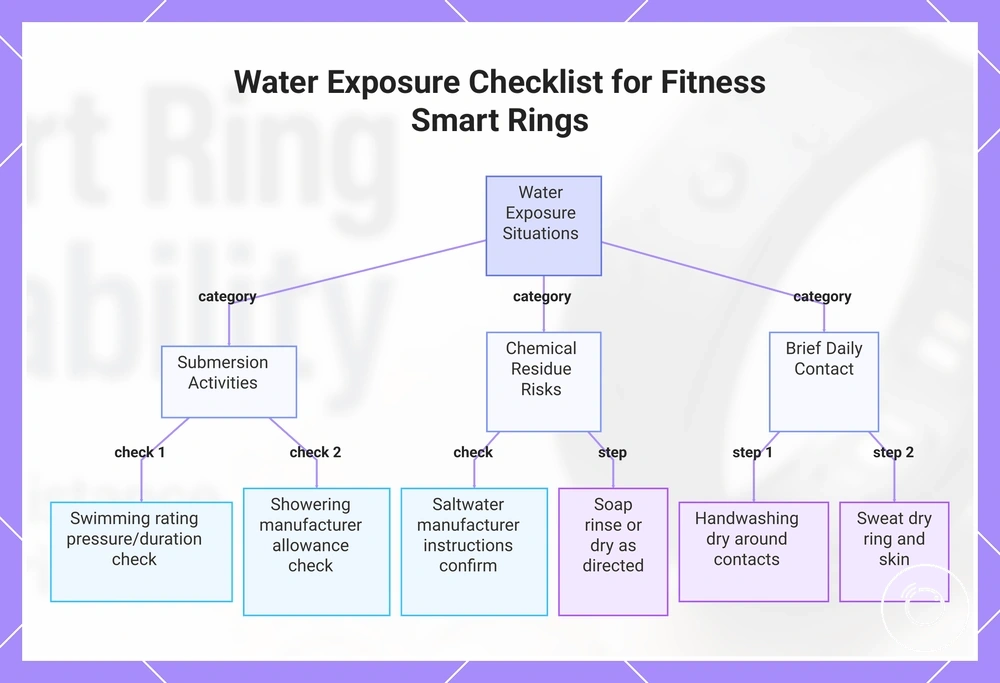
Water pressure, chemical contact, temperature, exposure duration, and drying habit can change the effect of wet exposure. Heat and soap may increase uncertainty around seals or coating condition, while retained moisture may affect comfort or charging contacts. The checklist below matches each water-use situation with its main condition and practical caution.
- Swimming: Check whether the stated rating covers the expected pressure and duration; movement and prolonged immersion may create conditions beyond a basic wet-use allowance.
- Showering: Confirm that manufacturer instructions allow showering because heat and shower products may affect seals, coating, or comfort.
- Handwashing: Brief daily water contact may fit the stated rating, but repeated soap exposure should be followed by drying around the ring and charging contacts.
- Sweat: Wear during exercise may be suitable when sweat exposure is covered by the model guidance; trapped moisture can reduce comfort until the ring and skin are dry.
- Rain: Short rain exposure may fall within the ring’s stated wet-use conditions, while prolonged saturation should be checked against the published exposure limit.
- Saltwater: Use should be confirmed against manufacturer instructions because saltwater combined with poor drying may increase residue around seals and charging contacts.
- Soap exposure: Repeated contact with soap or other wash products may increase practical risk when chemicals remain on the surface, so rinse or dry only as directed for the specific ring.
This chart groups water exposure situations into three categories and shows the key check or action for each.
Scratch Resistance and Surface Finish Wear
Scratch resistance describes how a ring surface responds to abrasion, pressure, and repeated contact rather than immunity to visible marks. Material hardness influences resistance to indentation, while coating thickness and surface finish influence how wear appears over time. Finish colour also affects scratch visibility because marks can contrast with the surrounding surface. Cosmetic wear therefore reflects the combined effect of material, coating, finish, and contact exposure.
Daily habits can expose a fitness smart ring to keys, gym equipment, metal rails, and rough surfaces. Hard or sharp contact may leave visible marks, while repeated rubbing can produce dulling or broader finish wear. These changes may affect appearance without establishing functional failure. The table below connects common surface attributes with likely visible outcomes.
| Surface or finish | Attribute | Contact condition | Likely visible effect |
|---|---|---|---|
| Uncoated hard surface | Material hardness provides the primary resistance to indentation and abrasion. | Sharp contact with keys, metal rails, or rough equipment. | Fine grooves or isolated visible marks may appear where contact pressure is concentrated. |
| Coated surface | Coating thickness determines how much surface material can wear before the underlying layer becomes visible. | Repeated rubbing against gym equipment or rough surfaces. | Local dulling, thinning, or colour contrast may develop as the coating wears. |
| Dark or high-contrast finish colour | Finish colour creates stronger contrast between the outer finish and a lighter mark or exposed layer. | Scraping or edge contact with hard objects. | Scratch visibility may be higher even when the physical mark is shallow. |
| Matte or textured surface finish | The less reflective surface can make minor marks less distinct under ordinary lighting. | Light daily contact and broad surface rubbing. | Fine marks may be less noticeable, while repeated abrasion can create uneven polishing or dulling. |
| Glossy or polished surface finish | The reflective surface makes changes in surface uniformity easier to notice. | Contact with keys, metal edges, or abrasive surfaces. | Hairline scratches and loss of gloss may become more visible under direct light. |
Colour, Coating, and Matte Finish Scratch Visibility
Colour finish and surface appearance influence how noticeable a scratch looks rather than how likely the surface is to scratch. Scratch visibility depends on contrast, texture, light reflection, and coating wear, so similar surface marks may appear more or less obvious depending on the finish. The finish type therefore affects perceived ageing without implying cosmetic marks affect function.
- Dark coating: Higher contrast between the coating and a lighter mark may make scratch visibility increase as the coating wears.
- Polished finish: Strong light reflection can make fine visible marks easier to notice, especially under bright lighting.
- Matte finish: The textured surface scatters light, so minor scratches may appear less distinct, although coating wear can still become visible over time.
- Natural metal appearance: Lower colour contrast may reduce the prominence of small scratches, while gradual abrasion can create a more even finish appearance instead of sharply defined visible marks.
Daily Wear, Comfort, and Ring Shape
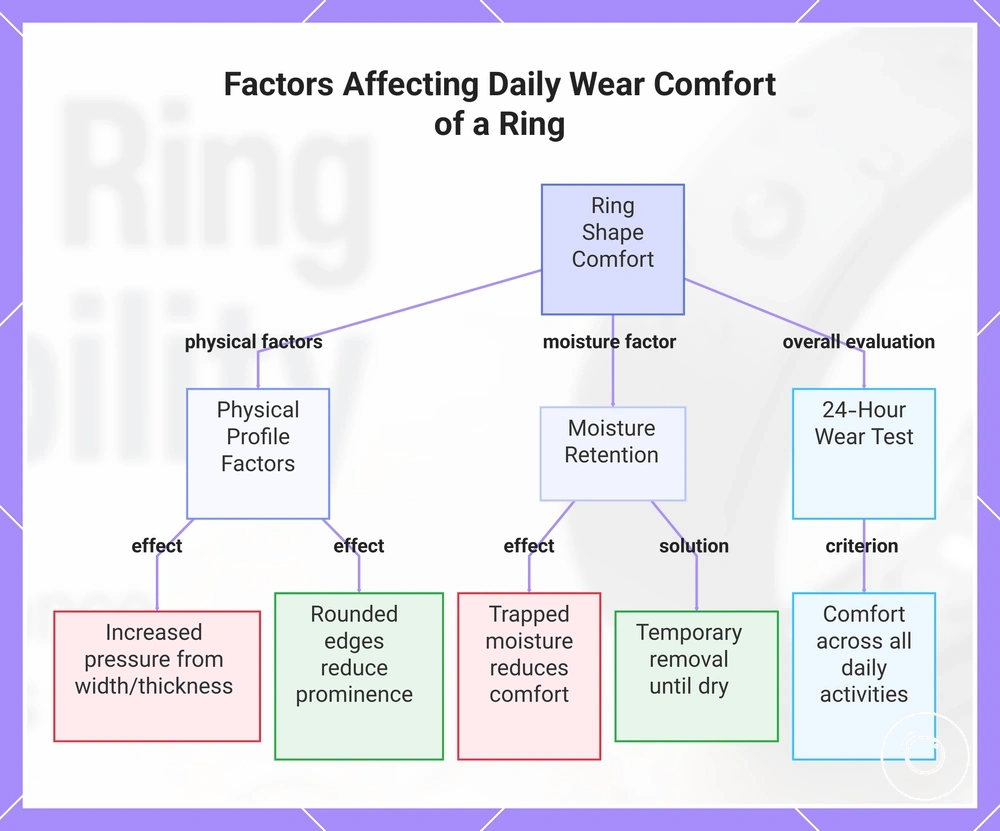
Daily wear across sleep, work, workouts, and washing is influenced by how the ring shape feels during normal hand movement rather than by one design feature alone. Ring shape, thickness, weight, edge finish, and material feel can change comfort as fingers bend, grip, and naturally swell throughout the day. A design that feels unobtrusive in one activity may feel more noticeable in another, so everyday comfort should be judged across typical 24-hour wear conditions. These situations are closely related to shape and fit-adjacent factors without replacing sizing guidance.
When a ring feels uncomfortable during long wear, the cause is often linked to its physical profile rather than a single material property. Greater width, thickness, or weight may increase pressure during extended use, while a rounded edge finish can reduce how prominent the ring feels against neighbouring fingers. A raised sensor bump may become more noticeable during gripping if it contacts the finger unevenly, and moisture retention after workouts or washing may make temporary removal more comfortable until the ring and finger are dry. The checklist below organises common shape-related comfort decisions for everyday wear.
- Ring shape and width: A wider ring profile may feel more noticeable during frequent hand movement, making a short break practical if pressure increases.
- Thickness and weight: A thicker or heavier ring may feel more prominent during extended wear, especially through work or workouts.
- Edge finish and sensor bump: Rounded edges and a lower-profile sensor bump may feel less intrusive when gripping or typing, while more pronounced features may be easier to notice.
- Moisture retention: Moisture trapped after washing or exercise can reduce comfort until the ring and finger are dry, making temporary removal a practical decision.
- 24-hour wear: If the ring remains comfortable across sleep, work, exercise, and routine washing, its overall shape is more likely to suit long wear under your usual conditions.
For guidance that focuses specifically on sizing and finger placement, see daily fit and comfort.
This chart shows the key factors that influence ring comfort during daily wear, including physical design, moisture retention, and overall wear evaluation.
Weight, Thickness, and 24-Hour Wear
During 24-hour wear, a fitness smart ring may feel different during sleep, typing, exercise, and repeated finger movement. Weight affects wear awareness over time, while thickness and profile height influence pressure feel when the finger bends or rests against another surface. A heavier or higher-profile ring may feel more noticeable when hand swelling or grip increases contact between the ring and finger.
- Sleep: Greater thickness or profile height may create a more noticeable pressure feel when the hand rests against bedding or another finger.
- Typing: A thicker ring profile may increase wear awareness when finger movement repeatedly brings the ring into contact with nearby fingers or a work surface.
- Exercise: Greater weight or thickness may feel more prominent when repeated movement or equipment contact increases pressure around the ring.
- Hand swelling: When the finger expands during the day, the same ring dimension may create a tighter pressure feel and make temporary removal more practical.
- Grip: A higher profile may feel more noticeable when gripping tools, weights, or handles because the ring can press more firmly against the finger or object.
Impact, Pressure, and Damage Risk During Workouts
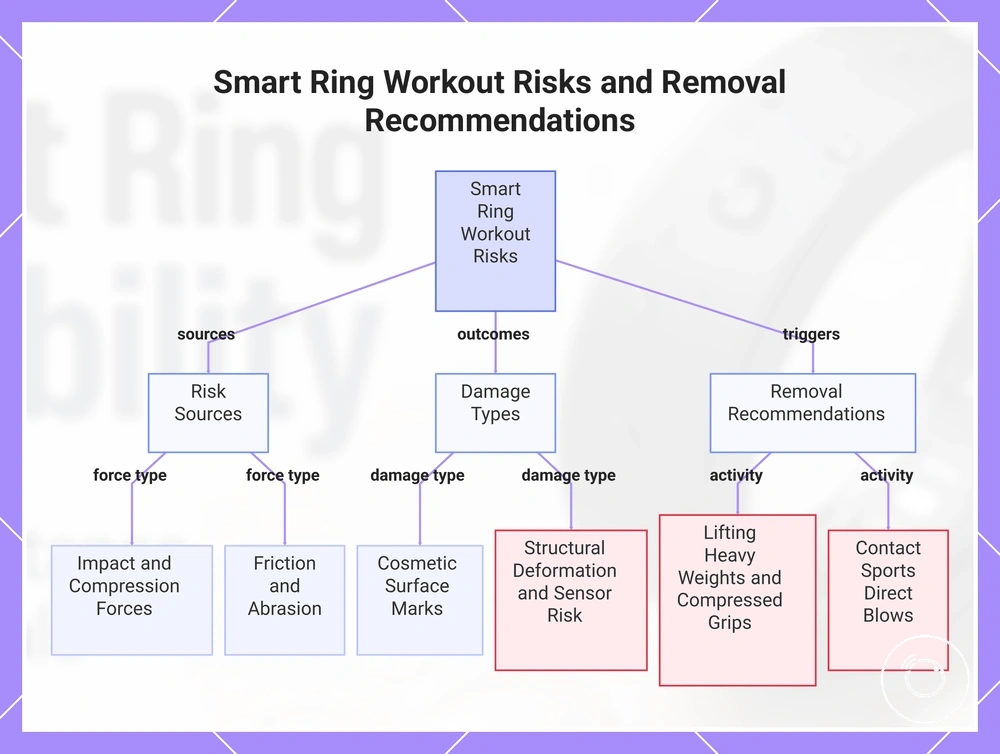
Impact and pressure risks become more relevant during workouts when a fitness smart ring contacts hard equipment, compressed grips, or abrasive surfaces. Activities such as lifting, cycling, rowing, climbing, and contact sports expose the ring to different levels of impact force, compression, and friction. Cosmetic wear is more likely during repeated equipment contact, while the possibility of deformation or sensor-window risk increases with stronger impacts or sustained compression. The overall risk depends on the activity, ring material, contact intensity, and ring design.
Light surface marks usually affect appearance rather than function, but stronger impacts or repeated pressure can increase the possibility of structural damage or create hand safety concerns. A removal decision is therefore most relevant when hard equipment, compressed grips, or direct impact could place excessive force on the ring or finger. The checklist below organises common workout situations by contact type and highlights when continued wear or temporary removal may be the more practical choice.
- Lifting: Heavy weights and compressed grips can increase pressure risk and equipment contact, making temporary removal worth considering if the ring is pressed firmly against the finger.
- Cycling: Extended handlebar contact can create repeated compression and friction, increasing cosmetic wear and hand pressure during longer rides.
- Rowing: Repeated handle contact may increase friction and pressure, particularly when the grip repeatedly presses against the ring.
- Climbing: Rock or climbing-hold contact can expose the ring material to high abrasion and impact, increasing cosmetic wear and potential sensor-window risk.
- Contact sports: Direct blows or forceful contact can increase both ring damage risk and hand safety concerns, so temporary removal may be appropriate before the activity.
This chart shows the main risk sources, types of damage, and specific activities where temporary removal of a fitness smart ring is recommended.
When to Remove a Fitness Smart Ring
Remove a fitness smart ring when pressure, chemicals, heat, abrasion, or impact exposure is likely to exceed the ring's stated limits or create a hand safety concern. Normal daily activities do not automatically require taking the ring off, but higher-risk situations warrant a separate removal decision based on exposure severity and the activity involved. If the conditions are uncertain, verify the ring's rating limit before continuing. Removal decisions should be based on exposure severity, the ring's stated limits, and hand safety.
- Heavy pressure: Remove the ring if compressed grips or forceful pressure could press the ring firmly against the finger and increase hand safety risk.
- Chemicals: Take off the ring before prolonged contact with harsh cleaning products or industrial chemicals that may affect the ring material.
- Heat: Remove the ring when high temperatures could exceed its stated limits or expose the ring material to unnecessary stress.
- Abrasion: Consider removal when repeated scraping against rough surfaces could increase cosmetic wear or material damage.
- Impact exposure: Remove the ring before activities where repeated impacts against hard equipment or tools are likely to exceed normal use conditions.
- Uncertain conditions: If an activity could exceed the published rating limit or raise hand safety concerns, verify the manufacturer's guidance before continuing to wear the ring.
Care Habits That Preserve Ring Durability
Care habits help preserve durability by reducing avoidable moisture exposure, surface wear, residue buildup, and contact damage. Cleaning, drying, storage, and removal timing protect the ring’s existing material condition and surface finish over time. Consistent maintenance may also reduce preventable issues around charging contacts and water resistance. Care cannot make a fitness smart ring exceed the model’s original limits or correct structural damage.
Cleaning should remove sweat, dirt, and residue without exposing the ring to harsh chemicals or abrasive tools. Drying is especially important after water exposure because trapped moisture can remain around seams, recesses, or charging areas. Use the model’s stated cleaning method and allow the ring to dry fully before charging or storage. The following checklist organises each care action by condition and durability effect.
- Clean gently: After sweat, dirt, or product buildup, use the cleaning method permitted for the model to reduce residue without increasing abrasion or finish damage.
- Dry thoroughly: After washing or water exposure, dry the ring and recessed areas before charging or storage to reduce moisture risk.
- Protect charging contacts: Keep charging contacts dry and free from visible residue so the connection surface remains clear and less exposed to moisture-related interference.
- Use chemical avoidance: Remove the ring before contact with strong cleaners, solvents, or similar substances when the manufacturer does not confirm chemical resistance, reducing coating and surface finish risk.
- Store separately: When the ring is not being worn, place it in a dry location away from hard or abrasive objects to reduce scratches and repeated impact exposure.
- Time removal to the activity: Take the ring off when pressure, heat, abrasion, chemicals, or impact could exceed its stated limits, reducing material risk and avoidable wear.
Charging-contact care is part of broader battery and charging care, particularly when moisture or residue is present before the ring is placed on its charger.
These care habits support material and finish preservation by limiting repeated friction, chemical exposure, trapped moisture, and contact with hard surfaces. They may help maintain the ring’s existing water resistance and surface finish when the seals, coating, and structure remain within their original condition, but they do not restore a damaged seal or worn coating.
When comparing suitable options, consider how easily each ring can be cleaned and dried, whether its charging contacts are exposed or recessed, which chemicals and water conditions its guidance permits, and how its ring material and surface finish match the intended use. These durability criteria provide more useful decision support than assuming routine care can compensate for a model with unsuitable ratings or materials.
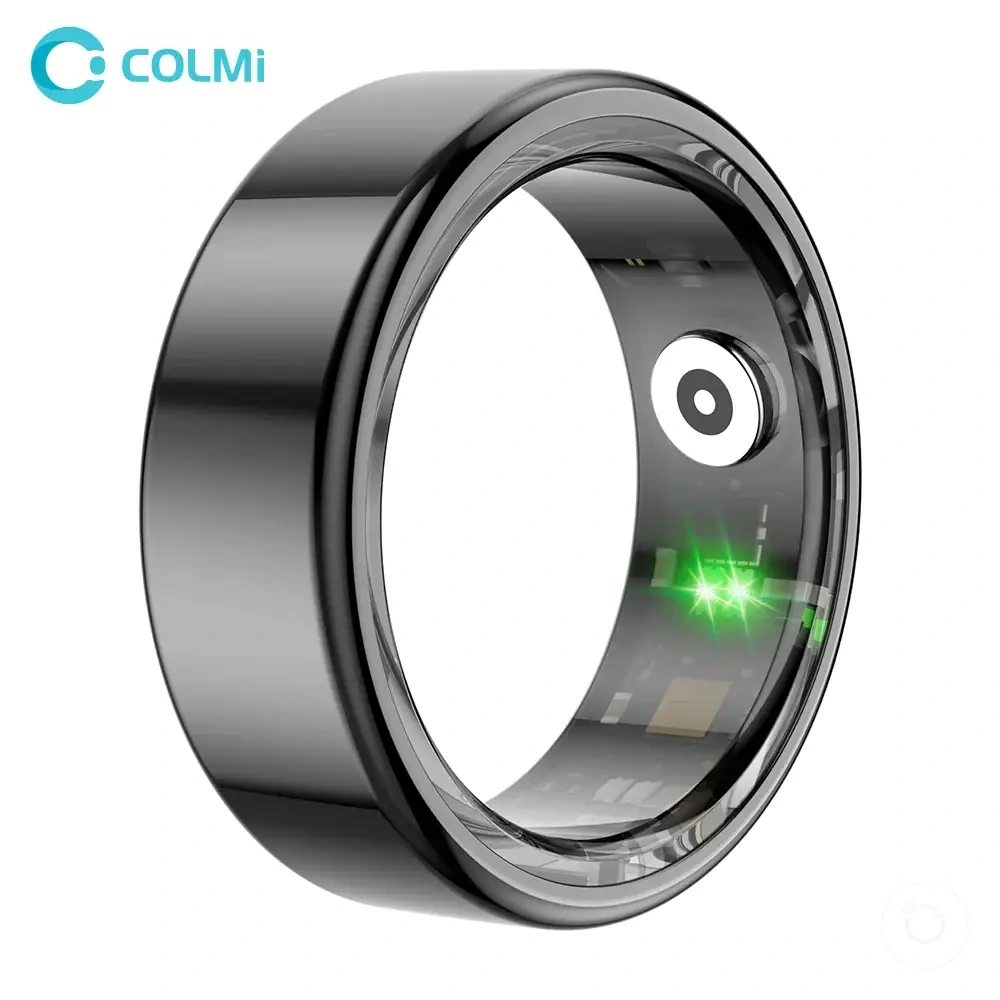
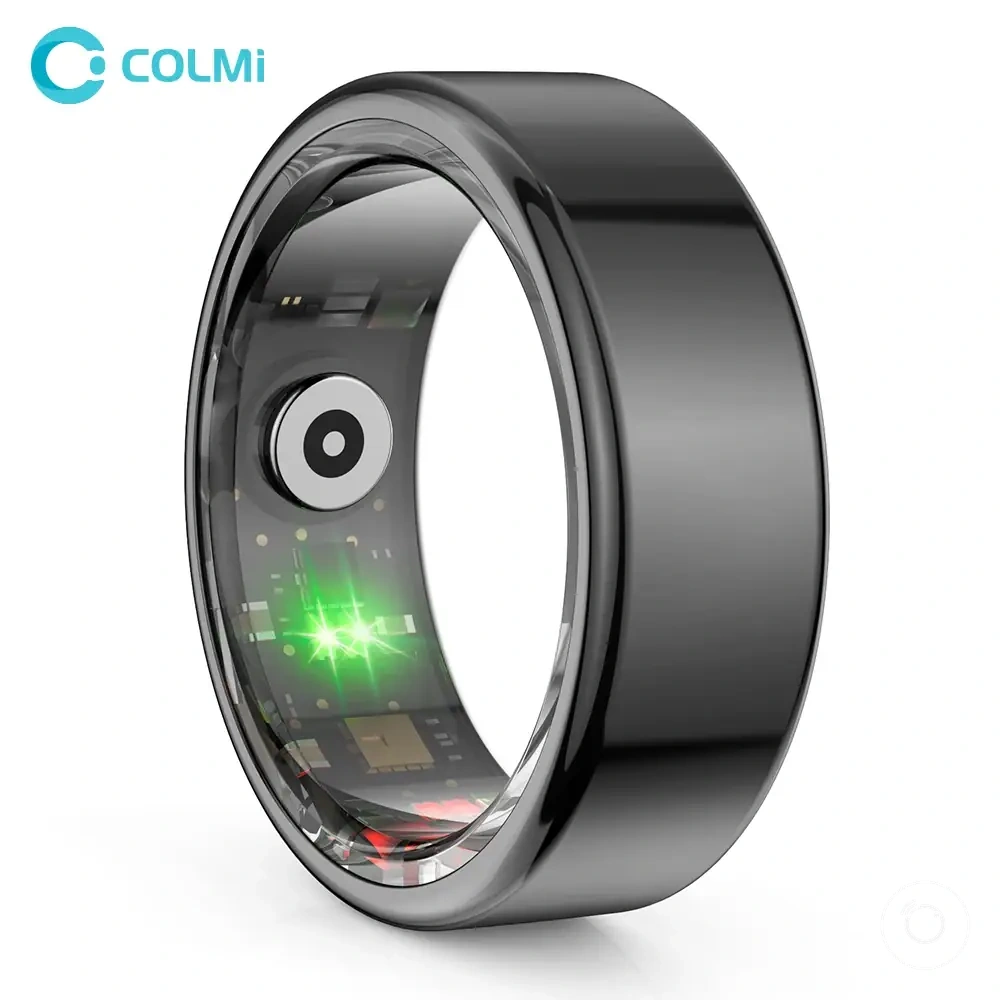
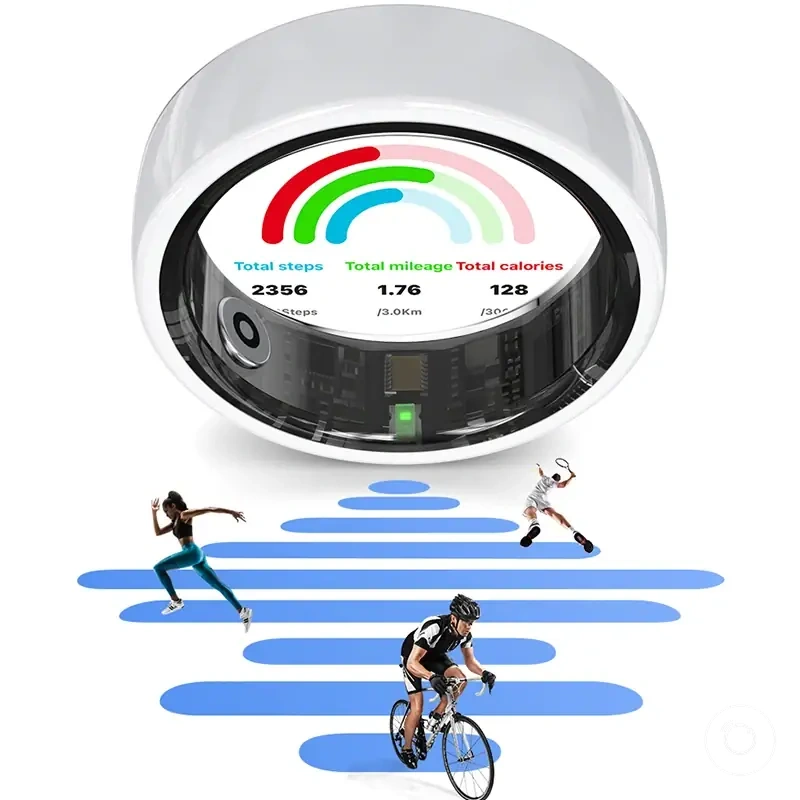
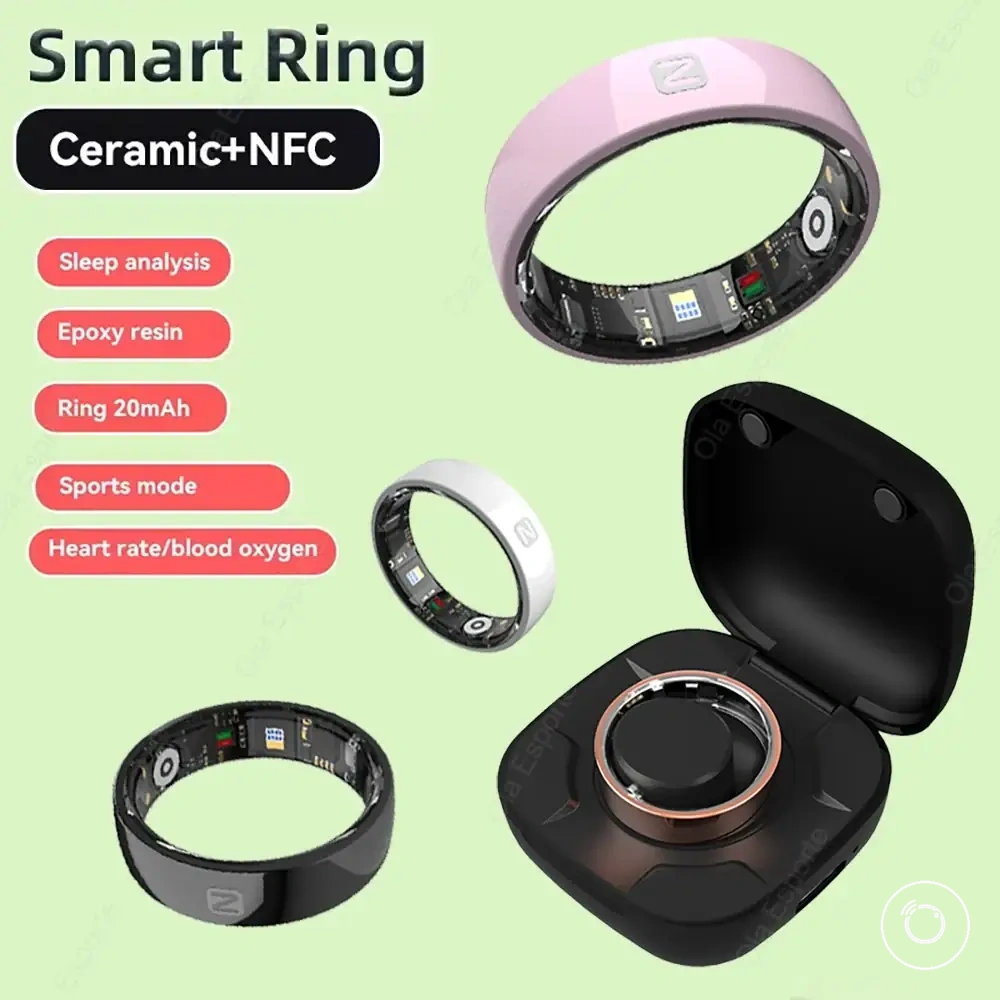
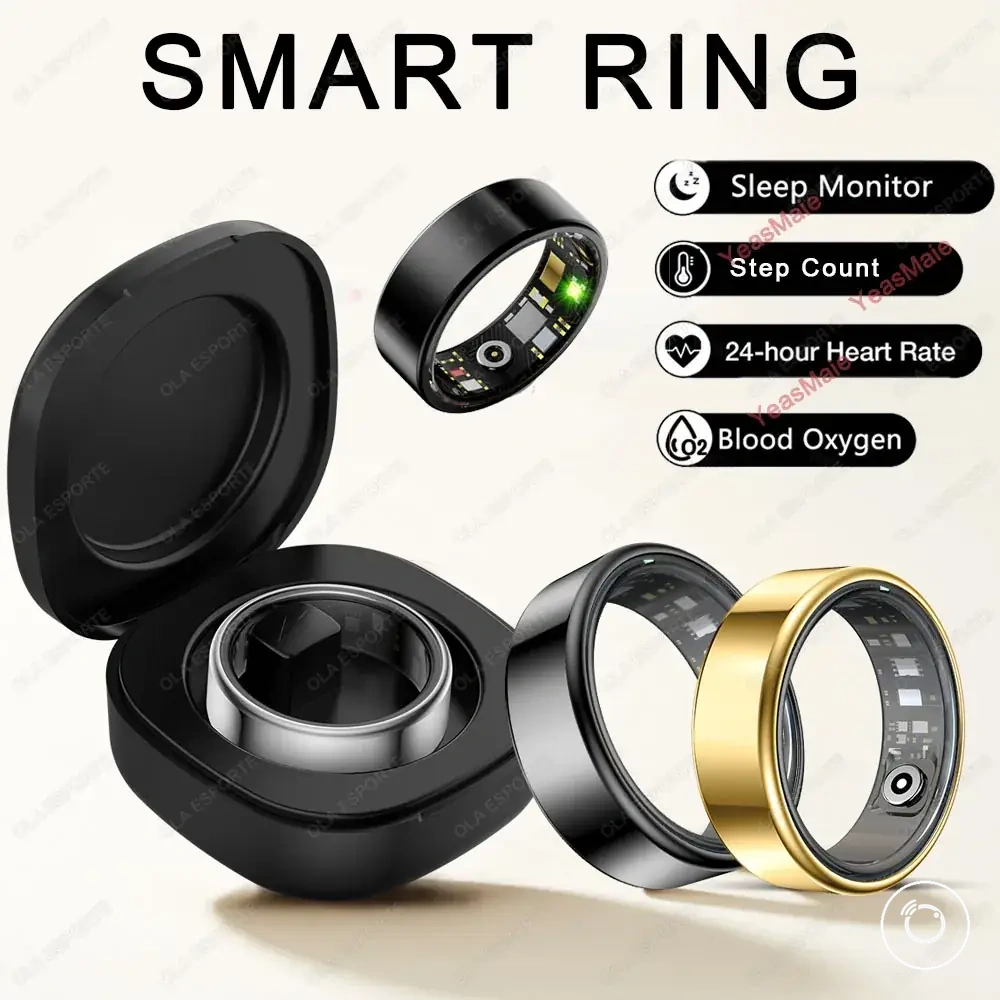
Here are product examples that may make comparison easier. Before buying, always review the compatibility criteria, essential features, and product details.
This chart outlines the key care actions, durability limits, and preservation conditions that help maintain a fitness smart ring's material condition and surface finish.