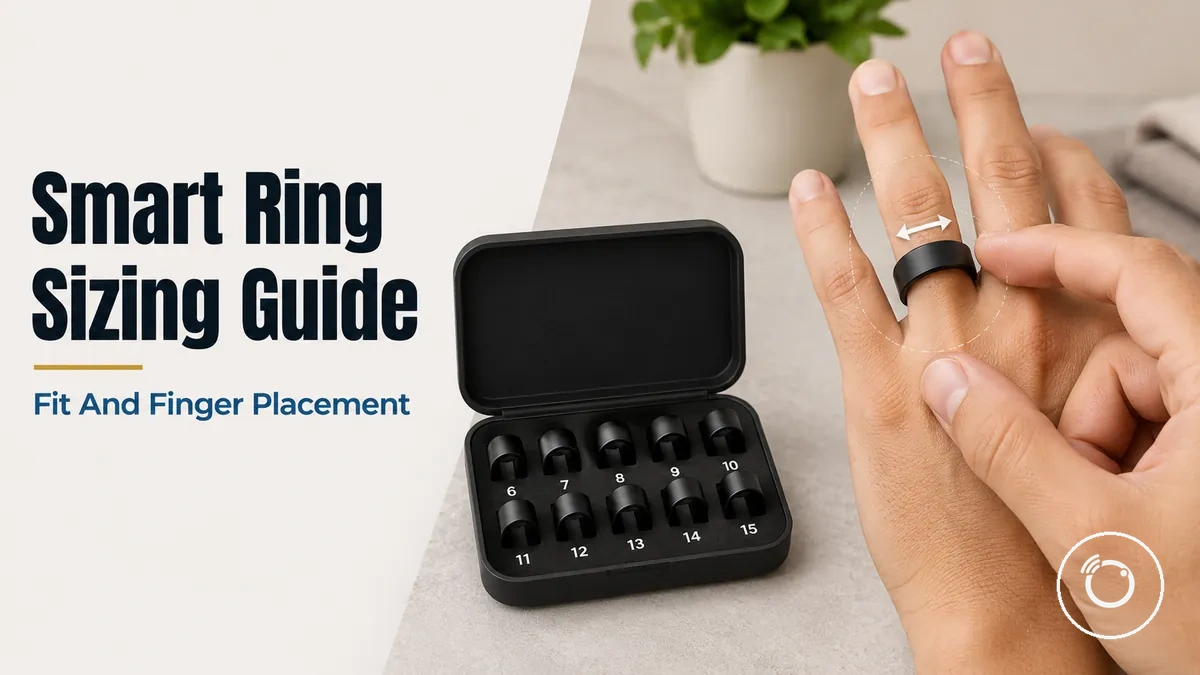
Fitness Smart Ring Sizing and Fit Guide
Fitness smart ring sizing is the process of choosing a ring size and finger position that keep the wearable secure without making it uncomfortably tight. A suitable fit rests at the base of the finger, limits unwanted rotation, and allows removal without excessive force. Because smart ring dimensions and sensor layouts differ from ordinary jewellery, a familiar ring size may not be the final size. Smart ring sizing is therefore a buying-confidence issue.
A fitness smart ring may feel comfortable during a short trial but become tighter during daily wear or overnight wear as temperature, activity, and swelling change finger size. A sizing kit or trial fit helps compare ring fit across fingers and wear conditions before choosing the final size. A secure fit should limit movement without causing pain, pressure, numbness, or difficult removal. This balance links comfort with consistent sensor contact.
Choose a size that stays in place during normal movement, remains comfortable across daytime and sleep use, and keeps the sensor area in contact with the skin. Finger placement and fit can support stable tracking contact, but they do not guarantee tracking accuracy; the next step is understanding why fit matters before purchase.
Why Fitness Smart Ring Fit Matters Before Buying
Fitness smart ring fit is a buying-stage criterion because it affects comfort during continuous wear and helps maintain consistent sensor contact with the skin. A snug fit should remain stable during normal movement without causing excessive pressure, while a loose fit is more likely to shift on the finger. Choosing an appropriate fit before purchase can reduce purchase risk by setting realistic expectations for everyday wear.
Why Fitness Smart Ring Fit Matters Before Buying is easier to evaluate when comfort and tracking expectations are considered together rather than separately. The comparison below illustrates how different fit conditions influence wearable comfort and ring stability without suggesting that one rule applies to every hand or ring model.
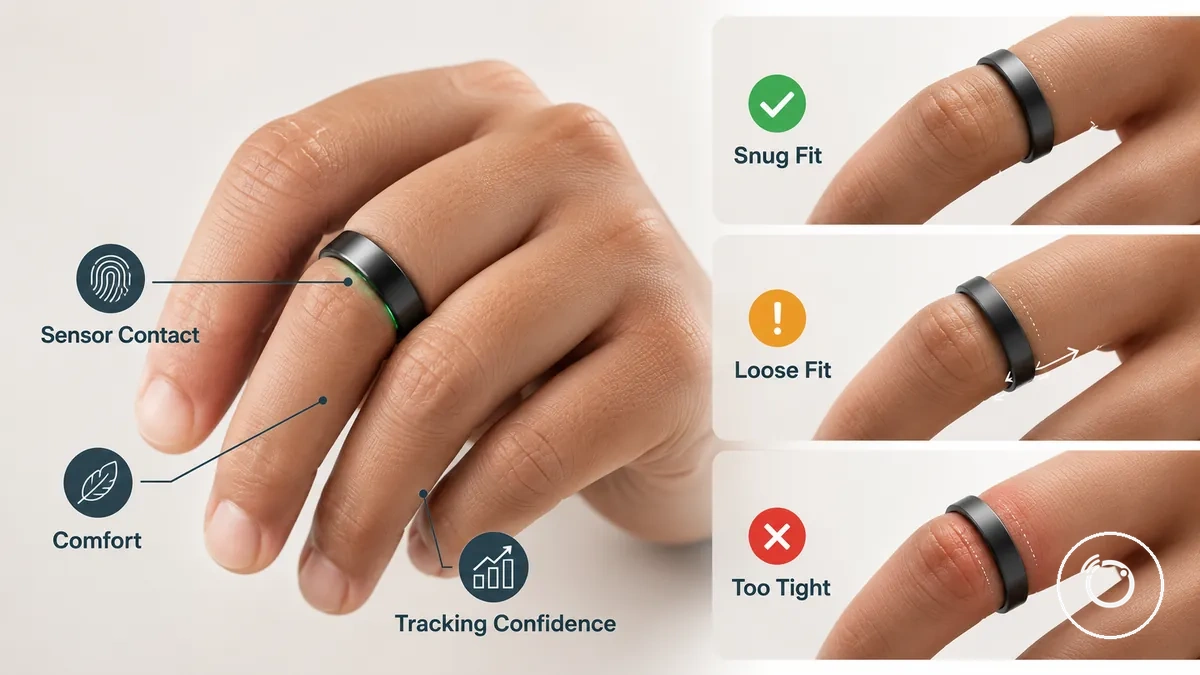
A fitness smart ring with a snug fit is more likely to maintain stable sensor contact during continuous wear, while a loose fit may reduce tracking confidence if the ring shifts. A ring that feels too tight can reduce comfort, particularly when normal swelling changes finger size during the day or overnight. For broader sizing context before comparing fit conditions, see the fitness smart ring guide.
| Condition | Attribute | Trade-off | Decision |
|---|---|---|---|
| Snug fit | Comfort with stable sensor contact | Supports continuous wear with limited movement | Usually the preferred starting point |
| Loose fit | Greater ring movement | May reduce tracking confidence if contact changes | Consider a smaller size if movement is frequent |
| Too tight | Higher finger pressure | Comfort may decrease during normal swelling or extended wear | Select a size that remains comfortable across daily wear |
Fit can influence tracking quality by supporting consistent sensor contact, but it does not replace broader factors that affect measurement performance. Learn more about this boundary in the accuracy and fit connection.
Smart Ring Sizes and Regular Ring Size Differences
Smart ring sizes can differ from a regular ring size because the ring size system, sensor position, and fit tolerance are designed for wearable tracking rather than jewellery alone. A jewellery size can provide an initial reference, but the final size choice should follow the model-specific size system when available. The key decision is to compare the sizing method used for the smart ring instead of assuming a direct conversion.
Smart Ring Sizes and Regular Ring Size Differences are easier to understand when jewellery comfort is compared with health-tracking requirements. If a model uses a different inner diameter or internal design, the same regular ring size may not provide equivalent sensor contact or fit tolerance. A sizing kit or trial size helps verify how model variation affects the final fit before selecting a permanent size.
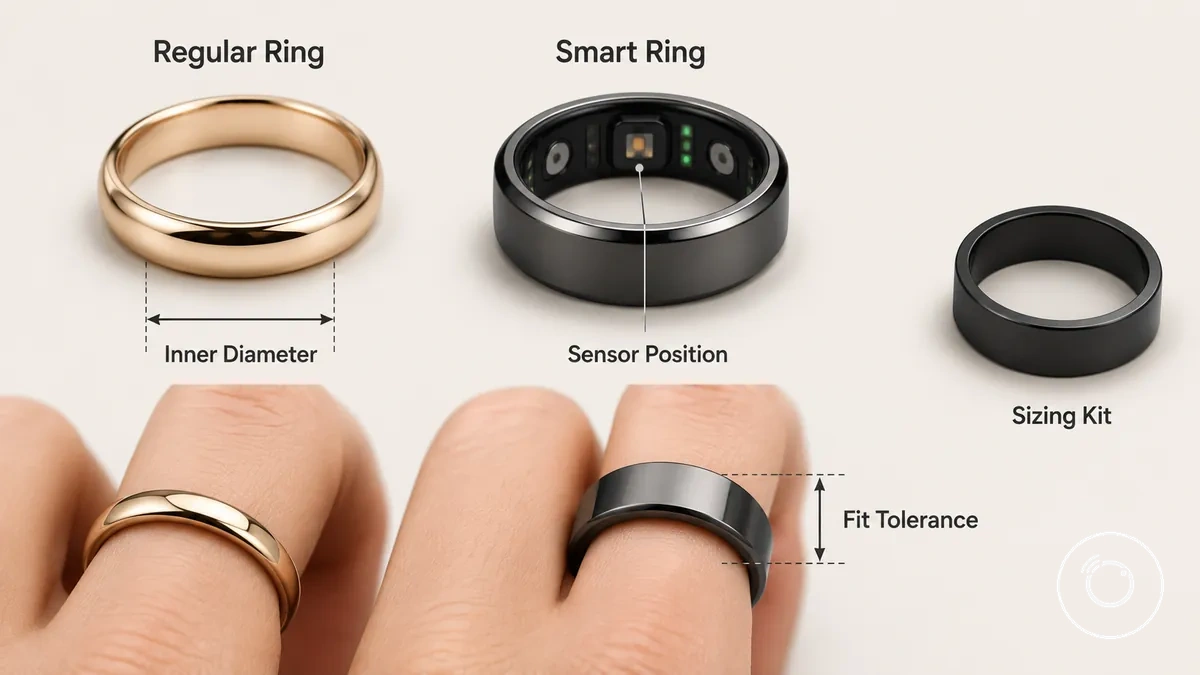
The comparison below shows how the ring size system, inner diameter, fit tolerance, and sensor position influence final size selection without implying a universal conversion between jewellery size and smart ring sizes.
| Option or condition | Attribute | Trade-off | Decision |
|---|---|---|---|
| Regular ring size aligns with the model's size system | Inner diameter | May provide a similar fit when dimensions match | Confirm with the model's ring size guide |
| Different smart ring size system | Model variation | Regular jewellery size may not transfer directly because fit tolerance and sensor position differ | Use the recommended sizing kit or trial size |
| Health-tracking wear | Fit tolerance and sensor position | Requires stable sensor contact rather than jewellery comfort alone | Select the size that balances comfort with consistent contact during wear |
How to Measure Smart Ring Size with a Sizing Kit
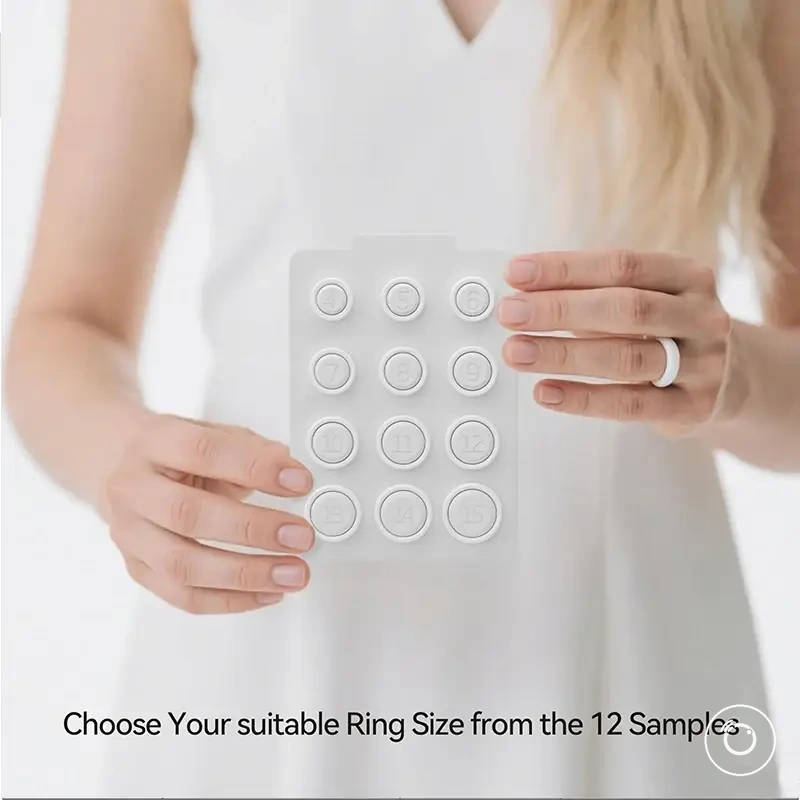
A sizing kit helps you measure smart ring size by testing a trial ring on the intended finger before selecting a final size. Instead of relying on a single measurement, the process combines fit, wear duration, and confirmation under normal use. The final size should be chosen only after the trial ring provides consistent comfort and stable contact.
How to Measure Smart Ring Size with a Sizing Kit is easier when the sizing kit organizes measurement, trial wear, and final confirmation into a simple sequence. The illustration below clarifies each stage of the fit test and shows how finger conditions and model-specific sizing methods can influence the final decision.
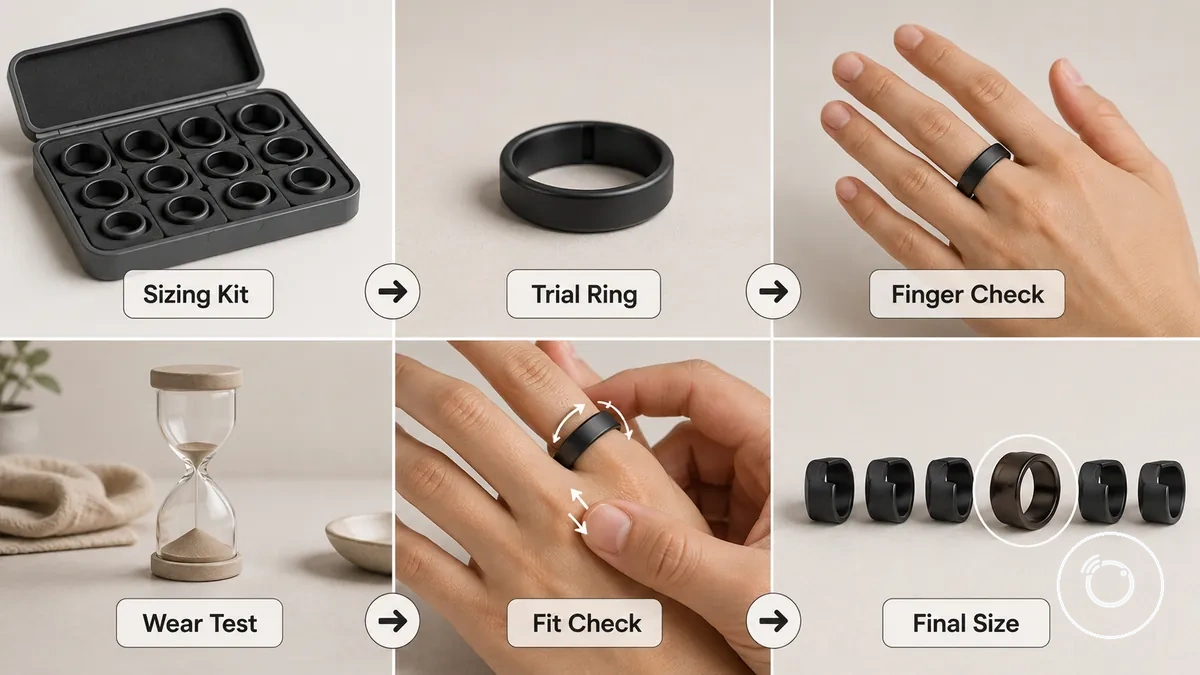
Follow these steps to measure with a sizing kit before confirming the final smart ring size.
- Place the trial ring from the sizing kit on the intended finger. Confirm that it slides on comfortably and stays secure during normal hand movement.
- Wear the trial ring for the wear duration recommended for the specific sizing kit or smart ring model. Use the result after the full trial period rather than a brief fitting.
- Check tightness and rotation. The trial ring should remain stable during everyday movement while still being removable without excessive discomfort.
- If you are between two sizes or your finger changes because of normal swelling or temperature, repeat the fit test under those conditions before making a decision.
- Complete confirmation only after the trial ring continues to provide a consistent fit throughout the evaluation period, then select that final size for the chosen smart ring model.
Sizing Kit Trial Wear Before Final Size Selection
Trial wear helps confirm whether a test size remains comfortable during realistic daily wear and overnight wear before selecting a final size. Sizing Kit Trial Wear Before Final Size Selection focuses on verifying comfort during normal use rather than relying on a single fitting. The final decision should be based on a trial ring that remains consistently comfortable across typical wear conditions.
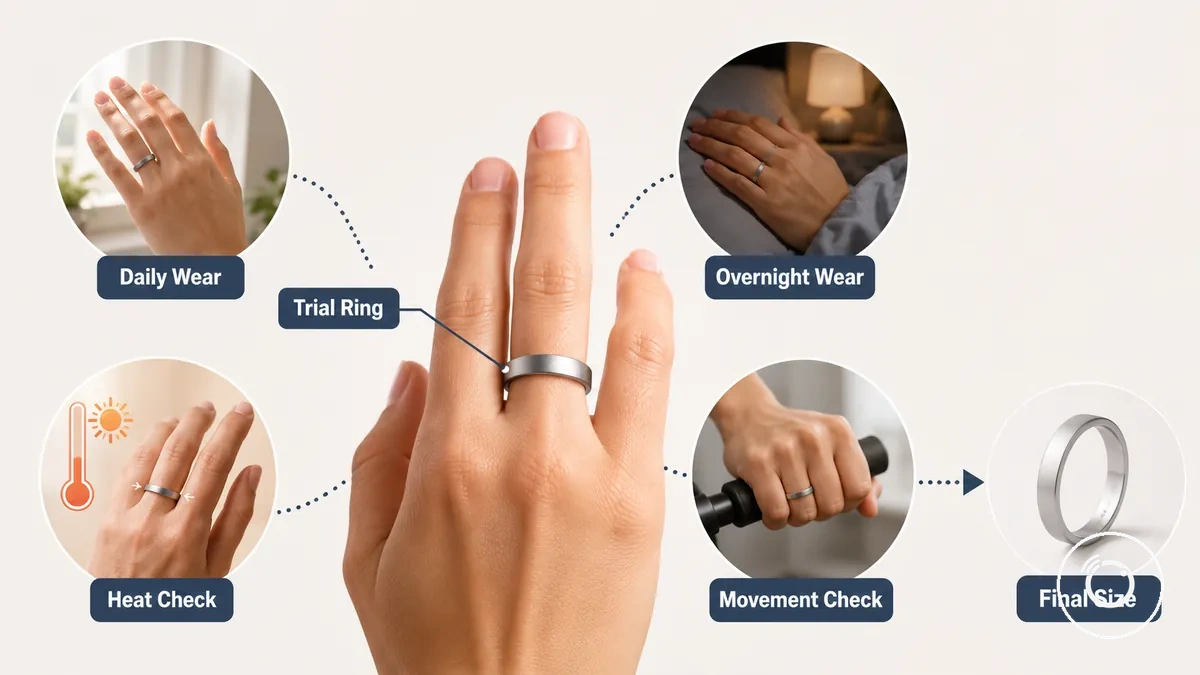
Use the checklist below to verify whether the selected test size remains suitable before confirming the final size.
- Wear the trial ring from the sizing kit during normal daily wear. Continue only if the ring stays comfortable during regular hand movement.
- Include overnight wear, when appropriate for the sizing process, to check whether the test size still feels comfortable after sleeping. Do not base the decision on daytime wear alone.
- Observe whether swelling from heat or changes in hand temperature makes the test size feel noticeably tighter. If the fit changes, repeat the trial before choosing the final size.
- Check the ring during everyday movement and different sleep positions. A test size that remains secure without ongoing discomfort is a stronger choice for the final size.
- If you are between sizes, compare both options during trial wear and select the one that provides the most consistent comfort before confirming the final size.
Printable, Digital, and Manual Measurement Limits
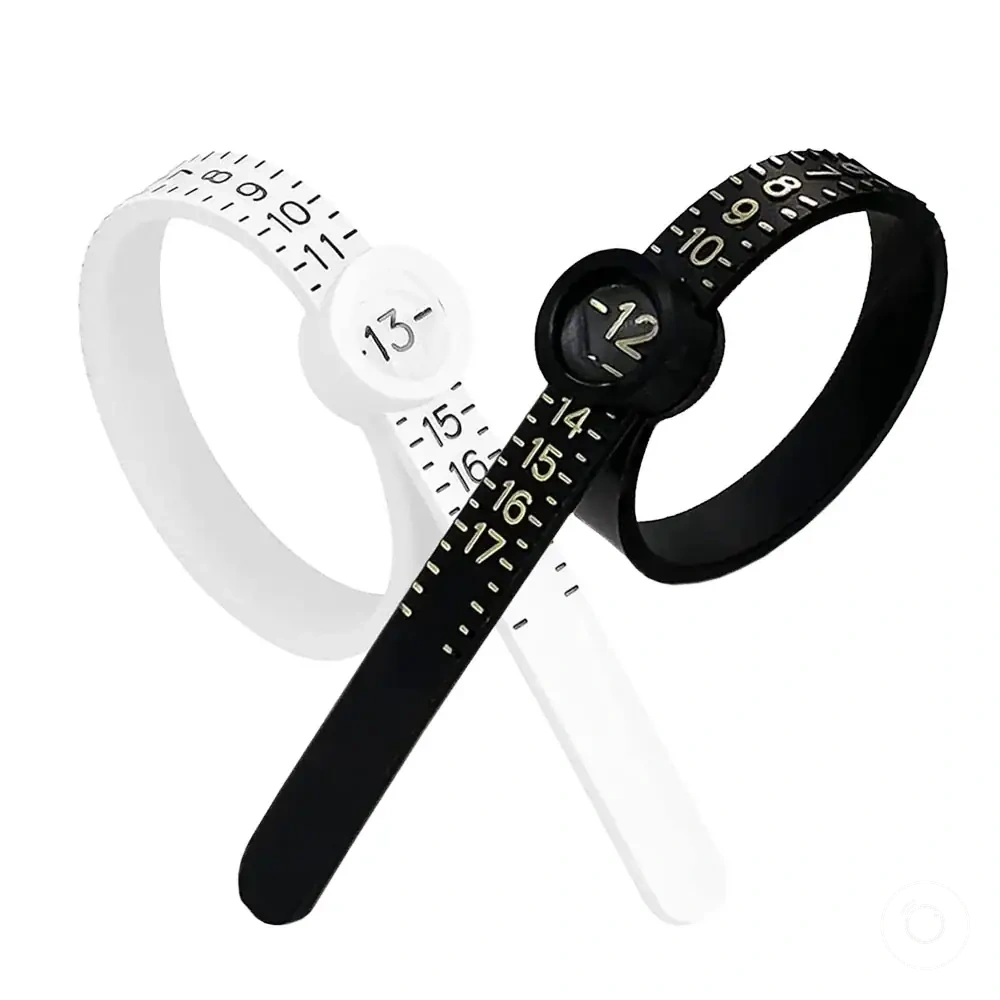
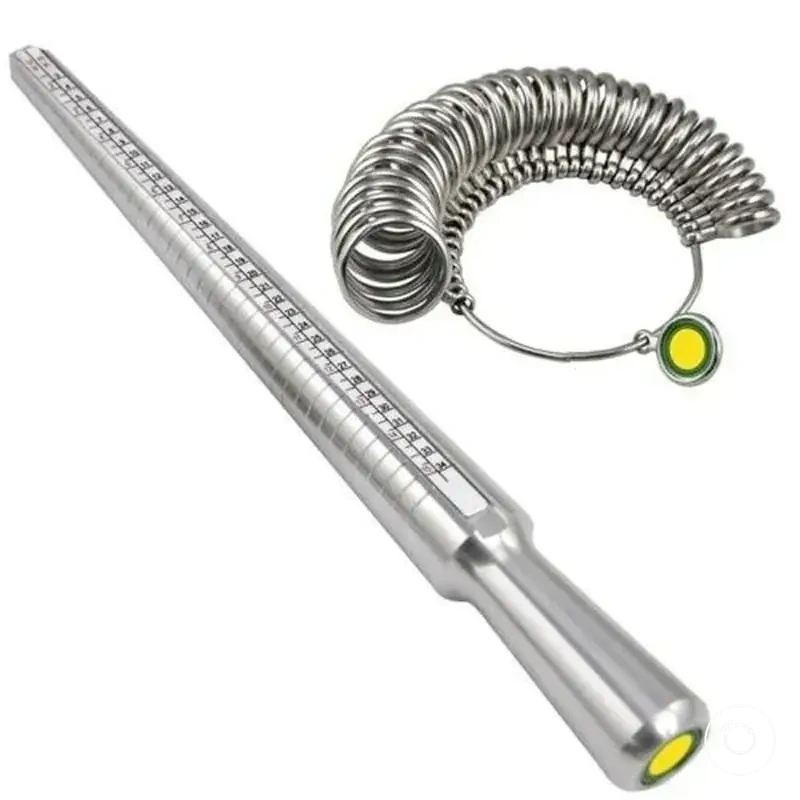
Printable, digital, and manual measurement methods each have different reliability limits, so they provide different levels of sizing confidence. A printable sizer, digital measurement, or manual measurement can support approximate measurement, while a sizing kit remains the stronger reference when trial fit is important before making a final decision.
The comparison below highlights where each method is useful and where measurement error is more likely to affect the result. Print scale, finger width, and the way a string method or paper method is used can influence sizing confidence, but these approaches can still help narrow a starting size before confirming it with a trial fit when greater precision matters.
| Option or Condition | Attribute | Trade-off | Decision |
|---|---|---|---|
| Printable sizer | Print scale | Incorrect scaling increases measurement error. | Useful for an initial estimate when printed at the intended scale. |
| Digital measurement | Tool or screen calibration | Results depend on accurate measurement technique and calibration. | Suitable for comparison, but not a replacement for trial fit. |
| String or paper method | Finger width | Wrapping tension can change the measured circumference. | Helpful for approximate measurement before further verification. |
| Sizing kit | Trial fit | Requires additional fitting but checks real-world comfort. | Provides higher sizing confidence before selecting a final size. |
Proper Smart Ring Fit at the Base of the Finger
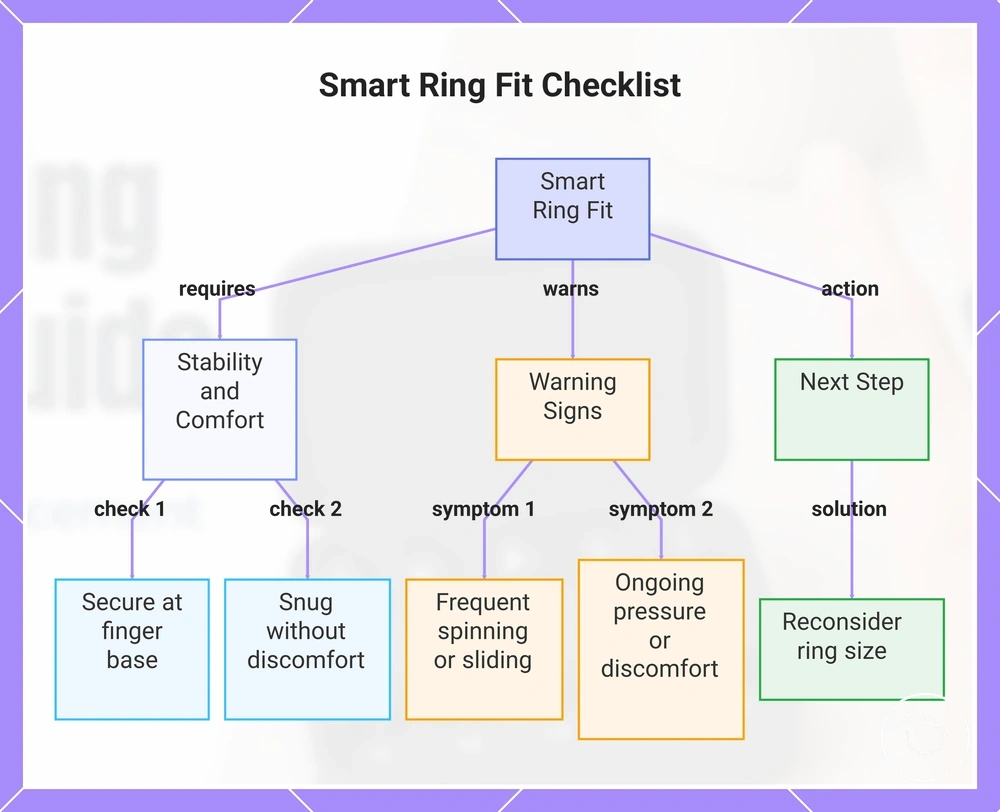
A proper fit places the smart ring snug and stable at the base of the finger, where it maintains consistent sensor contact without causing uncomfortable pressure. The ring should stay comfortably in place during normal wear while allowing natural finger movement. If the fit cannot maintain both stability and comfort, the size should be reconsidered.
A secure ring position keeps the ring against the skin with only slight natural movement. Limited rotation during everyday activity can be acceptable, but frequent spinning or sliding toward the knuckle reduces sensor contact and may affect tracking consistency. Ongoing pressure, pinching, or noticeable discomfort indicates the fit is too tight, even if the ring remains stable.
The checklist below highlights the main fit signals to verify before relying on the ring for regular wear or tracking.
- The ring rests securely at the base of the finger throughout normal daily movement.
- The fit feels snug and maintains consistent skin contact without persistent pressure or discomfort.
- Minor rotation is acceptable, but frequent spinning or sliding is a sign to perform another fit check.
- Sensor contact remains stable because the ring stays close to the skin during everyday wear.
- If the ring regularly slips, feels unstable, or causes ongoing discomfort, a size reconsideration is appropriate before long-term use.
This chart shows the key criteria for verifying a proper smart ring fit at the base of the finger, including warning signs and the recommended action.
Snug Fit Without Tightness or Sliding
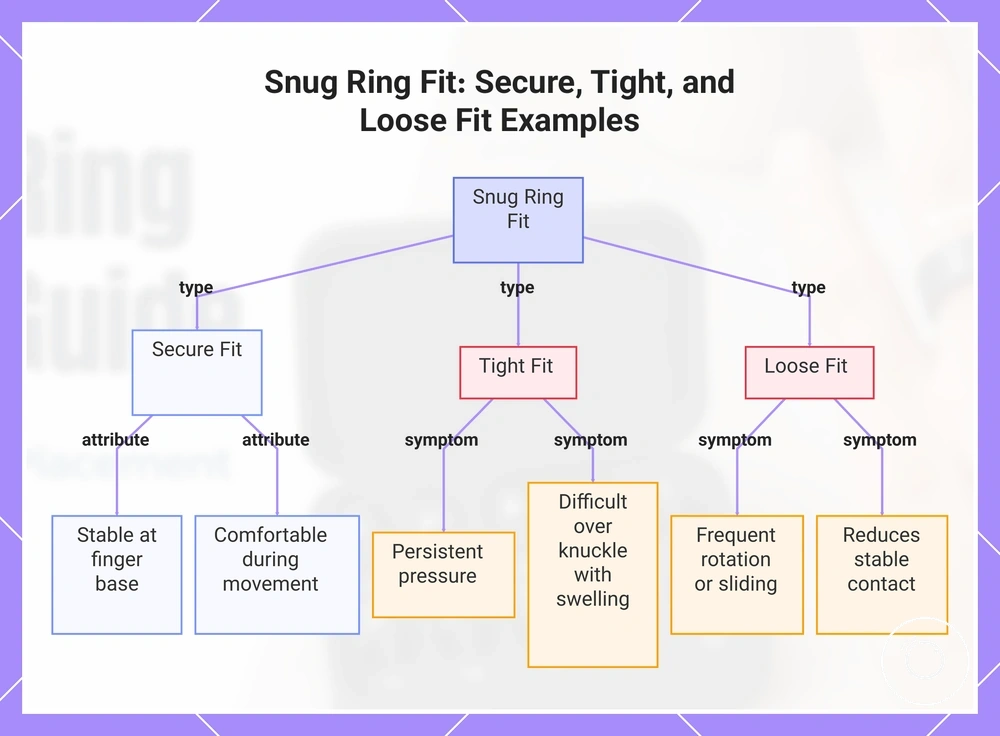
A snug fit keeps the ring secure at the finger base with stable contact while avoiding uncomfortable tightness or repeated sliding. The ring should pass over the knuckle with gentle resistance and remain comfortable during normal movement. Minor rotation can be acceptable if the ring quickly settles back into a stable position without reducing comfort or contact.
The fit examples below help distinguish the practical middle ground between a secure fit, a tight fit, and a loose fit during everyday wear, overnight swelling, or routine hand movement.
- Secure fit: The ring stays stable at the finger base, maintains comfortable pressure, and keeps consistent contact during normal daily movement.
- Tight fit: The ring creates persistent pressure, noticeable discomfort, or becomes difficult to move over the knuckle, particularly if the finger is more swollen overnight, indicating that a different size should be considered.
- Loose fit: The ring frequently rotates, slides away from the finger base, or shifts enough to reduce stable contact during hand movement, increasing contact risk.
This chart shows the three fit types that define a snug ring fit: secure (ideal), tight (problem), and loose (problem).
Knuckle Width, Finger Shape, and Swelling Changes
Knuckle width, finger shape, and everyday swelling can make the same nominal ring size produce a different fit outcome across users and conditions. A wider knuckle may require enough space for the ring to pass over it, while the finger base still needs enough stability to limit movement. Size choice should therefore reflect both passage over the knuckle and the ring’s position at the finger base.
Finger anatomy changes the trade-off between comfort and stability. A tapered finger may allow more sliding toward the fingertip, while a larger knuckle with a slimmer finger base may make a looser size easier to remove but less stable during wear. Changes in temperature, hydration, and time of day can also make the ring feel tighter or looser, so a fit checked only once may not represent normal daily wear.
The comparison below shows how these conditions can change the sizing decision.
| Option or condition | Attribute | Trade-off | Decision |
|---|---|---|---|
| Large knuckle | Knuckle width | A size that passes the knuckle more easily may sit less securely at the finger base. | Choose the size that balances manageable removal with stable ring position. |
| Tapered finger | Finger shape | A wider opening near the fingertip can increase sliding and reduce stability. | Prefer the size that stays positioned at the finger base without uncomfortable pressure. |
| Morning-to-night fit change | Swelling, temperature, hydration, and time of day | The ring may feel looser in one condition and tighter in another. | Base the size choice on the fit that remains comfortable and stable across typical daily conditions. |
Best Finger and Hand for Fitness Smart Ring Placement
The best finger is the one that balances sensor contact, comfort, and daily practicality while matching the model’s placement guidance. The index finger, middle finger, and ring finger are all valid options when the ring stays stable against the skin without causing unwanted interference. The final choice should favour consistent contact and comfortable wear rather than a single placement rule.
Finger placement changes the trade-off between contact stability and everyday comfort. The index finger may provide firm sensor contact when the model guidance prefers that position, while the middle finger can offer a stable alternative with less daily interference for some users. The ring finger can also be suitable when its fit keeps the sensors in steady contact during normal movement.
Hand placement affects activity friction and practicality. The dominant hand may experience more contact with tools, surfaces, or objects during routine tasks, while the non-dominant hand may reduce that friction when both hands offer a similar fit. Manufacturer preference, user comfort, and the amount of daily interference should guide the hand decision.
The comparison below summarises the main placement trade-offs.
| Option or condition | Attribute | Trade-off | Decision |
|---|---|---|---|
| Index finger | Sensor contact | Can provide stable contact but may feel more noticeable during daily tasks. | Choose it when model guidance supports the position and comfort remains acceptable. |
| Middle finger | Stability | Can balance steady contact with lower daily interference. | Choose it when the ring remains stable and comfortable during normal use. |
| Ring finger | Comfort | May feel familiar but requires a secure fit to maintain sensor contact. | Choose it when comfort and contact stability remain consistent. |
| Dominant hand | Activity friction | May encounter more contact with objects during routine tasks. | Use it when the placement remains practical and the ring stays stable. |
| Non-dominant hand | Daily practicality | May reduce activity friction when both hands provide a similar fit. | Prefer it when lower interference improves comfort without reducing contact stability. |
After choosing a suitable finger and wearing hand, review how to wear a fitness smart ring for the next placement and use steps.
Index, Middle, and Ring Finger Fit Trade-Offs
The index finger, middle finger, and ring finger each create a different fit trade-off between width, stability, daily interference, and sensor contact. A contact-first choice favours the finger that keeps the ring steady against the skin, while a comfort-first choice favours the finger that causes less interference during routine movement. The suitable option is the finger that aligns with model guidance and remains comfortable for the user’s hand shape.
Finger width and shape should be assessed separately because the same nominal size may fit each finger differently. The index finger may support broader sensor contact when its width keeps the ring stable, the middle finger may balance stability with lower interference, and the ring finger may feel more familiar while offering lower fit confidence if the ring moves. The comparison below organises these local placement trade-offs without assigning a fixed ranking.
| Option or condition | Attribute | Trade-off | Decision |
|---|---|---|---|
| Index finger | Width and sensor contact | A wider or differently shaped index finger may support steady contact, but the ring may feel more noticeable during frequent hand use. | Choose it when contact stability is the priority and the fit remains comfortable. |
| Middle finger | Stability and interference | Its position may offer a balance between stable contact and moderate daily interference. | Choose it when stability and comfort remain consistent during normal movement. |
| Ring finger | Comfort and fit confidence | Familiarity may improve comfort, but a narrower or differently shaped finger may allow more movement and reduce sensor contact. | Choose it when the ring stays secure enough to maintain contact without unwanted movement. |
Dominant and Non-Dominant Hand Placement
The dominant hand usually has higher task exposure and more frequent movement, while the non-dominant hand often has lower interaction with objects. For ring wear, this creates a trade-off between familiar hand use, scratch exposure, and comfort. Choose the wearing hand that keeps ring movement and daily interference at an acceptable level during the activities you perform most.
The dominant hand may face greater contact with equipment, desks, keyboards, and other surfaces during workouts, typing, and routine activity. The non-dominant hand may reduce that contact when it performs fewer of those tasks, while a preferred ring hand may still feel more natural because of established wear habits. During sleep, the practical option is the hand that remains comfortable and avoids noticeable pressure or catching without assuming that either hand improves every tracking outcome.
The comparison below organises the main hand-placement scenarios.
| Option or condition | Attribute | Trade-off | Decision |
|---|---|---|---|
| Dominant hand during workouts | Activity, movement, and scratch exposure | Higher hand use may increase ring movement and contact with equipment. | Choose it when the ring remains stable and comfortable throughout the workout. |
| Non-dominant hand during typing | Daily interference | Lower task involvement may reduce contact with a keyboard, desk, or nearby objects. | Choose it when reduced interference improves comfort during repeated typing. |
| Either hand during sleep | Comfort | Pressure and noticeable movement differ with sleeping position and preferred hand placement. | Choose the hand that remains less noticeable and avoids pressure during sleep. |
| Preferred ring hand | Wear habit | Familiar placement may improve comfort even when that hand has higher activity exposure. | Keep the preferred hand when familiarity outweighs the added interference and the ring stays stable. |
Daily and Overnight Comfort Fit Factors
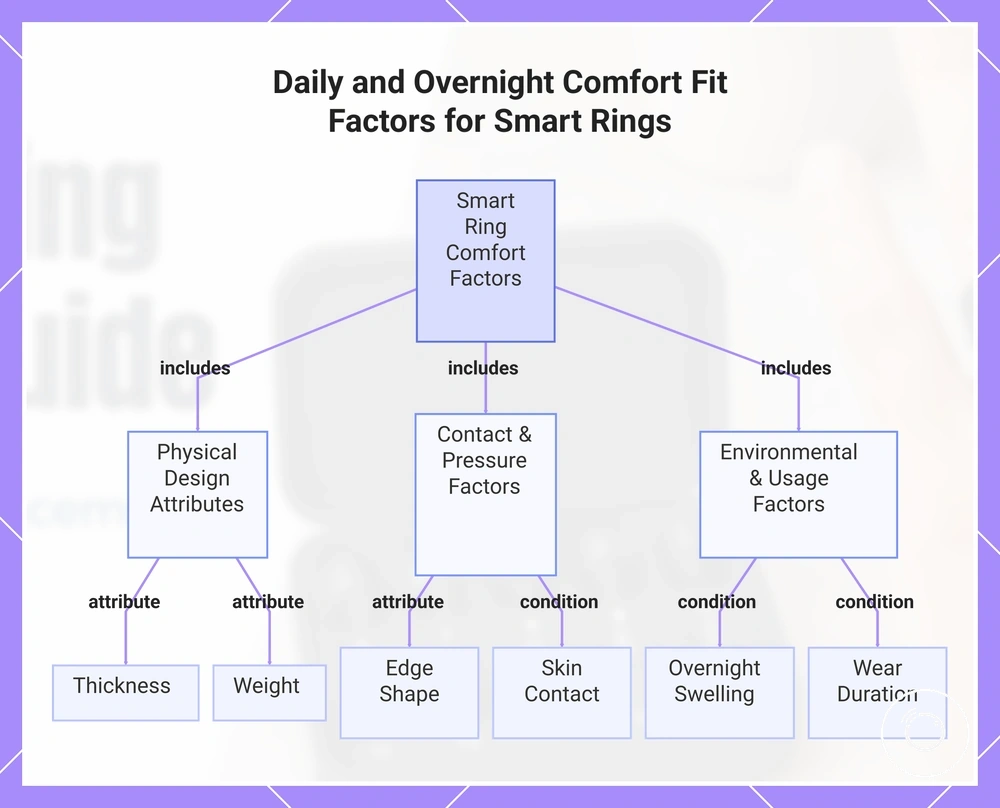
Daily comfort and overnight comfort are acceptable when a fitness smart ring remains unobtrusive, maintains stable skin contact, and does not create persistent pressure during the intended wear duration. The decision should account for ring design, finger changes, temperature, and how long the ring remains on.
Greater thickness and weight can make a ring more noticeable during all-day wear, while a lower-profile form can reduce contact with nearby fingers and objects. A smooth edge shape spreads contact more evenly than a sharp or abrupt edge when the ring presses against the skin. During sleep, swelling or warmer conditions can increase pressure by reducing the free space between the ring and finger.
These comfort factors also affect whether the ring remains practical for overnight wear and sleep tracking. Use the checklist to compare each condition with the pressure, movement, and skin-contact signals experienced during daily and overnight use.
- Thickness: A thicker profile creates more finger-to-finger and object contact, while a lower-profile ring creates less physical interference.
- Weight: A heavier ring feels more noticeable during movement, while a lighter ring places less perceived load on the finger.
- Edge shape: A smooth, rounded edge creates gentler contact, while a pronounced edge concentrates pressure along a narrower area.
- Skin contact: Continuous, even contact supports stable wear; pinching, deep marks, or repeated shifting indicate excessive pressure or insufficient stability.
- Overnight swelling and temperature: Increased finger size during warm conditions or sleep raises pressure, so the ring should retain enough space to avoid constriction.
- Wear duration: Longer wear increases exposure to pressure, moisture, and friction, so comfort should remain acceptable across both active daytime use and sleep.
Comfort should be checked across different conditions rather than judged from a brief fitting alone. A ring that feels unobtrusive during short daytime wear may become noticeable after prolonged activity, warmer temperatures, or overnight swelling.
This section addresses fit-related pressure and wear practicality rather than diagnosing material sensitivity or skin reactions. Persistent redness, itching, or other reactions belong within the separate guidance on skin comfort and irritation.
This chart outlines the key design, contact, and environmental factors that determine smart ring comfort, and highlights the importance of evaluating comfort across different wear conditions.
Thin, Lightweight, and Smooth Ring Comfort
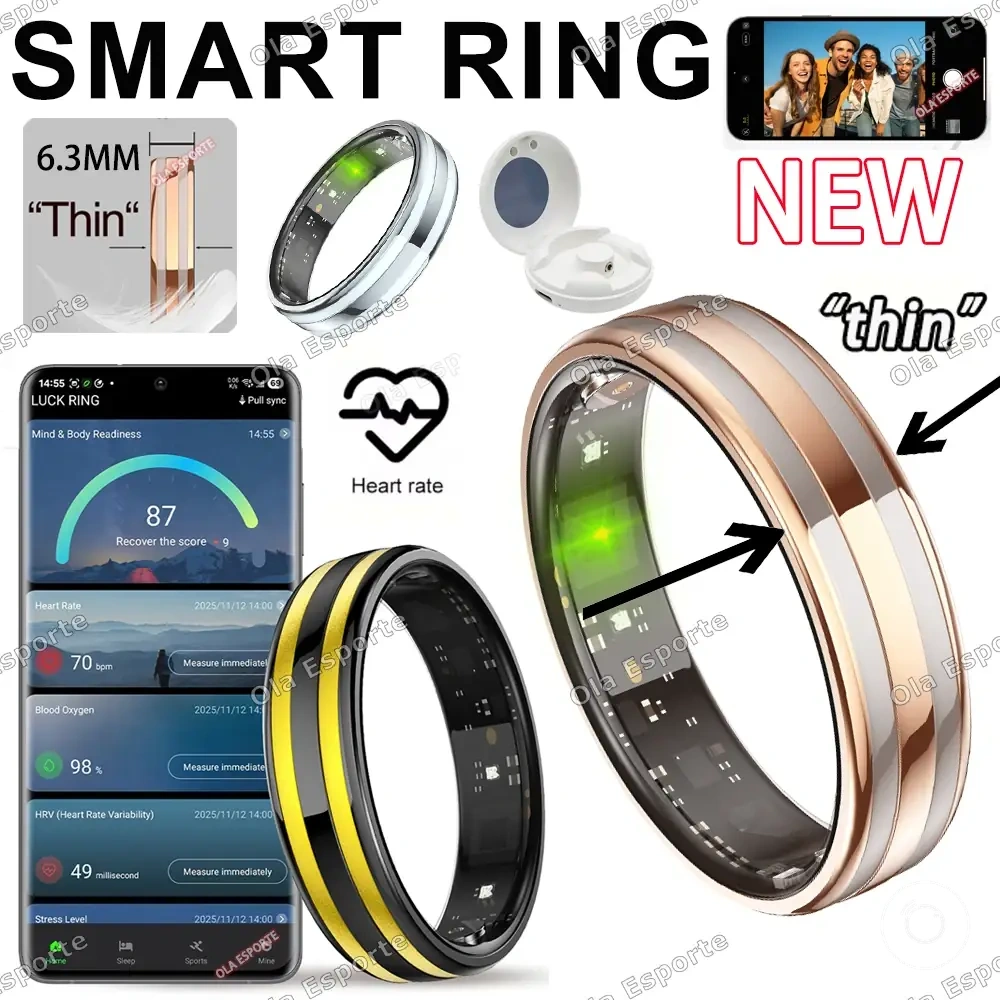
A thin smart ring, lightweight smart ring, or smooth ring can feel less noticeable during daily wear when its physical form limits interference and concentrated finger pressure. Lower thickness improves clearance beside adjacent fingers, lower weight reduces awareness during movement, and a smooth surface reduces friction. Comfort should be judged by how these attributes work together rather than by ring size alone.
A low-profile ring creates less contact with nearby fingers and objects than a thicker form, while a heavier ring is more noticeable during long wear than a lighter form of the same size. The inner finish should feel even against the finger, and a smooth edge shape should avoid concentrating pressure along a narrow border. If the inner surface, edge, or profile creates repeated rubbing or local pressure, the ring may feel uncomfortable despite matching the same nominal size.
For example, two rings with the same inner size can feel different when one has greater thickness, higher weight, a flatter inner finish, or a more pronounced edge. A thin smart ring with a smooth edge may offer more finger clearance, while a thicker or heavier shape may create greater awareness during daily movement.
Overnight Fit and Continuous Skin Contact
Overnight fit should maintain steady skin contact and sensor contact during sleep while allowing for normal finger-size changes. The ring should stay in position without persistent ring pressure or frequent rotation. The correct decision is a fit that supports contact continuity without causing morning tightness or discomfort.
Check the ring after a full sleep period to confirm that overnight wear remains stable and comfortable. These local signals show whether the fit allows normal swelling while preserving contact.
- Sleep duration: The ring should remain comfortable for the full overnight wear period rather than becoming increasingly distracting.
- Swelling and pressure: Finger-size changes during sleep should not lead to persistent tightness, pain, or deep pressure marks.
- Rotation: Minor movement can occur, but repeated shifting indicates weaker positional stability and less consistent sensor continuity.
- Skin contact: The sensing surface should remain against the finger rather than lifting away or moving to a noticeably different position.
- Morning discomfort: Ongoing tightness, soreness, or pronounced red marks indicate that the overnight fit should be reassessed.
- Retest decision: A shifted ring position or repeated morning tightness calls for another fit check before continued overnight use.
A ring that feels comfortable during the day can feel tighter or move more during sleep because finger size and hand position change overnight. These checks assess fit and contact only; overnight wear and sleep tracking covers the broader tracking experience.
Fit-Related Tracking Accuracy Limits
Fit-related accuracy is most affected when poor sensor contact, repeated ring rotation, a loose fit, or excessive tight pressure changes the ring’s contact with the finger. A stable fit can improve contact quality and tracking confidence, but it cannot remove every source of metric variability. The key decision is to treat fit as one accuracy factor rather than the only explanation for an unexpected reading.
A loose fit can create contact gaps or allow the sensing surface to shift away from its intended position, which may reduce skin contact continuity. Tight pressure can keep the ring stationary but may cause discomfort, making the fit unsuitable even when contact remains continuous. Stable contact therefore means consistent ring position and comfortable pressure, not maximum tightness.
The table separates fit conditions from broader tracking limits. Use it to identify whether a contact or placement issue is plausible before considering sensor, algorithm, app, or activity-related factors.
| Condition | Attribute | Trade-off | Decision |
|---|---|---|---|
| Stable fit | Consistent sensor contact and limited rotation | Supports stronger contact continuity but does not guarantee accurate metrics | Keep the fit when pressure remains comfortable and the ring stays positioned |
| Loose fit | Contact gaps and frequent ring rotation | Can increase tracking-signal inconsistency and metric variability | Reassess size or placement when the ring repeatedly shifts |
| Tight fit | Continuous contact with excessive pressure | May preserve position while reducing comfort | Do not treat tighter pressure as an accuracy fix |
| Stable fit with variable readings | Contact quality appears consistent | Variability may relate to the sensor, algorithm, app processing, or activity conditions | Review non-fit factors instead of changing size alone |
A better fit can address contact gaps and unstable ring position, but it cannot resolve readings when the source lies outside fit. The broader accuracy and fit connection compares these contact effects with other factors that influence wearable readings.
When a Smart Ring Is Too Tight or Too Loose
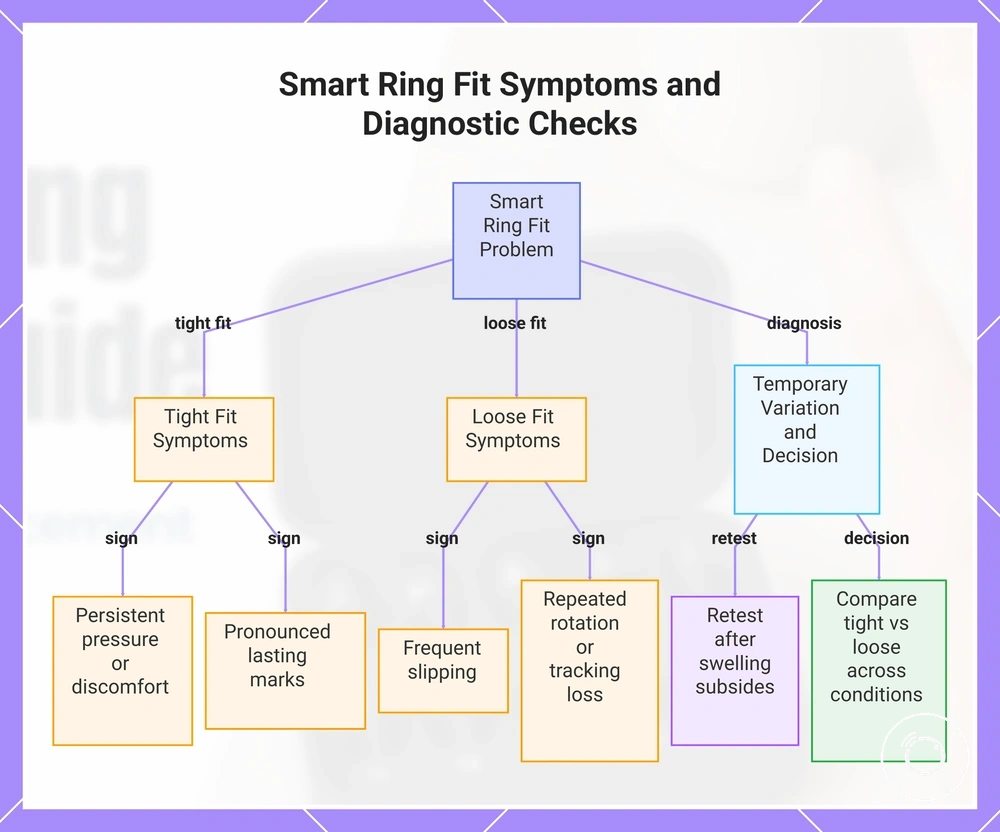
A sizing problem is more likely when a smart ring is too tight and causes repeated pressure or discomfort, or too loose and allows frequent movement, rotation, or slipping. Temporary fit changes can occur with finger swelling or temperature changes, so one brief symptom does not confirm the wrong size. Separate tight and loose fit symptoms before deciding whether to retest or change size.
A tight fit is indicated by persistent pressure, difficult movement over the finger, or pronounced marks after normal wear. A loose fit is indicated by repeated rotation, sliding during hand movement, or loss of steady skin contact that contributes to a tracking interruption. Use the pattern and duration of the symptoms, not a single moment, to qualify the fit condition.
The following checks separate excessive tightness, looseness, and temporary variation:
- Persistent pressure or discomfort: The ring is likely too tight when pressure continues during normal wear rather than easing after a short adjustment period.
- Pronounced or lasting marks: Deep or persistent marks indicate excessive pressure; a faint temporary imprint alone does not confirm a sizing problem.
- Frequent slipping: The ring is likely too loose when it repeatedly slides toward the knuckle or feels at risk of coming off during ordinary hand movement.
- Repeated rotation: Regular spinning or a shifted sensor position indicates a loose fit and a higher risk of contact gaps.
- Tracking interruption: Missing or inconsistent contact is plausibly fit-related when it occurs with visible slipping or rotation, while stable positioning points to other tracking factors.
- Temporary swelling: Tightness that appears only during heat, exercise, or another temporary finger-size change should be retested after the finger returns to its usual condition.
- Between-size decision: When one size causes repeated discomfort and the next size repeatedly slips, compare both across normal daily conditions before choosing the more stable and comfortable fit.
Repeated discomfort after normal wear supports reassessing the size, while a short-lived change linked to swelling supports a later retest rather than an immediate replacement decision. The diagnostic boundary is persistence: recurring pressure, slipping, or contact loss indicates a fit issue more clearly than an isolated symptom.
This chart shows the main symptoms of a too-tight or too-loose smart ring and the diagnostic steps to distinguish persistent fit issues from temporary variation.
Too Tight Fit Signs
A smart ring may be too tight when pressure, discomfort, marks, or removal difficulty continue during normal wear. Judge these tight fit signs by severity, duration, and repeatability rather than by one brief change. Repeated symptoms support size reconsideration, while temporary tightness supports a later retest.
The following checks separate an ongoing tight fit from a short-term change linked to the swelling context:
- Persistent pressure: Pressure that continues through ordinary wear suggests the ring may be too tight, especially when it does not ease after the finger returns to its usual condition.
- Repeated discomfort: Discomfort that returns across normal wear periods is a stronger size signal than a brief sensation caused by heat, exercise, or temporary swelling.
- Persistent marks: Pronounced marks that remain after removal suggest excess pressure, while a faint temporary imprint alone provides weaker evidence that the size is too small.
- Removal difficulty: A ring that repeatedly resists removal under usual conditions suggests a tight fit; difficulty limited to temporary swelling should be reassessed after the swelling subsides.
- Overnight tightness: Morning pressure, discomfort, or lasting marks after sleep indicate that overnight fit is tighter than daytime fit and may justify size reconsideration when the pattern repeats.
Heat, exercise, and sleep can produce temporary finger-size changes, so one isolated episode does not establish a persistent sizing issue. Recurrent pressure signs under ordinary conditions provide the clearer basis for retesting the fit.
Too Loose Fit Signs
A smart ring may be too loose when repeated sliding, spinning, or rotation prevents it from staying in a stable position. Judge loose fit signs by movement during normal wear and by whether the ring repeatedly loses steady contact. Repeated instability supports reconsidering the size or finger, while brief movement alone does not confirm a poor fit.
The following checks separate persistent looseness from temporary movement caused by activity or changing finger size:
- Repeated sliding: A ring that regularly shifts along the finger during ordinary hand movement suggests the size may be too large.
- Frequent spinning: Spinning that repeatedly moves the sensing area away from its intended position indicates unstable wear, while occasional rotation alone is weaker evidence of a sizing problem.
- Sensor gap: A visible or recurring gap between the ring and the skin indicates reduced contact and a higher tracking risk.
- Position changes: A ring that does not remain in the same position during workouts, hand washing, or sleep movement suggests insufficient wear stability.
- Slipping over the knuckle: Slipping toward or over the knuckle during routine movement indicates that the ring may not be secure on that finger.
- Inconsistent contact: Contact that repeatedly breaks when the ring slides or rotates suggests a fit-related source of tracking variability rather than guaranteed tracking failure.
Cold weather can temporarily reduce finger size, while water, exercise, and sleep movement can change how the ring moves on the finger. Retest the fit under ordinary conditions before deciding whether a different size or finger provides more stable contact.
Pre-Purchase Fitness Smart Ring Sizing Checklist
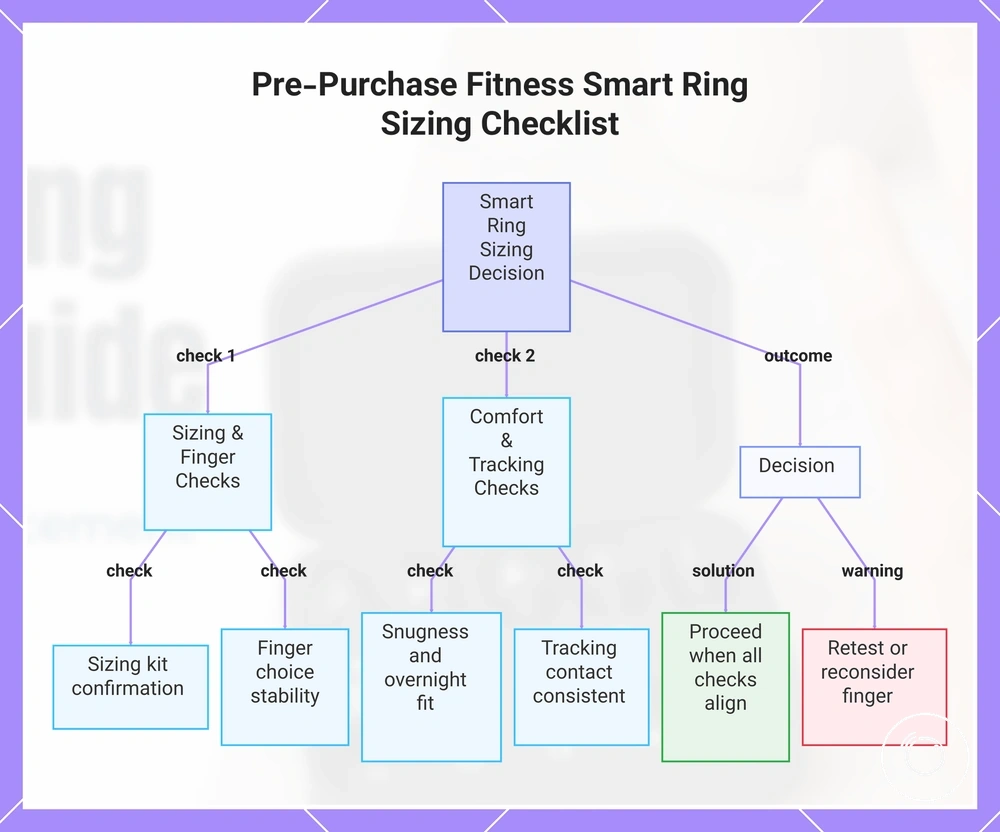
Use this pre-purchase checklist to confirm the final size, placement, and wear stability before moving toward a fitness smart ring purchase decision. These checks consolidate the earlier sizing criteria without replacing the detailed fit guidance. Proceed when the ring remains comfortable and stable across normal daily conditions; retest when the fit signals remain inconsistent.
Complete each final fit check with the intended model’s sizing kit and placement guidance. Each result should point to one decision: proceed, retest the size, change the finger choice, or review comfort and tracking expectations.
- Sizing kit confirmation: Proceed when the selected sizing-kit sample matches the intended model and remains stable during ordinary wear; retest when two sizes produce conflicting comfort or movement signals.
- Finger and hand choice: Keep the chosen finger and hand when the ring stays secure through routine movement; choose another finger when position changes repeatedly or daily tasks make wear impractical.
- Snugness and comfort: The fit should feel snug without persistent pressure, removal difficulty, or repeated slipping. Reconsider the final size when discomfort or instability continues under normal conditions.
- Overnight fit and swelling variation: Confirm that overnight fit remains comfortable and that temporary swelling does not create lasting pressure. Retest after heat, exercise, sleep, or cold conditions when finger size changes temporarily.
- Tracking contact: Proceed when the ring maintains consistent skin contact and its sensing area stays in the intended position. Review the size or finger when recurring gaps, rotation, or movement interrupt contact.
- Return policy and model guidance: Review the seller’s stated return policy, sizing terms, and model-specific placement instructions before deciding. Treat these conditions as product-specific because eligibility, timelines, and fit guidance differ by seller and model.
The sizing decision is ready when the sizing kit, finger choice, comfort, overnight fit, swelling response, and tracking contact point to the same stable option. Retest or reconsider the finger when one or more checks remain unresolved.
This chart shows the key pre-purchase sizing checks for a fitness smart ring and the final decision based on their alignment.
The products below are useful examples for comparing available options. Before buying, check that the compatibility criteria, key features, and product details match your needs.