Chronograph and Standard Watches Compared for Men
A chronograph watch adds a stopwatch function for measuring elapsed time, while a standard watch keeps the time display simpler without that added timing complication. For a buying decision, the core difference is function and simplicity.
For a buying decision, the core difference is function and simplicity.
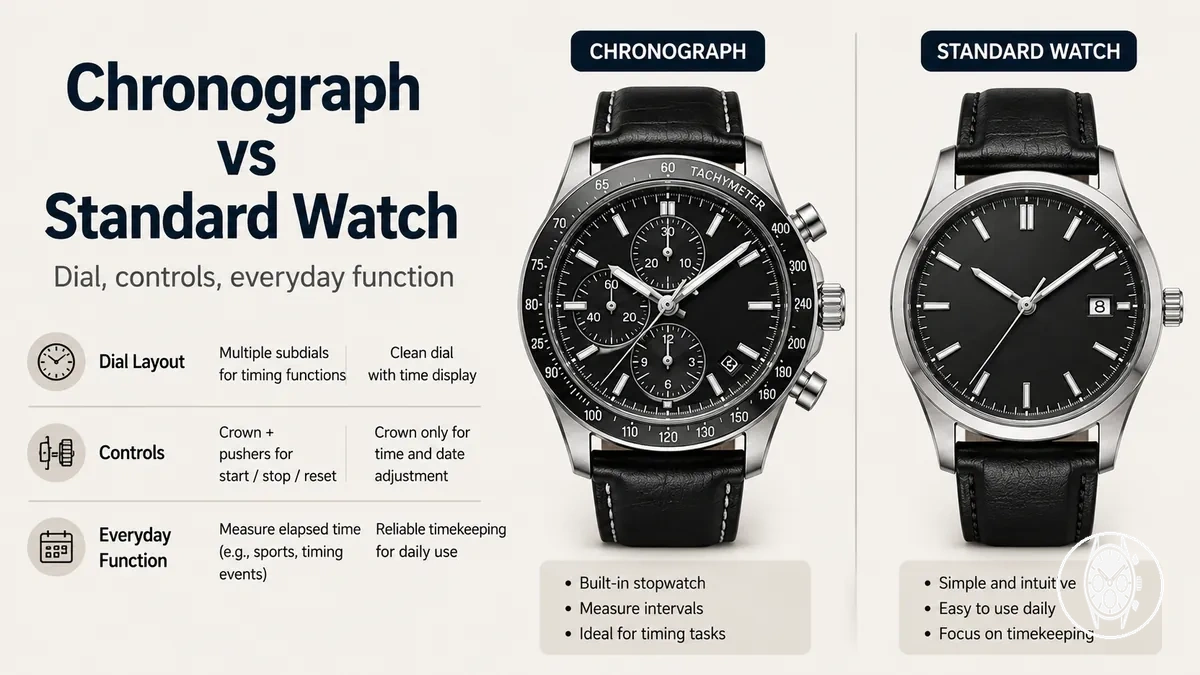
men's chronograph watches combine ordinary timekeeping with a stopwatch function, commonly using pushers to start, stop and reset elapsed-time indications shown by chronograph hands or subdials. By contrast, a time-only standard watch prioritises hours, minutes and, where included, seconds; both designs can be an analog watch, so the practical contrast is function and layout rather than analog versus non-analog.
The practical value of the added function therefore depends on whether elapsed-time measurement is useful enough to justify the extra controls and visual information for the wearer.
For everyday wear, compare the two designs by timing needs, layout, comfort, budget, movement type and style preference: a chronograph adds user-controlled elapsed-time measurement and more dial information, while a time-only standard watch removes that stopwatch interaction and keeps the display focused on ordinary timekeeping. The practical value of the added function therefore depends on whether elapsed-time measurement is useful enough to justify the extra controls and visual information for the wearer.
Understanding the stopwatch function first makes the later comparison of wearability and value clearer.
Understanding the stopwatch function first makes the later comparison of wearability and value clearer. A chronograph should therefore be judged for the timing capability it adds, rather than treating subdials or pushers alone as evidence that it is the more suitable choice.
Table of Contents
What a Chronograph Adds to a Standard Watch
A chronograph is a watch that adds a stopwatch function for measuring elapsed time while continuing to indicate the current time. Seiko defines the chronograph function as measuring elapsed time while showing the current time, so the added value over a standard time-only watch is a separate stopwatch layer.
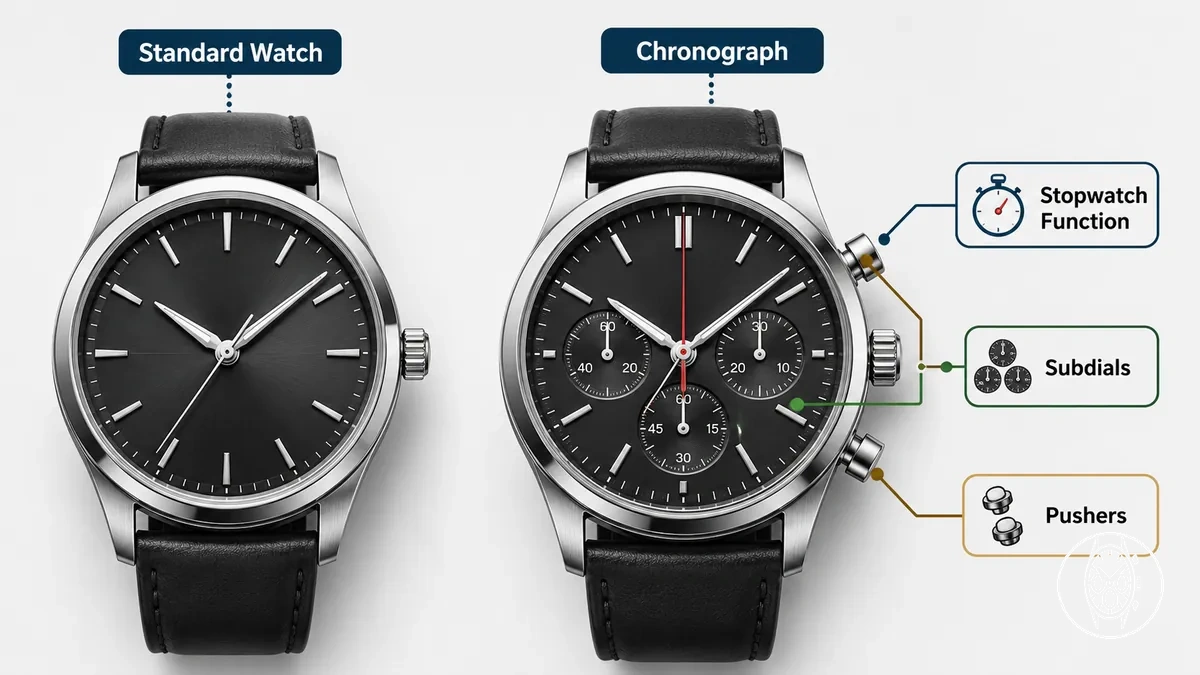
Compared with a standard watch, the chronograph changes the dial layout and controls by adding timing hands or subdials plus pushers for stopwatch operation. In Seiko's Calibre 8R46 and 8R48 instructions, Button A starts and stops the stopwatch and Button B resets it; this control-and-display relationship clarifies the chronograph watch meaning without changing the watch's everyday role of showing the current time.
Compared with a standard watch, the chronograph changes the dial layout and controls by adding timing hands or subdials plus pushers for stopwatch operation.
The amount of elapsed time a chronograph can record is model-specific rather than universal: Seiko specifies a maximum of 30 minutes for Calibre 8R46 and 12 hours for Calibre 8R48. A chronograph can also be analog, so “chronograph versus analog” confuses stopwatch capability with display format; the practical comparison is an analog chronograph with added timing controls versus a standard analog time-only watch with a simpler dial.
Stopwatch Function, Subdials, and Pushers
A chronograph's stopwatch function uses dedicated chronograph controls and timing displays to measure elapsed time while the watch continues to indicate the current time. Seiko's 8R46/8R48 instructions specify a centre timing hand for stopwatch seconds, a stopwatch minute hand measuring up to 30 minutes, Button A as the start/stop pusher, and Button B as the reset pusher; the 8R48 also adds a stopwatch hour hand measuring up to 12 hours. These pushers, timing hands, and subdial-style registers connect physical controls to elapsed-time measurement.
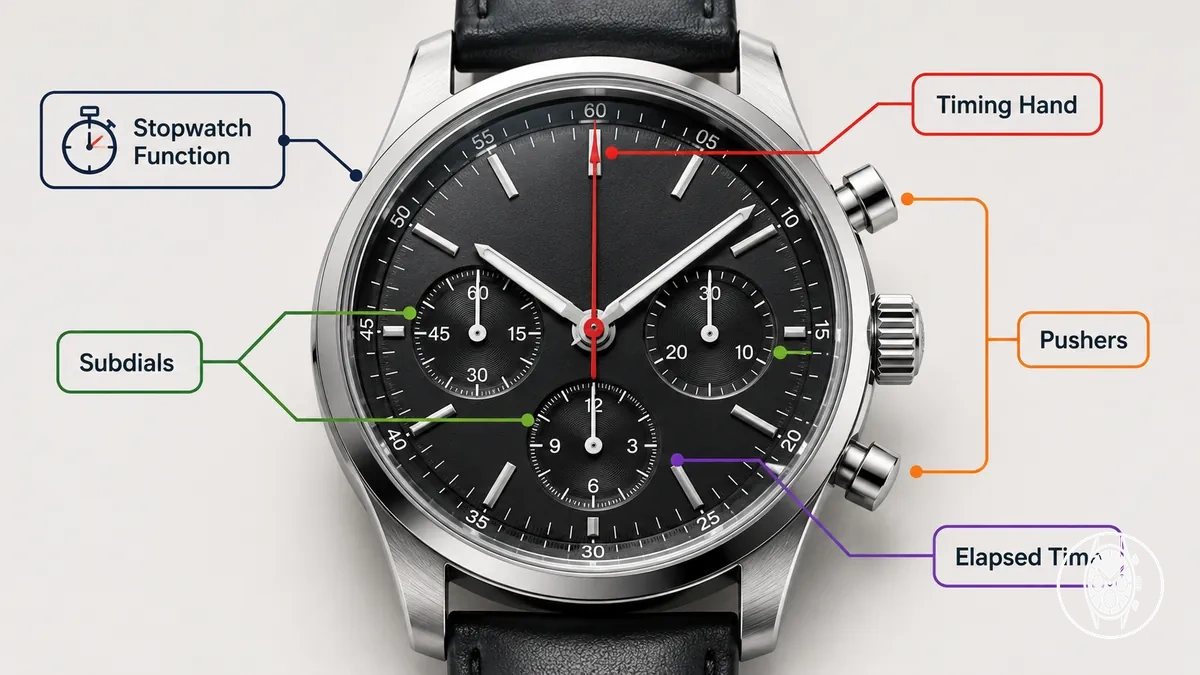
For example, Seiko's 8R46/8R48 instructions illustrate a 5,000-metre timing task with an elapsed-time reading of 20 minutes 41 seconds, showing how the pushers and timing display work together in a simple measurement. The same Seiko documentation states that display position and design vary by model, so the number and arrangement of subdials and the timing hand should not be assumed from this example; individual chronograph functions are identified by the specific watch layout and documentation.
Regular Time Display and Standard Analog Use
A standard analog watch uses an hour hand and minute hand as its primary time display, while a seconds hand is an optional additional indicator; without a chronograph function, the display has no separate stopwatch layer. Nixon's guide to analog watches describes the hour hand as the shorter hand, the minute hand as the longer hand, and notes that many analog watches also include a seconds hand, supporting the time-only role of this simpler configuration.
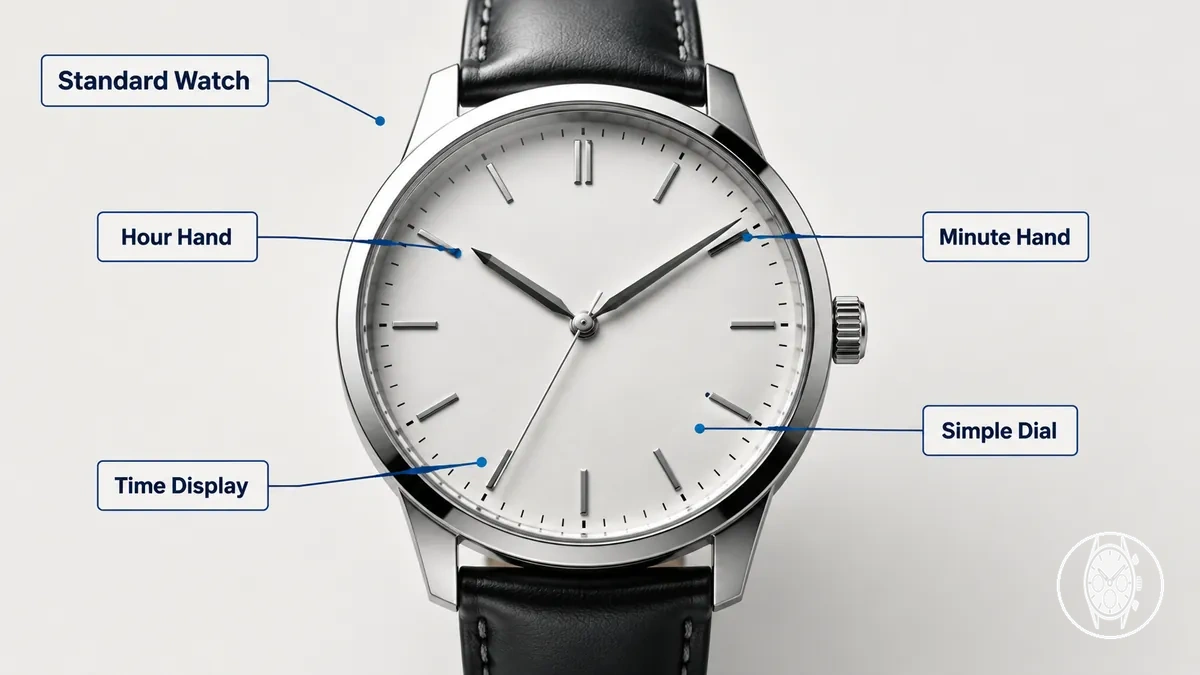
By contrast with a chronograph display, a time-only watch can use a simple dial and fewer controls, creating lower interaction during daily wear because a quick time check requires reading the hands rather than operating stopwatch pushers. Easier reading is conditional rather than universal: the practical readability of a standard analog watch still depends on the specific dial layout, hand visibility and hour markers.
Chronograph vs Standard Watch Functionality
A chronograph combines everyday timekeeping with a stopwatch for elapsed-time measurement, while a standard time-only watch provides simple timekeeping without that stopwatch function. The functionality split is therefore added timing capability and interaction for the chronograph versus lower interaction for a standard watch when the wearer only needs the current time.
For everyday use, the decision depends on timing need, interaction, and readability rather than one watch type being universally preferable.
For everyday use, the decision depends on timing need, interaction, and readability rather than one watch type being universally preferable. A chronograph requires additional dial information and controls when elapsed time is measured, whereas a standard time-only watch can present fewer timing elements; readability still depends on the specific hands, markers, contrast, and dial layout, so dial complexity alone does not establish that one design is easier to read in every case.
| Watch type | Main function | Interaction level | Best-fit use case | Trade-off |
|---|---|---|---|---|
| Chronograph | Current time plus elapsed-time stopwatch | Additional interaction when the stopwatch is used | Everyday use that includes a need to measure elapsed time | Added timing capability with additional dial information and controls |
| Standard watch | Simple timekeeping without a stopwatch | Lower interaction for time-only use | Everyday use focused on checking the current time | No dedicated elapsed-time stopwatch capability |
For a wearer who prefers the chronograph look but rarely measures elapsed time, the stopwatch can remain an infrequently used function, making dial appearance rather than timing need the main reason for that choice. For a wearer who needs elapsed-time measurement, the same added controls provide a practical function; the appropriate trade-off therefore depends on whether timing capability or simple timekeeping has greater value in the intended use case.
Timing Tasks and Practical Everyday Uses
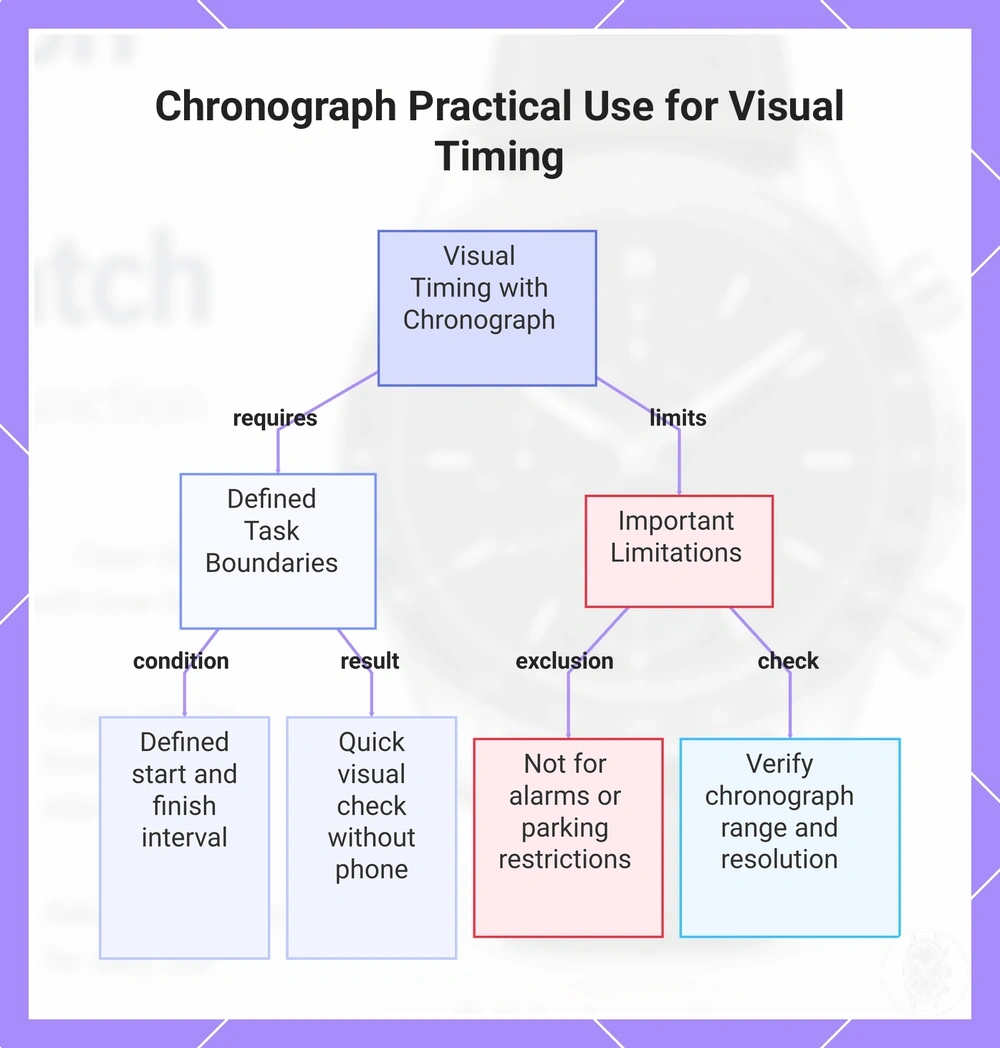
A chronograph can add practical value to timing tasks when the wearer wants elapsed time visible on the wrist for cooking, workouts, parking time, meetings, or other short intervals. The useful condition is a task with a defined start and finish: visual timing provides a quick check of progress without requiring a phone to be opened, although a chronograph does not replace alarms, posted parking restrictions, or specialised timing equipment.
A chronograph can add practical value to timing tasks when the wearer wants elapsed time visible on the wrist for cooking, workouts, parking time, meetings, or other short intervals.
The durations below are explicitly illustrative rather than manufacturer specifications or recommended limits; the usable timing range and display resolution must be checked for the specific chronograph.
- Cooking: Suppose a cooking step calls for an illustrative 12-minute interval. Starting visual timing with the step lets the wearer compare elapsed time with the 12-minute target during a quick wrist check.
- Workouts: Suppose a workout uses an illustrative 5-minute exercise interval followed by a 2-minute recovery interval. Timing each interval separately gives the wearer a visible elapsed-time reference for changing phases.
- Parking time: Suppose a permitted parking period is illustratively 45 minutes. Timing from arrival provides a visible measure of elapsed parking time, but the applicable sign, ticket, meter, or local restriction remains the authority for when the vehicle must leave.
- Meetings: Suppose a meeting is allocated an illustrative 30 minutes. Timing from the start lets the wearer compare elapsed time with that planned duration without interrupting the discussion to open a phone.
- Short intervals: Suppose a task needs an illustrative 90-second interval. A chronograph can provide wrist-based quick timing when its specific display has sufficient resolution and readability for that interval; otherwise, a timer with an audible alert may be more practical.
This chart shows the essential condition for using a chronograph as a visual timing tool and its practical limitations.
Simple Time Reading and Lower Interaction
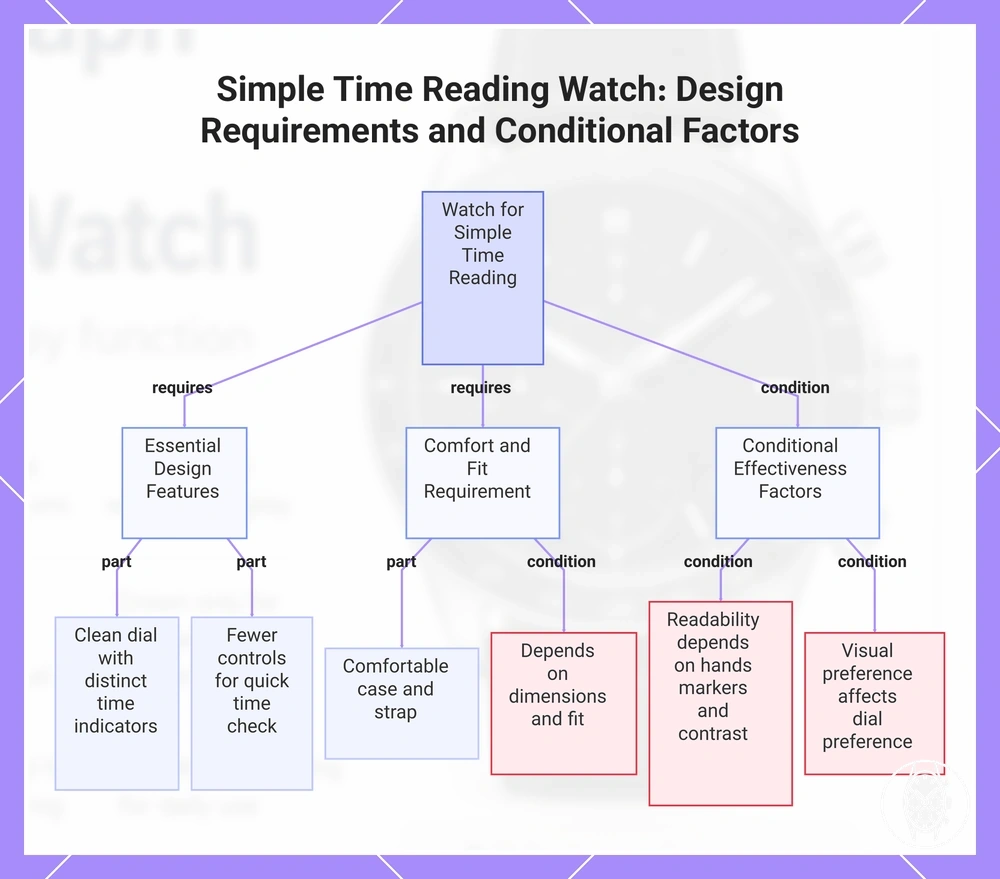
A standard watch can support simple time reading when its clean dial keeps the primary time indicators visually distinct and its fewer controls reduce the actions required for a quick time check. Readability remains conditional on the specific hands, markers, contrast, and dial layout, but fewer user-operated controls also reduce opportunities for accidental presses; for wearers who mainly want the current time, lower interaction is a practical benefit rather than a limitation.
A standard watch can support simple time reading when its clean dial keeps the primary time indicators visually distinct and its fewer controls reduce the actions required for a quick time check.
For users who prioritise speed and simplicity, daily practicality is strongest when the watch combines a clean dial for easy reading, fewer controls for straightforward operation, and a case and strap or bracelet that feel comfortable on the wearer's wrist. These criteria are conditional rather than universal: visual preference affects whether a simple dial feels preferable, while comfort depends on the specific watch dimensions, fit, and wearer rather than simplicity alone.
This chart shows the essential design features, comfort requirements, and conditional factors that determine a standard watch's ability to support simple time reading with lower interaction.
This chart shows the essential design features, comfort requirements, and conditional factors that determine a standard watch's ability to support simple time reading with lower interaction.
Dial Design, Size, and Wearing Style Differences
Chronograph dial design usually has greater visual complexity because subdials and pushers add visible timing components, while a standard watch can use a cleaner dial with fewer external controls. SwissWatchExpo describes subdials as smaller dials within the main dial that can display chronograph information, so the main design split is added timing detail and case presence versus a potentially cleaner time-focused layout.
Dial layout, case presence, visual weight, wrist comfort, and wearing style should be judged as separate attributes because visible complexity does not establish actual case size or comfort.
Dial layout, case presence, visual weight, wrist comfort, and wearing style should be judged as separate attributes because visible complexity does not establish actual case size or comfort. Quill & Pad defines watch proportion as the relative sizing of components and distinguishes proportion from overall scale, so perceived size can change with dial spacing, hands, text, subdials, pushers, and case proportions even when the category alone does not determine dimensions. In practical terms, denser chronograph details can create greater visual weight, while more open spacing on a standard watch can create a lighter visual impression; actual wrist comfort still requires the dimensions, profile, fit, and wearer of the specific model.
| Attribute | Chronograph tendency | Standard watch tendency | Decision effect |
|---|---|---|---|
| Dial layout | Subdials add timing information and increase visible dial density | A time-focused layout can leave more open dial space | Choose the level of visual complexity that matches the preferred wearing style |
| Controls | Pushers add visible case-side controls | Without chronograph controls, the case can have fewer external controls | Additional or fewer controls change both case appearance and interaction |
| Visual weight | Subdials, pushers, and tighter spacing can create a visually heavier presentation | Cleaner spacing can create a visually lighter presentation | Perceived size can differ from actual case dimensions |
| Wrist comfort | Determined by the specific case dimensions, profile, fit, and wearer rather than chronograph status alone | Determined by the specific case dimensions, profile, fit, and wearer rather than standard-watch status alone | Assess the individual watch on the wrist instead of assuming one category is more comfortable |
| Style fit | Additional dial and case detail can suit a preference for greater visual complexity | A clean dial can suit a preference for a more restrained visual presentation | Outfit compatibility depends on personal preference and practical style fit rather than a fixed dress rule |
For outfit compatibility and daily wearing style, compare the specific watch's dial density and case presence with the appearance and wrist comfort you prefer. A chronograph is not inherently large and a standard watch is not inherently minimal, so practical fit should be based on the individual model's proportions and visual density rather than the watch category alone.
Busier Multi-Dial Layouts
A chronograph multi-dial layout creates greater visible dial density when subdials, additional hands, pushers, and scale markings occupy more of the watch face and case. This combination can produce a more technical look or sporty impression because the eye processes more separate visual elements than on a cleaner time-only dial.
This combination can produce a more technical look or sporty impression because the eye processes more separate visual elements than on a cleaner time-only dial.
Readability and style outcome remain model- and preference-dependent: higher hand count and denser scale markings can make a quick glance require more visual separation, while strong contrast and clear spacing can preserve legibility. Pushers also increase case presence, so the same visual complexity that feels busy to one wearer may be the preferred style signal for another rather than an objective flaw.
Cleaner Simple-Dial Layouts
A standard watch with a simple-dial layout can reduce visual load by using fewer hands, fewer or no subdials, and more open dial space, which can support faster time checking when the hands and markers remain visually distinct. The clean dial therefore links simpler visual structure with readability, while the benefit remains conditional on contrast, marker design, hand shape, and the wearer's visual preference.
This restrained appearance can increase versatility across different wearing styles, but a simple watch face is not inherently dressier, more formal, or preferable for every wearer.
For everyday use, open dial space and fewer competing elements can make the primary time indicators easier to isolate during a quick glance, while a simpler case and dial composition can also create a thinner-looking visual profile even when the actual case thickness is unchanged or model-specific. This restrained appearance can increase versatility across different wearing styles, but a simple watch face is not inherently dressier, more formal, or preferable for every wearer.
Advantages of Choosing a Chronograph Watch
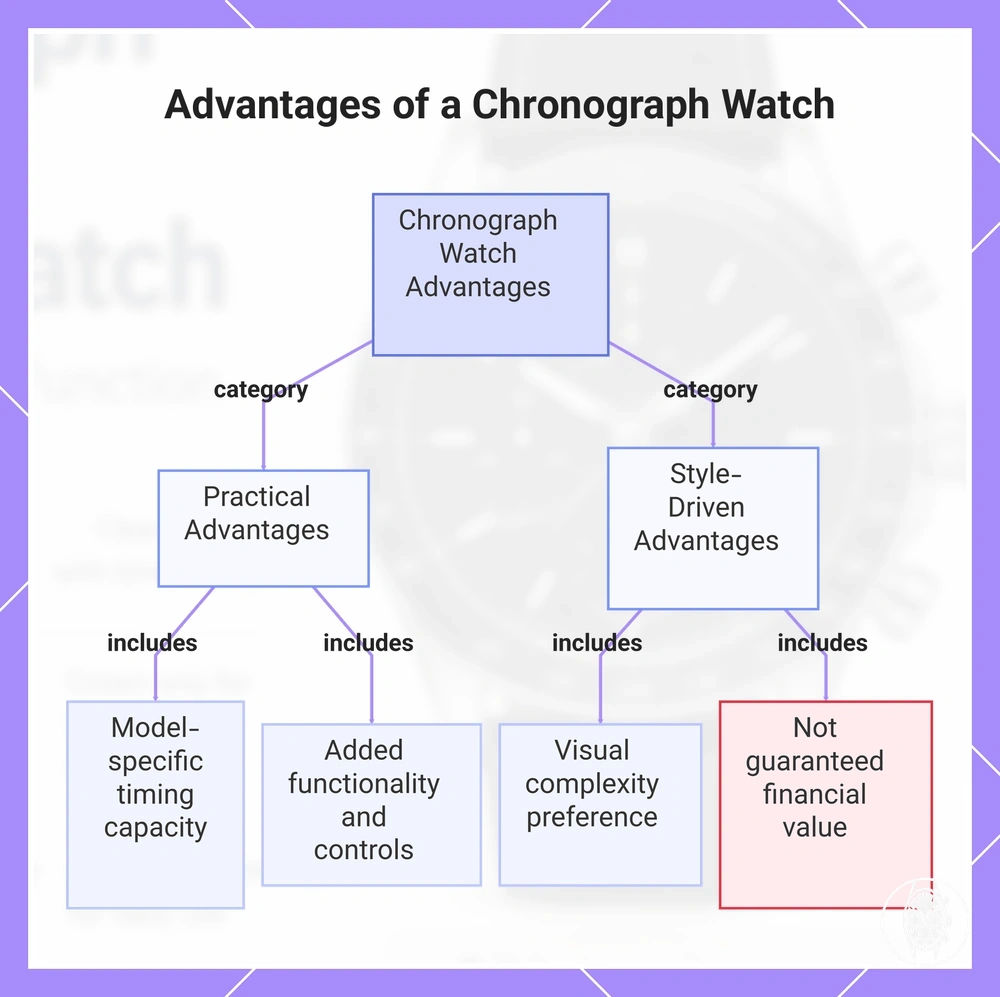
The main advantages of a chronograph watch over a standard time-only watch are timing utility through a stopwatch function, greater interaction through dedicated controls, and a technical appearance created by additional timing displays. These advantages have practical value when elapsed-time measurement is useful and style-driven value when the wearer prefers greater visual complexity, so their importance depends on use and personal preference.
The clearest decision signal is whether each added feature serves a practical requirement or a style preference.
The clearest decision signal is whether each added feature serves a practical requirement or a style preference. Seiko's instructions for mechanical chronograph calibres 8R46 and 8R48 specify dedicated start/stop and reset pushers and separate stopwatch timing displays, providing a concrete basis for distinguishing functional advantages from appearance-led ones.
- Timing utility: The stopwatch function is a practical advantage when the wearer needs wrist-based elapsed-time measurement. Seiko specifies a maximum stopwatch duration of 30 minutes for calibre 8R46 and 12 hours for calibre 8R48, showing that usable timing capacity is model-specific rather than a universal chronograph value.
- Technical appearance: Subdials, timing hands, and pushers increase visual complexity compared with a time-only dial; this is an advantage when a detailed, instrument-like appearance matches the wearer's style preference, but not when a cleaner dial is preferred.
- Versatility: A chronograph provides current-time display and separately controlled elapsed-time measurement in one watch, which adds functional versatility for everyday wear when both functions are useful; a buyer who only checks the current time receives less practical benefit from the second function.
- Interaction: Dedicated controls create an additional physical interaction that a standard time-only watch does not require. In Seiko's 8R46/8R48 instructions, Button A starts and stops the stopwatch and Button B resets it, making this advantage relevant to wearers who expect to operate the timing function rather than simply prefer its appearance.
- Collector appeal: A chronograph's movement, timing mechanism, dial configuration, or historical context can create collector appeal when those characteristics match a collection theme or personal preference; collector appeal is therefore a style- and ownership-driven advantage, not evidence of guaranteed financial value.
This chart shows the main advantages of a chronograph watch, grouped by whether they serve a practical requirement or a style preference, with key supporting details from Seiko's chronograph calibres.
Disadvantages and Trade-Offs of Chronograph Watches
The main disadvantages of chronograph watches are added visual complexity and controls, plus model-dependent trade-offs in case thickness, service needs, repair cost, and learning curve compared with a simpler time-only watch. These drawbacks are decision criteria rather than universal defects because their practical effect changes with movement type, case design, repair access, and whether the wearer values or uses the added functions.
The strongest decision signal is the specification of the individual watch rather than the chronograph label alone.
The strongest decision signal is the specification of the individual watch rather than the chronograph label alone. Seiko's 8R46/8R48 instructions provide a concrete interaction example: Button A starts and stops the stopwatch and Button B resets it, while the same documentation shows separate stopwatch indications; this establishes additional controls and display information, but it does not establish a universal numerical increase in case thickness, service interval, or repair cost for chronographs as a class.
| Trade-off | Condition that increases it | Possible effect | When it matters |
|---|---|---|---|
| Visual complexity | Subdials, chronograph hands, scales, and other timing indications increase dial density | More information must be visually separated during a time check; the effect on readability remains specific to dial contrast, spacing, and layout | It matters when the wearer prioritises a cleaner time display over a technical appearance |
| Case thickness | The selected movement architecture and case construction require additional vertical space | Greater case height can increase size perception and alter wrist comfort or clearance under a cuff | No universal numerical thickness penalty is established for chronographs as a class, so it matters when the individual model's stated case thickness exceeds the wearer's preferred fit |
| Service needs | Movement type is mechanical or automatic and incorporates additional chronograph components, or access to appropriate parts and service is restricted | Servicing can involve the chronograph mechanism as well as the base timekeeping system | No single service interval applies across quartz, automatic, and mechanical chronographs; the relevant value is the interval specified for the individual movement by its manufacturer |
| Repair cost | The movement requires specialised labour, manufacturer-specific parts, or restricted repair access | Ownership cost can face greater price pressure than for a simpler movement under comparable repair conditions | The reviewed evidence does not establish a defensible universal repair-cost difference in Australian dollars across chronograph movement types, so a buyer concerned about cost should compare model-specific service pricing and repair access |
| Learning curve | The watch adds stopwatch pushers and separate timing indications to normal timekeeping | The wearer must distinguish ordinary time display from stopwatch operation; in Seiko's 8R46/8R48 example, two pushers divide start/stop and reset into separate controls | It matters when daily use is intended to require minimal control input or the stopwatch function will rarely be used |
These trade-offs are acceptable when the wearer gains enough practical or stylistic value from the stopwatch function, technical dial, and additional interaction to justify the extra complexity. They weaken the choice when visual complexity, case fit, service needs, repair cost, or the learning curve conflicts with the buyer's priorities, so thickness, servicing, and cost should be evaluated from the individual model and movement documentation rather than inferred from chronograph status alone.
Bulk, Maintenance, Repair Cost, and Learning Curve
Chronograph ownership can involve four local trade-offs: bulk can reduce comfort, maintenance can increase ownership effort, repair cost can weaken value, and a learning curve can reduce usability when the added controls are rarely used. These effects are model-specific rather than universal; Seiko lists its quartz SSB453 chronograph at 11.5 mm thick and its mechanical SRQ043 chronograph at 15.1 mm thick, showing that case thickness must be checked at model level rather than assumed from the chronograph category.
The practical decision is whether each trade-off exceeds the buyer's tolerance for added size, service effort, cost, or control complexity:
- Bulk: Greater thickness or case presence matters when it changes wrist fit or comfort. Seiko's 11.5 mm SSB453 provides a relatively slim quartz edge case, while the 15.1 mm SRQ043 provides a thicker mechanical edge case; the 3.6 mm difference shows that bulk can vary materially even within one manufacturer's chronograph range.
- Maintenance: Maintenance becomes a stronger ownership-effort factor when the movement requires more specialised service. Seiko describes its 8R-series mechanical chronograph movements as technically complex, but the reviewed evidence does not establish one universal service interval across quartz and mechanical chronographs, so the relevant value is the interval specified for the individual model.
- Repair cost: Repair cost matters when movement complexity, parts access, or specialist labour raises service expense beyond the buyer's value threshold. The reviewed evidence does not provide a defensible universal Australian-dollar repair-cost premium for chronographs, so cost should be judged from model-specific service pricing and repair access rather than treated as a fixed category penalty.
- Learning curve: Additional pushers and timing displays increase use effort when the wearer mainly wants simple time checking. Seiko's 8R46/8R48 instructions assign one pusher to start and stop the chronograph and another to reset it, so the extra interaction can reduce usability for a wearer who rarely uses timing functions while remaining acceptable for someone who does.
When a Standard Watch Makes More Sense
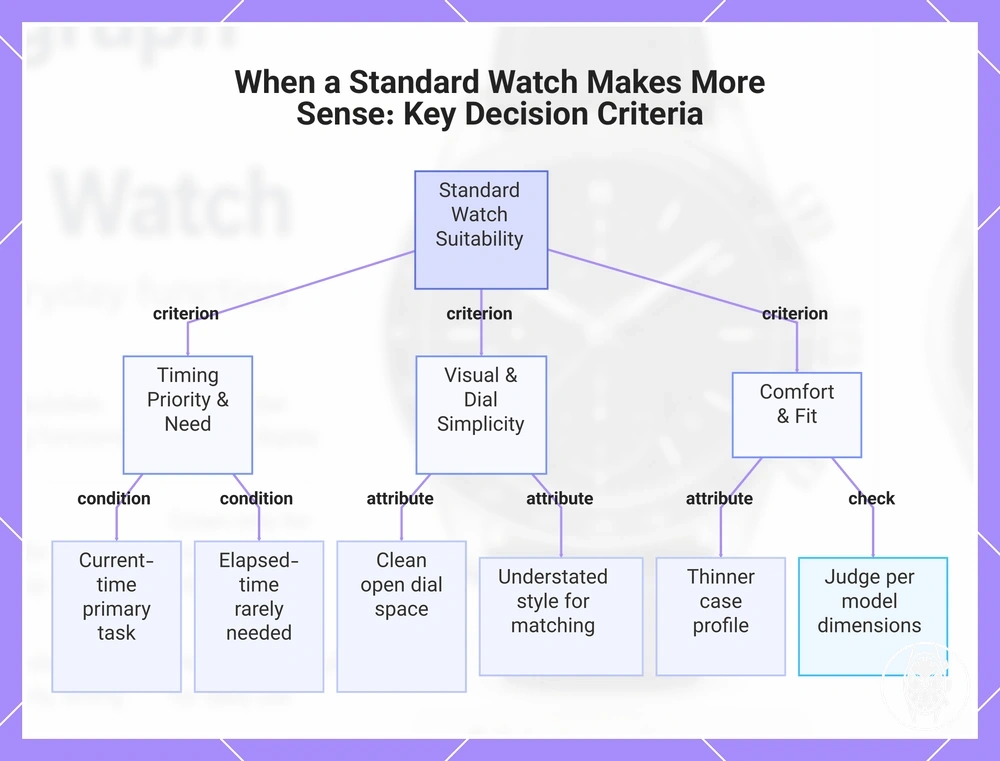
A standard watch makes more sense when the buyer's time-reading needs are limited to checking the current time and the priorities are a clean dial, lower interaction, a thinner feel, and ownership simplicity rather than additional timing controls. The simpler option is therefore a better fit when low timing need, restrained visual preference, wrist comfort, and straightforward daily use matter more than chronograph-style visual complexity.
These criteria support the following decision signals without making the standard watch automatically preferable for every wearer.
The buying decision is clearest when each criterion is tied to a specific use condition: dial preference affects readability, control count affects daily interaction, case dimensions affect comfort, and the absence of a regular timing need reduces the practical value of additional stopwatch controls. These criteria support the following decision signals without making the standard watch automatically preferable for every wearer.
- Time-reading priority: A standard watch is the stronger fit when current-time checking is the primary task and elapsed-time measurement is rarely required, because fewer controls support lower interaction during daily use.
- Clean dial preference: A clean dial with fewer hands, fewer or no subdials, and more open dial space suits a buyer who prefers visual simplicity and wants the primary time indicators to remain prominent.
- Comfort and thinner feel: A standard watch makes more sense when the individual model has a case profile that produces the thinner feel or wrist fit the wearer prefers; actual comfort should be judged from that model's dimensions rather than from watch type alone.
- Low timing need: A buyer who rarely times workouts, cooking, meetings, parking, or similar tasks receives limited functional value from chronograph controls, making a time-only watch a more direct match for the intended use.
- Workwear and formal wear: A restrained standard watch can suit workwear or formal wear when the wearer prefers a less visually complex accessory that does not compete strongly with the rest of the outfit, but this remains a style preference rather than a fixed dress rule.
- Minimal style and daily matching: A standard watch can offer easier daily matching when the wearer's wardrobe favours simple shapes and understated details; a buyer who prefers subdials, pushers, and a technical appearance may still prefer a chronograph despite having little timing need.
This chart shows the main criteria that indicate whether a standard watch is a better fit than a chronograph.
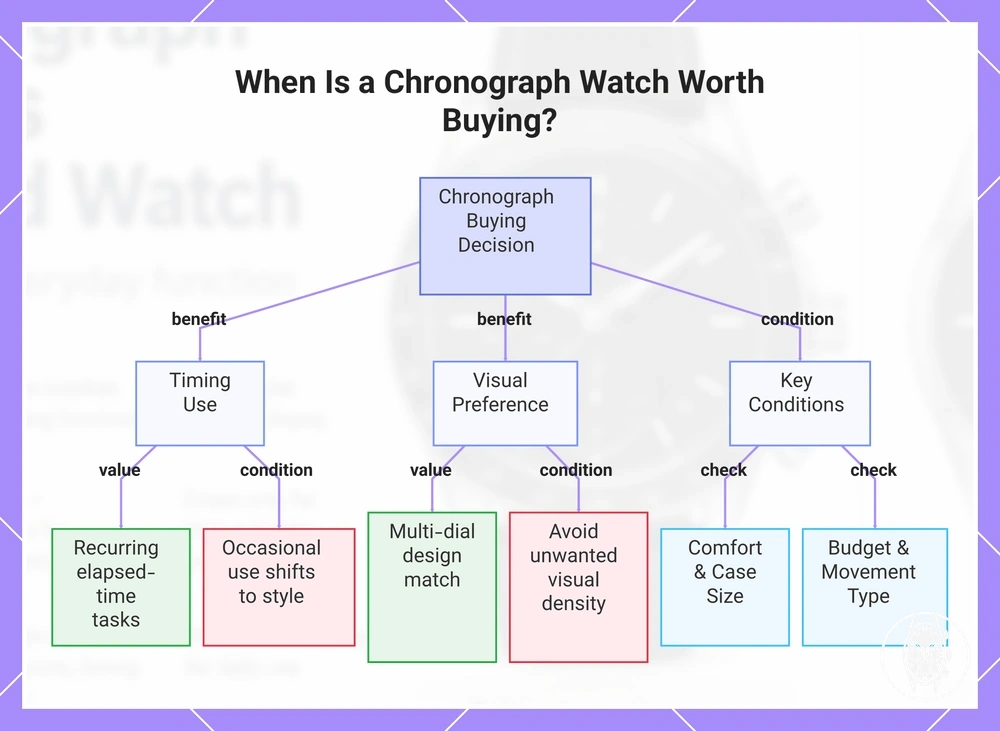
When a Chronograph Watch Is Worth Buying Instead
A chronograph watch is worth buying instead when its timing use or multi-dial design provides enough practical value or style value to justify the added controls and visual complexity. The strongest buying case exists when the wearer expects to use elapsed-time functions or has a sustained dial preference for chronograph styling rather than choosing the complication without a functional or visual reason.
The decision should then be tested against case size, movement type, budget, and comfort because each condition changes the value of the added complication.
The decision should then be tested against case size, movement type, budget, and comfort because each condition changes the value of the added complication. A larger-feeling case weakens the choice when wrist fit or cuff clearance is a priority, while a movement type that exceeds the buyer's preferred budget or ownership effort can reduce value even when the chronograph function itself is useful.
- Timing use: A chronograph watch has practical value when elapsed-time measurement is a recurring task; occasional or absent timing use shifts the justification toward style value rather than function.
- Visual preference: A multi-dial design is a good fit when subdials, additional hands, and pushers match the wearer's dial preference instead of creating unwanted visual density.
- Comfort: Case size supports the decision when the specific watch fits the wrist comfortably and works with the wearer's usual clothing; an uncomfortable case weakens the choice regardless of timing capability.
- Budget: Movement type affects both purchase budget and ownership effort, so the selected chronograph makes more sense when its movement architecture fits the buyer's spending limit and maintenance tolerance.
- Ownership effort: Added controls, case presence, and movement-specific servicing are acceptable when the buyer considers them reasonable trade-offs for the practical or visual value gained.
The clearest criteria for whether a chronograph is worth it are therefore regular timing use, a positive multi-dial design preference, acceptable case size, a suitable movement type, and ownership effort that remains within the buyer's budget and comfort limits. A practical-use buyer needs the stopwatch function to add real utility, while a style-led buyer needs the chronograph design itself to provide lasting visual value.
Applying those conditions when choosing a chronograph watch keeps the final decision tied to the buyer's actual use and preferences rather than complication alone.
A chronograph watch is worth buying when at least one primary benefit—useful timing capability or preferred multi-dial styling—remains important after comfort, case size, movement type, budget, and ownership effort are considered. Applying those conditions when choosing a chronograph watch keeps the final decision tied to the buyer's actual use and preferences rather than complication alone. :contentReference[oaicite:0]{index=0}
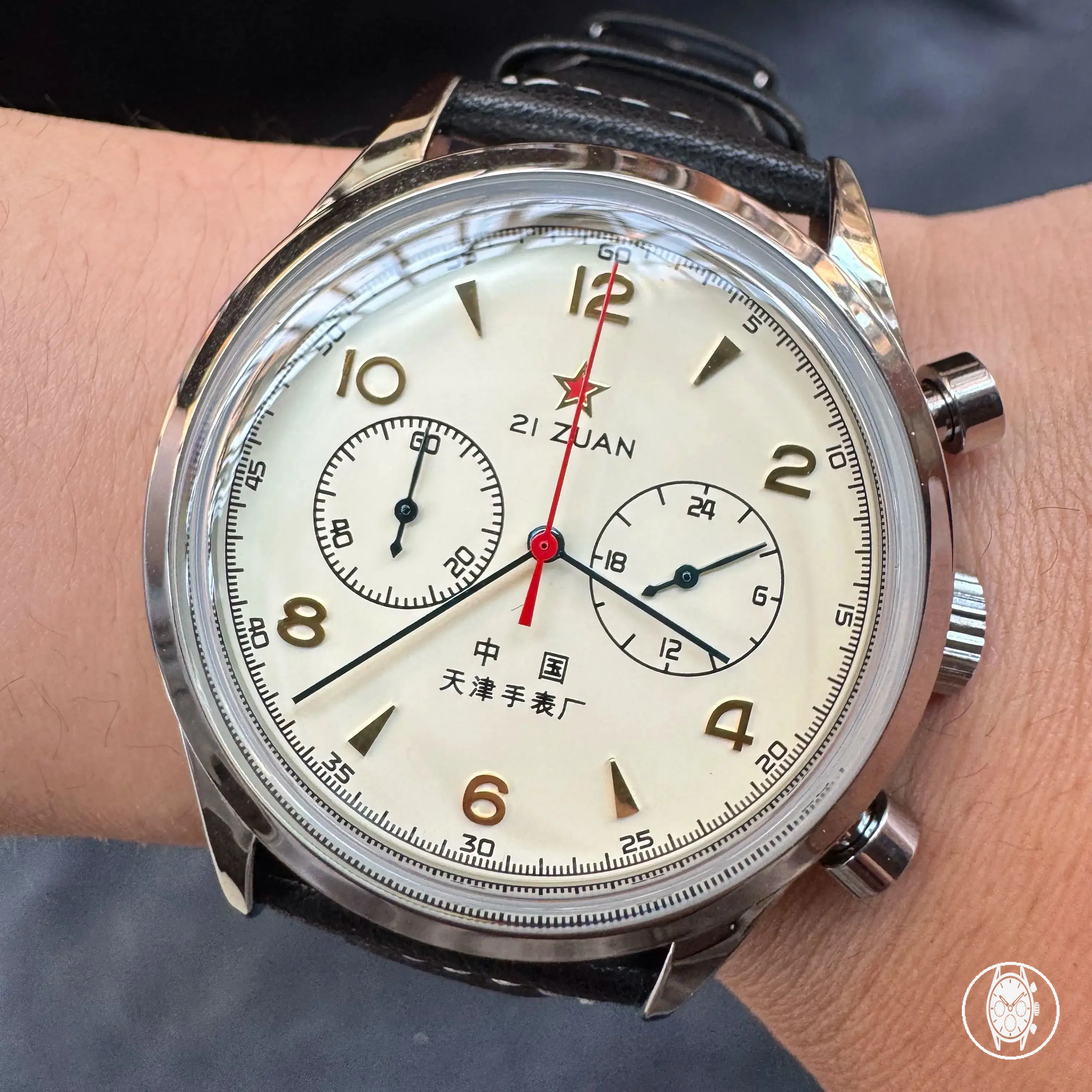
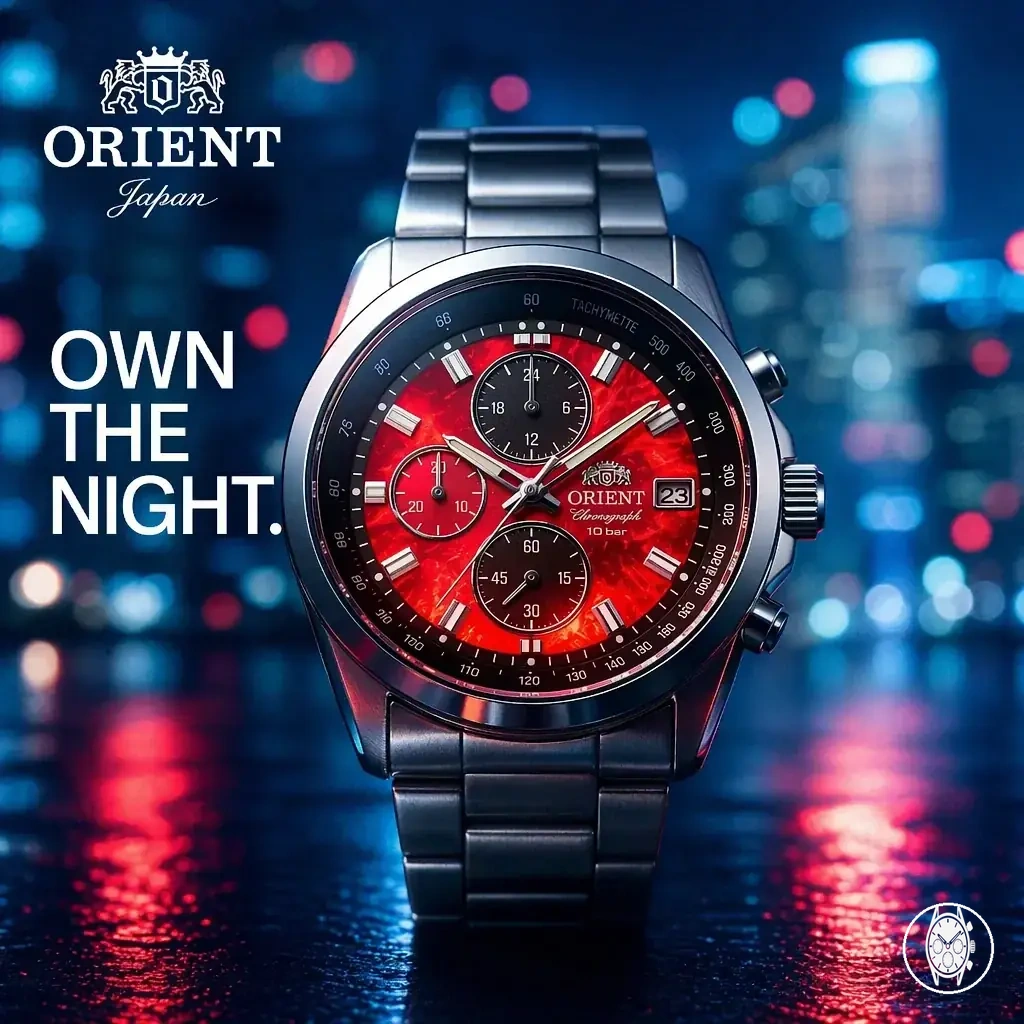
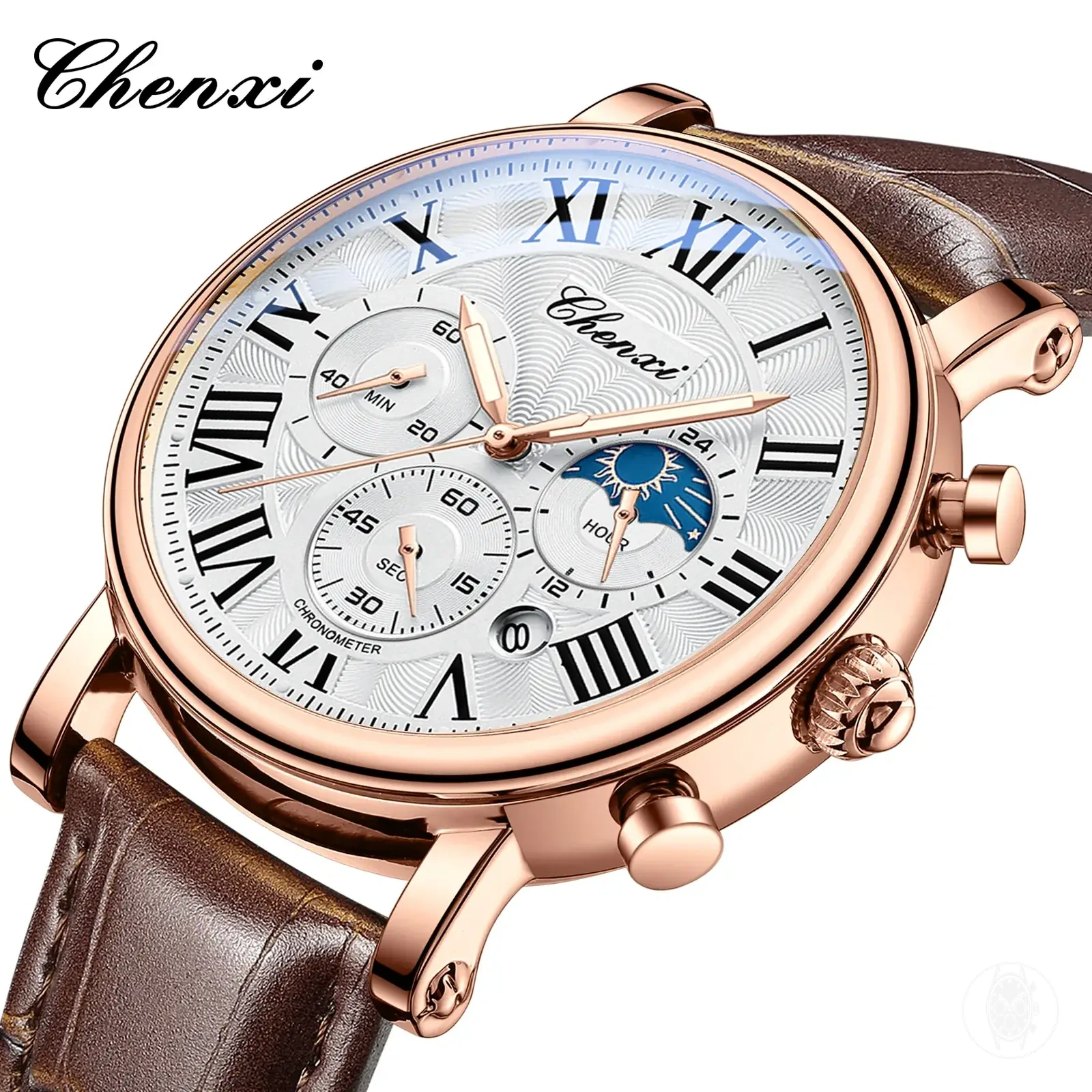
The products below are useful examples for comparing available options.
The products below are useful examples for comparing available options. Before buying, check that the compatibility criteria, key features, and product details match your needs.
This chart shows the main factors that determine whether a chronograph watch is worth buying, including timing use, visual preference, and key conditions to test.
Chronograph vs Standard Watch Buying Decision
The chronograph vs standard watch buying decision should follow the buyer's function need, visual preference, comfort, and value tolerance rather than treating either watch type as universally preferable. A chronograph watch is the better fit when elapsed-time timing or a multi-dial preference provides meaningful value, while a standard watch is the better fit when simple time reading and lower interaction are the priorities.
The final choice is clearest when the buyer profile is matched to one must-have criterion and one acceptable trade-off.
The final choice is clearest when the buyer profile is matched to one must-have criterion and one acceptable trade-off. Chronograph controls and additional timing displays create a different use and visual experience from a time-focused standard watch, so the decision table compares equivalent buyer priorities rather than ranking either category overall. :contentReference[oaicite:0]{index=0}
| Buyer priority | Better fit | Why it fits | Check before choosing |
|---|---|---|---|
| Regular elapsed-time timing use | Chronograph watch | The stopwatch function adds practical value when the buyer repeatedly measures intervals | Confirm that the timing display, controls, and usable timing range suit the intended tasks |
| Simple readability and lower interaction | Standard watch | A time-focused layout suits a buyer profile that values fewer competing indications and no stopwatch operation during ordinary use | Check hand contrast, marker visibility, and dial spacing on the specific model |
| Preference for visual complexity | Chronograph watch | Subdials, additional timing hands, and pushers provide the multi-dial appearance the buyer wants | Confirm that the added visual density remains appealing and readable in daily use |
| Comfort and restrained wrist presence | Standard watch if the selected model fits better | A simpler design can suit a buyer who values lower case presence, but watch type alone does not determine dimensions | Compare actual case diameter, thickness, lug dimensions, and wrist fit between the specific models |
| Budget tolerance | Either watch type | The acceptable trade-off is the model whose price and expected ownership effort remain within the buyer's value tolerance | Compare the specific purchase price, movement type, service requirements, and expected use rather than applying one cost assumption to an entire category |
| Uncertainty about function or style | Standard watch unless chronograph value becomes clear | The simpler option avoids committing to added controls or visual complexity before either becomes a meaningful requirement | Try both layouts for comfort and readability, then identify whether timing use or multi-dial preference changes the decision |
Each buyer profile should accept only the trade-offs that support its main priority. A timing-focused chronograph buyer can accept added controls and dial density because they provide practical value, while a style-focused chronograph buyer needs the multi-dial design itself to justify that complexity; a standard-watch buyer can instead treat a simple dial and lower interaction as the preferred value outcome.
Each buyer profile should accept only the trade-offs that support its main priority.
The next-step checks are model-specific: compare case dimensions for comfort, dial layout for readability, movement type for ownership effort, purchase price for budget fit, and expected timing use for functional value. This keeps an acceptable trade-off in one watch from being generalised to every chronograph or every standard watch.
This keeps an acceptable trade-off in one watch from being generalised to every chronograph or every standard watch.
Choose a chronograph when the buyer profile includes genuine timing use or a lasting preference for multi-dial design and the resulting comfort, budget, and ownership effort remain acceptable; choose a standard watch when current-time reading, visual simplicity, and lower interaction carry greater value. An undecided buyer should prioritise comfort and function need first, then use visual preference and value tolerance as the final decision criteria rather than treating either watch type as the universal choice.
Before buying, check that the compatibility criteria, key features, and product details match your needs.
The products below are useful examples for comparing available options. Before buying, check that the compatibility criteria, key features, and product details match your needs.